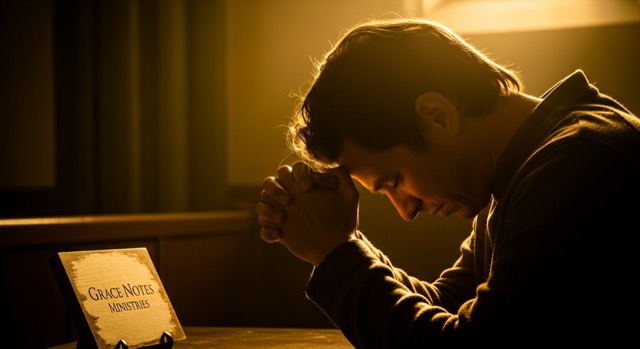
It's the question that always seems to show up at midnight. It doesn't come when the sun is high and your spirit feels strong. It waits for the dark, when the house is quiet and the walls feel thin. A phone call rings, a...
- Why Does God Kill? Finding Grace in the Midnight of Loss: Trusting God's Word through life's deepest trials and seasons of waiting.
- 1. The Midnight Cry and the Bread of Importunity: Trusting God's Word through life's deepest trials and seasons of waiting.
- 2. The Sovereign Hand and the Cup of Gethsemane: Trusting God's Word through life's deepest trials and seasons of waiting.
Why Does God Kill? Finding Grace in the Midnight of Loss
1. The Midnight Cry and the Bread of Importunity
It's the question that always seems to show up at midnight. It doesn't come when the sun is high and your spirit feels strong. It waits for the dark, when the house is quiet and the walls feel thin. A phone call rings, a doctor sits you down, or you find yourself standing over a fresh grave, and the question just tears out of your throat, raw and ragged: Why? Why does a good God allow this? Why does God kill?
That question is like a desperate friend who shows up unannounced, finding your spiritual pantry completely bare. You realize you have nothing—absolutely nothing—to offer the deep, aching hunger of this kind of grief. Right after praying, one of the disciples, probably feeling that exact same emptiness, looked at Jesus and said, "Lord, teach us to pray." They weren't looking for some magic formula to get what they wanted. They were begging for a lifeline to the Father. And the very first thing Christ puts on their lips is the most dangerous prayer we can ever pray: "Thy will be done, as in heaven, so in earth."
It's easy to say those words when His will lines up with our plans—when life feels blessed and everything is going right. But it's something else entirely to whisper them from the floor, when His will feels like a thief that just kicked down your door. Yet, look at where Jesus goes right after teaching them this prayer of surrender. He doesn't talk about quiet, polite acceptance. He doesn't tell them to just grin and bear it. Instead, He tells a story about a man pounding on his neighbor's door at midnight, demanding bread without apology, making an absolute scene.
And he said unto them, Which of you shall have a friend, and shall go unto him at midnight, and say unto him, Friend, lend me three loaves; (For a friend of mine in his journey is come to me, and I have nothing to set before him?) And he from within shall answer and say, Trouble me not: the door is now shut, and my children are with me in bed; I cannot rise and give thee. I say unto you, Though he will not rise and give him, because he is his friend, yet because of his importunity he will rise and give him as many as he needeth. (Luke 11:5-8)
God does not turn away from your midnight pounding. He does not silence your raw, desperate questions. In our deepest grief, when we have nothing left to offer, He invites us to bring our importunity—our shameless, persistent pleading—directly to His door.
2. The Sovereign Hand and the Cup of Gethsemane
To truly face the question of why God allows death, we must confront the absolute reality of His sovereignty. Scripture does not shy away from God's ultimate authority over life and death. In Deuteronomy, He declares His sovereign position clearly:
See now that I, even I, am he, and there is no god with me: I kill, and I make alive; I wound, and I heal: neither is there any that can deliver out of my hand. (Deuteronomy 32:39)
This truth can feel terrifying when we view it apart from the cross. If God is the one who holds the power of life and death, how do we trust Him when He chooses to take away those we love? The answer is not found in sterile theological debates, but in the garden of Gethsemane. There, we see the Son of God Himself sweating great drops of blood, pleading with the Father to let a cup of suffering pass from Him. Yet, Christ surrendered to that sovereign hand, praying, "nevertheless not my will, but thine, be done" (Luke 22:42).
God did not spare His own Son from death. The cross is the ultimate proof that God does not stand aloof from our pain; He entered into it. He allowed His Son to be slain so that death would not have the final word in our lives.
3. Finding Hope in the Resurrection and Life
When we stand at the graveside, the sting of death feels absolute. But the gospel promises that for the believer, death is not an eternal end, but a temporary sleep. Because Christ submitted to the Father's will and conquered the grave, the power of death has been broken forever.
Jesus spoke these comforting words to Martha as she wept over her brother Lazarus:
Jesus said unto her, I am the resurrection, and the life: he that believeth in me, though he were dead, yet shall he live: And whosoever liveth and believeth in me shall never die. Believest thou this? (John 11:25-26)
When God's will feels unbearable, we must anchor our souls in this promise. He who holds the keys of hell and of death (Revelation 1:18) is the same Savior who weeps with us in our sorrow. We may not understand the "why" behind every loss in this life, but we can trust the character of the One who laid down His life to give us eternal hope.