It’s a question that keeps you up at night, isn't it? You're reading through the Old Testament, maybe in Numbers or Joshua, and the sheer scale of the destruction is staggering. You read about the Flood, about Sodom and...
- He Beheld the City, and Wept Over It: Trusting God's Word through life's deepest trials and seasons of waiting.
- One of You Which Eateth with Me: Trusting God's Word through life's deepest trials and seasons of waiting.
- Where is the Guestchamber?: Trusting God's Word through life's deepest trials and seasons of waiting.
He Beheld the City, and Wept Over It
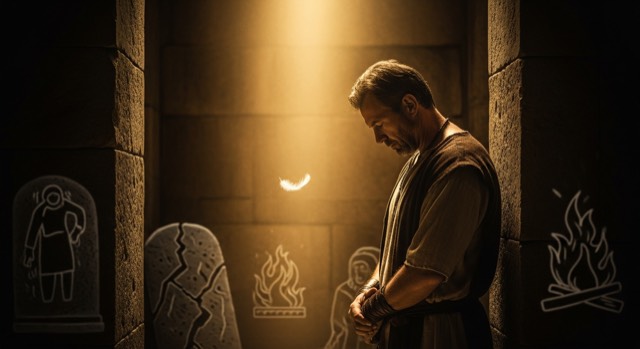
It’s a question that keeps you up at night, isn't it? You're reading through the Old Testament, maybe in Numbers or Joshua, and the sheer scale of the destruction is staggering. You read about the Flood, about Sodom and Gomorrah, about whole nations put to the sword, and a cold knot forms in your stomach. This God, the one who commanded all this, feels distant, severe, and frankly, a little frightening. It challenges the image of the gentle Jesus we hold so dear and creates a dissonance in our souls that cheap answers can’t resolve. We're left in the quiet of our own thoughts, wondering if the God we serve is truly good, or just powerful.
Before we can even touch those ancient, dusty accounts, we have to go to a hill overlooking a city. We have to stand with Jesus. Luke tells us that when He came near Jerusalem, the city that was about to orchestrate his murder, the city that had rejected prophet after prophet, He didn't raise his fist in righteous anger. He didn't list their transgressions like a prosecutor. The Scripture says, “he beheld the city, and wept over it.” His heart broke. He saw the coming Roman legions, the starvation, the temple burning, the slaughter of the innocent, and His response was a flood of tears, a torrent of divine grief for the people who refused His peace.
This moment, this image of a weeping Savior, must become the lens through which we read every single word of judgment in the Old Testament. God’s justice is not the detached, cold act of a cosmic tyrant; it is the agonizing, last-resort surgery of a heartbroken Creator. The Flood wasn’t a fit of divine temper; it was a response to a world where Genesis says “the earth was filled with violence,” a world groaning under the cancer of its own corruption. The fire that fell on Sodom was a cauterizing of a wound so septic it threatened to poison everything around it. God's justice is always grieved, always a consequence of humanity turning its back on the very “things which belong unto thy peace.”
And when he was come near, he beheld the city, and wept over it, Saying, If thou hadst known, even thou, at least in this thy day, the things which belong unto thy peace! but now they are hid from thine eyes.— Luke 19:41-42, KJV
One of You Which Eateth with Me
Now let’s step out of the battlefield and into a quiet upper room. The air is thick with the smell of roasted lamb and unleavened bread. It’s a place of intimacy, of friendship, of sacred tradition. And into this sacred space, Jesus speaks a devastating truth: betrayal is present at the table. Instantly, the disciples’ confidence shatters. Their first reaction is not to point fingers at Judas, but to look inward with terror, asking one by one, “Is it I?” This is the human condition when confronted by the holiness of God. We immediately begin to self-assess, to scan our own hearts for disqualifying flaws, to perform a frantic moral inventory hoping to prove we are not the one who will fail Him. This is the engine of all dead religion: a desperate attempt to manage our own righteousness and secure our place at the table through our own efforts.
But see the staggering grace of our Lord. He knows exactly who the betrayer is. He has known all along. Yet He doesn't expose Judas, He doesn't cast him out into the night. No. He serves him. He lets him dip his hand into the common dish, a profound sign of fellowship and trust. Jesus shares the Passover, the very symbol of redemption and deliverance, with the man who has already agreed to sell him for a handful of silver. The judgment that Judas so richly deserves, the wrath that all sin earns, is not poured out on Judas's head. Instead, it is about to be absorbed, every last drop, by Jesus Himself in a garden and on a cross. This is the great mystery of the gospel: God’s justice isn't sidestepped; it is fully satisfied in the broken body of His Son.
The Lord’s words, “Verily I say unto you, One of you which eateth with me shall betray me,” are not primarily an accusation; they are a sorrowful declaration of a deep truth. The wound comes not from an outside enemy, but from within the circle of love. This is the story of humanity from the beginning, a story of an intimate creation turning its back on its Creator. By making this announcement, Jesus isn't just singling out Judas; He is exposing the potential for betrayal that lurks in every human heart. It forces every disciple, then and now, to stop trusting in their own loyalty and to realize their only hope is the grace of the One who hosts the meal.
And as they sat and did eat, Jesus said, Verily I say unto you, One of you which eateth with me shall betray me. And they began to be sorrowful, and to say unto him one by one, Is it I? and another said, Is it I?— Mark 14:18-19, KJV
Where is the Guestchamber?
So what happens tomorrow morning, when you wake up and the reality of your own failures hits you? You lose your temper with your spouse, you entertain a lustful thought, you feel the cold grip of anxiety instead of faith. The voice of the accuser starts whispering about the God of the Old Testament, the God who strikes people down for their sin. You start to feel that you've forfeited your place at the table. But Jesus’s words to his disciples before the Passover change everything. He doesn't tell them to go build a room or make themselves worthy of His presence. He simply says, “The Master saith, Where is the guestchamber, where I shall eat the passover with my disciples?” He is the one seeking a place to be with us, even when He knows we are weak and prone to wander.
My friend, hear this deep in your spirit: you cannot prepare a room worthy of the King of kings. You can't. Your best efforts are, as Isaiah says, as filthy rags. The beauty of the gospel is that you don't have to. Jesus told Peter and John, “he will shew you a large upper room furnished and prepared: there make ready for us.” The room is already prepared. The work is already done. Christ's righteousness is the fine furnishing. His shed blood is the cleansing that has made it ready. Your only job is to stop trying to build your own shack of self-effort and instead enter the palace He has provided for you. Rest in His finished work. That is all He asks.
To walk in this grace day by day means your motivation for holiness completely changes. You no longer flee from sin primarily because you fear the lightning bolt of God's judgment. Instead, you turn from sin because you now see it for what it is: the very thing that broke the heart of your weeping Savior, the very betrayal that nailed Him to the cross. Reading the hard stories of the Old Testament no longer makes you recoil from God in fear; it makes you press closer to the heart of Christ, marveling at the justice He absorbed on your behalf. You begin to hate your sin not because it endangers you, but because it grieves Him.
And he will shew you a large upper room furnished and prepared: there make ready for us.— Mark 14:15, KJV
Standing on Solid Ground
The disciples were sent into the city with a strange and specific instruction: follow a man carrying a pitcher of water. It seemed arbitrary, perhaps even foolish. Yet Mark records the simple, profound outcome: “and found as he had said unto them.” This is the bedrock of our faith. God’s Word is utterly reliable. His character is perfectly consistent. The God who brought a flood is the same God who commanded Noah to build an ark of salvation. The God whose holy fire consumed the unauthorized offering of Nadab and Abihu is the same God whose Son became our offering, consumed by a divine wrath we will never have to face. His justice and His mercy are not two competing attributes; they are two sides of the same holy love, and they meet with a kiss at the cross. He is the same yesterday, today, and forever.
The greatest tragedy would be to understand this grace and then walk away from it. It is to leave the security of the furnished upper room and return to the exhausting, soul-crushing work of trying to earn God's favor. That path leads only to the endless, fearful question, “Is it I?” It reduces the cross to a mere starting line for a new race of performance, rather than the glorious finish line that has secured our victory forever. I urge you, do not return to that bondage. Stay at the table of grace. Stay with the Master who, knowing everything about you, still chooses to eat with you. His presence is your only true safety, your only lasting peace.
And his disciples went forth, and came into the city, and found as he had said unto them: and they made ready the passover.— Mark 14:16, KJV
Perhaps the question we’ve been asking is the wrong one. We ask, “Why would a loving God kill people?” But the gospel flips the question on its head. The real, unanswerable question is, “Why would a holy God save people like us?” And the answer is not a doctrine or a theological formula; the answer is a Person. The answer is Jesus, weeping over the city that would murder Him. The answer is Jesus, washing the feet of the man who would betray Him. He is the ultimate revelation of God’s heart. He is the furnished room, the prepared place where perfect justice and infinite mercy embrace. And His invitation is for you. Not when you are better, not when you are stronger, but right now, just as you are. Come. Eat with Him. And let His grace make you whole.