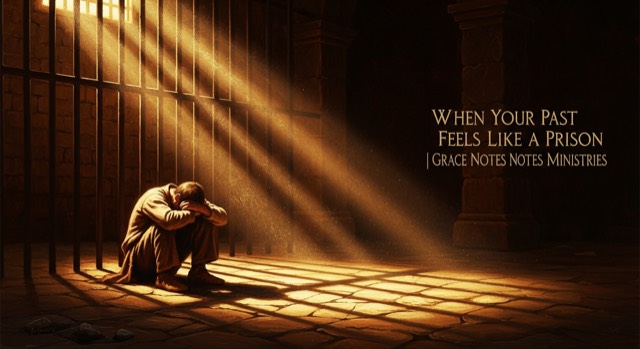
We spend so much of our lives trying to earn our way, trying to prove we are enough. But the gospel tells us a completely different story. It is not about what we can do for God; it is about what He has already done for...
Key Truths:
Resting in the Finished Work: Trusting God's Word through life's deepest trials and seasons of waiting.
The Gift of Proactive Grace: Trusting God's Word through life's deepest trials and seasons of waiting.
Frequently Asked Questions: Trusting God's Word through life's deepest trials and seasons of waiting.
Resting in the Finished Work
We spend so much of our lives trying to earn our way, trying to prove we are enough. But the gospel tells us a completely different story. It is not about what we can do for God; it is about what He has already done for us. When Jesus hung on that cross, He did not say, "To be continued." As the Holy Scripture records in John 19:30, He declared:
"It is finished: and he bowed his head, and gave up the ghost."
That means the debt is fully paid, the work is done, and we can finally breathe. Your past no longer has the power to condemn you because Christ has already satisfied the law on your behalf.
The Gift of Proactive Grace
His grace is not a reaction to our goodness. It is a proactive, overwhelming gift that meets us right where we are. We do not have to clean ourselves up to come to Him. He invites us to come weary, heavy-laden, and ready for rest. As the Savior gently commands in Matthew 11:28:
"Come unto me, all ye that labour and are heavy laden, and I will give you rest."
We do not have to strive anymore. We do not have to let our past dictate our future. We must simply receive His perfect grace.
Let us pray this together today:
"I receive Thy finished work on the cross as the total cancellation of my debt. Cover me with Thy righteousness, quiet my mind with Thy peace, and help me to sit at Thy feet, fully clothed in Thy grace. Amen."
✝ Sister Grace's Pastoral Reflection
Grace and peace from the Father of mercies be with thee, beloved. Though the full tapestry of thine exposition lieth not yet before mine eyes, the very title proclaimeth “Finding Freedom When Thy Past Feels Like a Prison” doth ring with the ancient trumpet of Calvary. As one laboring in the vineyard of Grace Notes Ministries, let me set forth mine assessment, as the Lord granteth wisdom.
First, its strength consisteth in this: where the wounded soul groaneth under chains of yesterday, the Gospel speaketh not of self-expiation but of Christ’s completed atonement: “If the Son therefore shall make you free, ye shall be free indeed” (John 8:36). The teaching refuseth to bind the penitent to a treadmill of remorse, for true repentance bringeth not condemnation but restoration (Romans 8:1). It pointeth rightly to the blood that washeth, the Spirit that quickeneth, and the resurrection life that breaketh prison walls (Psalm 107:14).
Second, it aligneth well with the unmerited favor of our God. The Gospel of Grace teacheth that our former sins are cast into the depths, as far as east is from west (Psalm 103:12), that old things are passed away, and behold, all things are become new (2 Corinthians 5:17). When a message holdeth forth Christ’s finished work rather than man’s fading strength, it ministereth bread unto the fainting heart (Matthew 11:28). Yet let the writer beware lest he minimize holy sorrow for sin; for freedom is wrought through the cross, and every burdened soul must lay his weeping at Calvary before he may walk in green pastures.
Third, remember that sanctification is a daily putting to death of the flesh, yet ever accompanied by the witness of the Spirit (Romans 8:16). Thy past hath no dominion over him whom grace hath justified (Romans 6:14). Hear now the altar call, O ye weary pilgrims: “Almighty God, Father of lights, I come to this altar as one long held by shadows. Forgive my unbelief; break every chain of shame that the enemy hath forged in my mind. Pour out Thy Spirit, that I may rise from the dungeon of yesterday and walk in open fields. By the blood of Jesus, I renounce every lie; by His resurrection, I receive liberty. Sanctify me wholly. Amen.”
The grace of our Lord Jesus Christ, the love of God, and the communion of the Holy Ghost be with thy spirit now and evermore. Walk in liberty, dear soul; thy Redeemer liveth.
You are new in Christ; let go of the old self. 2 Cor 5:17 (KJV) says, 'Therefore if any man be in Christ, he is a new creature.'
What does the Bible say about forgiveness?
The Bible assures forgiveness. 1 John 1:9 (KJV) declares, 'If we confess our sins, He is faithful and just to forgive us our sins, and to cleanse us from all unrighteousness.'
How can prayer help release past guilt?
Prayer brings healing and release. Psalm 103:12 (KJV) says, 'As far as the east is from the west, so far hath He removed our transgressions from us.'
Can I trust God's plan despite my past?
Yes, trust God's plan. Jeremiah 29:11 (KJV) promises, 'For I know the thoughts that I think toward you, saith the LORD, thoughts of peace, and not of evil, to give you an expected end.'
What practical steps can I take to move forward?
Take steps of renewal. Philippians 3:13-14 (KJV) urges, 'Brethren, I count not my own life precious unto myself, for all things are loss because of Christ. But I press toward the goal.'