We've all been there. In that quiet, fervent moment, alone with God or surrounded by brothers and sisters, we make the vow. We mean it with every fiber of our being, a raw and honest declaration that this time will be di...
- The Promise Before the Prayer: Trusting God's Word through life's deepest trials and seasons of waiting.
- When Your Eyes Are Heavy: Trusting God's Word through life's deepest trials and seasons of waiting.
- Daily Bread, Daily Turning: Trusting God's Word through life's deepest trials and seasons of waiting.
The Promise Before the Prayer
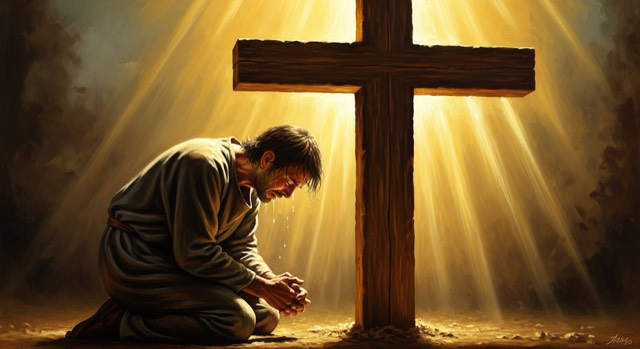
We've all been there. In that quiet, fervent moment, alone with God or surrounded by brothers and sisters, we make the vow. We mean it with every fiber of our being, a raw and honest declaration that this time will be different. This time, we won't fall. This time, we won't give in. This time, we won't deny Him. We speak the words, as Peter did, 'the more vehemently,' absolutely convinced of our own loyalty, our own strength for the battle ahead. And the echo of that promise hangs in the air, a beautiful and fragile thing, just moments before the crushing reality of our own weakness sets in.
Then comes Gethsemane. Not a garden of olive trees, perhaps, but a quiet living room late at night, a difficult meeting at work, a moment of sharp temptation that rises like a sudden storm. And we fail. We fall asleep on our watch. We do the very thing we swore we would not do. And in that moment of failure, we expect the hammer of judgment, but instead, we hear the gentle, sorrowful voice of Jesus. He finds his dearest friends sleeping, and saith unto Peter, 'Simon, sleepest thou? couldest not thou watch one hour?' This isn't the voice of a drill sergeant; it's the voice of a shepherd who knows his sheep, a physician who understands the disease. He gives the diagnosis for all of us: 'The spirit truly is ready, but the flesh is weak.'
And here's the thing we so often miss. True repentance doesn't begin with another vehement promise to do better. It begins with a quiet, humble agreement with Jesus's diagnosis. It's the soul finally admitting, 'You're right. My spirit is ready, but my flesh is so weak. I can't do this.' Repentance is not about doubling down on our resolve; it's about abandoning our resolve altogether. It's a change of mind, a turn from trusting in our own ability to stay awake and a complete reliance on the One who prayed through the night for us. It’s the profound shift from making promises to God to resting in the promises of God.
Watch ye and pray, lest ye enter into temptation. The spirit truly is ready, but the flesh is weak.— Mark 14:38, KJV
When Your Eyes Are Heavy
So much of what we call religion is just us trying to prop up our weak flesh. We create rules. We make checklists. We build elaborate systems of accountability and self-improvement, hoping that if we just get the formula right, we can finally stop failing. But it's exhausting work. The scripture says that when Jesus returned to his disciples, 'he found them asleep again, (for their eyes were heavy,) neither wist they what to answer him.' That is the end of all self-reliance. It's a spiritual exhaustion so deep that you have no more words, no more excuses, no more plans for how you're going to fix it this time. You are simply found out. Asleep. With nothing to say for yourself.
But notice the beautiful, staggering truth of the gospel. While their eyes were heavy, His were fixed on the Father. While they were sleeping, He was sweating drops of blood, wrestling in prayer for the salvation of the world. While they were failing to watch for one hour, He was securing an eternity of fellowship for them. Repentance, then, is the act of turning from our own pitiful performance and looking at His perfect performance on our behalf. It's realizing that our acceptance with God was never based on our ability to stay awake, but on His willingness to go to the cross. Your guilt, your shame, your repeated failures—they were all dealt with while you were spiritually asleep, by a Savior who never slumbers nor sleeps.
This is what Peter would later preach with such power in the book of Acts. He commands the people, 'Repent ye therefore, and be converted, that your sins may be blotted out.' The word for 'repent' there, metanoeō, means to change your mind, to think differently. Change your mind about your sin, yes, but more deeply, change your mind about who is responsible for dealing with it. Then, 'be converted,' epistrephō, which means to turn around and go in a new direction. It's a single, fluid motion: think differently, and therefore, turn differently. The result isn't just a clean slate. It's something far better: 'when the times of refreshing shall come from the presence of the Lord.' It's not just the removal of a debt, but the downpouring of a blessing.
Repent ye therefore, and be converted, that your sins may be blotted out, when the times of refreshing shall come from the presence of the Lord;— Acts 3:19, KJV
Daily Bread, Daily Turning
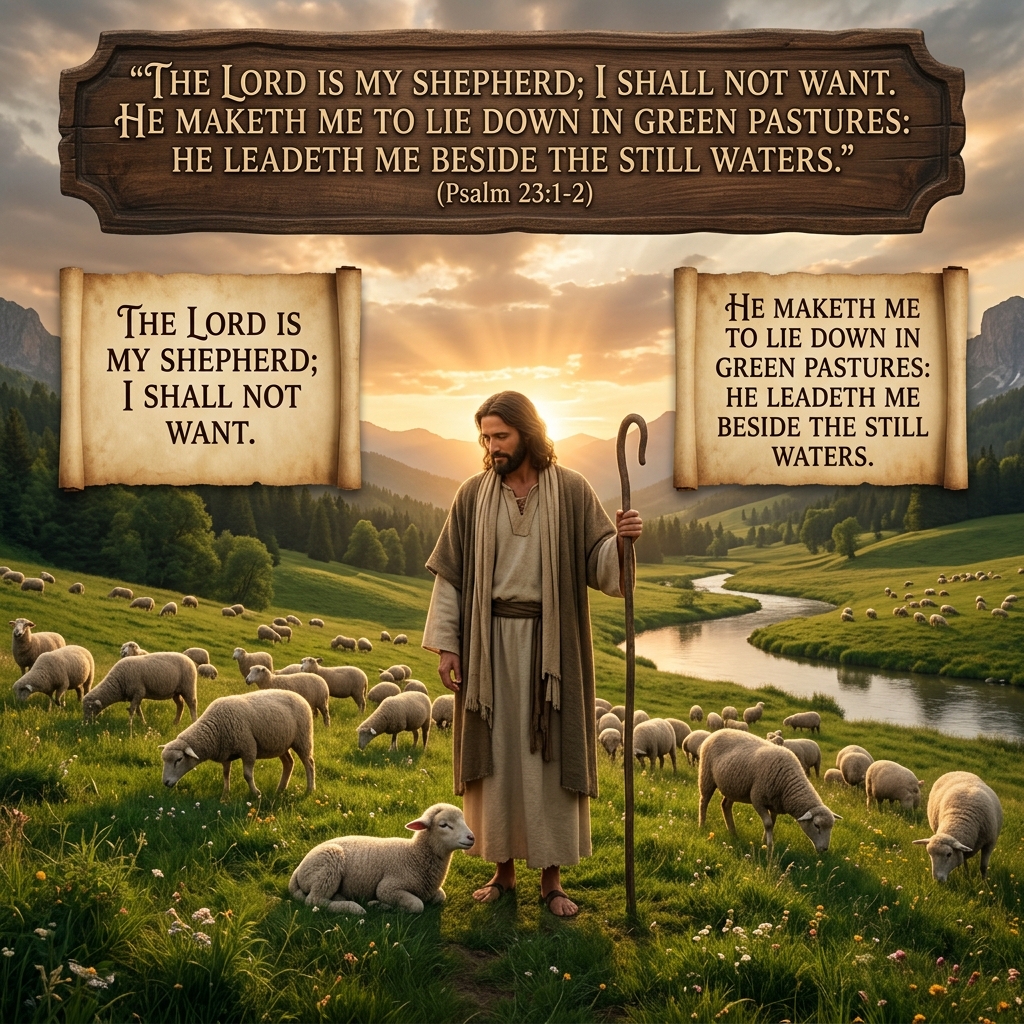
So what does this look like on a Tuesday? It’s not a dramatic, tear-filled altar call every day. It's smaller. Much smaller. It's the moment you snap at your kids over spilled milk, and instead of justifying it, you stop, you kneel down, and you say, 'I'm sorry, I was wrong.' In that same breath, you turn your heart to God and whisper, 'Lord, there's my weak flesh again. Thank you for your grace.' It’s the constant practice of what Jesus taught us to pray: 'Give us this day our daily bread. And forgive us our debts.' Repentance becomes as routine and necessary as daily bread. It's a hundred small turns back to Him throughout the day, keeping the account short and the fellowship sweet.
My friend, you have to stop letting the enemy beat you over the head with your failures. When you fall asleep on your watch, the accuser comes and whispers that you're a hypocrite, that you're no good, that God must be so disappointed in you. But that's a lie from the pit. Jesus knew Peter's vehement promise and his coming denial in the same moment, and He loved him just the same. He knows your frame. He remembers that you are dust. His response to your weakness isn't to cast you out but to draw you in. So don't try to fix yourself before you come to Him. Just come. Turn. He is not waiting to punish you; He is waiting to restore you.
When you begin to live this way, a great weight lifts. You stop walking a spiritual tightrope, where every wobble threatens to send you plummeting. Instead, you find you're on a wide, spacious road. The pressure to perform is gone, replaced by the freedom to love. You can actually serve people without needing their approval, because you are already approved in Christ. You can take risks for the kingdom, knowing that even if you stumble, your identity is not in your success but in your Savior. This isn't a license to sin; it's the freedom from the power of sin. It's the liberty to finally live as a beloved child, not a terrified slave trying to earn his keep.
And forgive us our debts, as we forgive our debtors.— Matthew 6:12, KJV
Not What I Will, But What Thou Wilt
Everything we've talked about stands on one unshakable foundation. One prayer. The most important prayer ever uttered. In the depths of his agony, Jesus prayed, 'Abba, Father, all things are possible unto thee; take away this cup from me: nevertheless not what I will, but what thou wilt.' Our entire salvation hinges on that one word: 'nevertheless.' His perfect submission to the Father's will is the very power that saves us from our own rebellious, weak, and wavering wills. True repentance, at its core, is simply coming into agreement with Jesus's prayer. It's laying down our own will—our will to be strong, our will to be right, our will to save ourselves—and saying with Him, 'nevertheless not what I will, but what thou wilt.'
The temptation will always be to go back. Back to the chains. Back to the performance. It feels safer sometimes, doesn't it? To have a list of things you can do to make yourself feel righteous. The enemy will always try to sell you on a new plan, a better strategy for staying awake this time. Do not buy it. It's a return to the prison of self-reliance, a place of heavy eyes and speechless shame. The way of freedom is the way of the turn. When you fail—and you will—don't look inward at your own resolve. Look upward to your Rescuer. Look back to the garden and see Him praying for you. Look forward to the throne and see Him interceding for you. That is where your hope lies.
And he said, Abba, Father, all things are possible unto thee; take away this cup from me: nevertheless not what I will, but what thou wilt.— Mark 14:36, KJV
So don't ever think of repentance as a grim duty, a sorrowful walk of shame back to a disappointed God. It is not that. It is the joyful pivot of the soul finding its true north. It is the relieving exhale of a heart that can finally stop pretending to be strong. Every turn away from your own failure is a turn toward His finished work. Every admission of weakness is an embrace of His infinite strength. And every time you turn, you will find Him there, not with a ledger of your faults, but with the 'times of refreshing' that flow only from His presence. This is the way home, my friend. A constant, beautiful, grace-filled turning toward the One who loves you without condition and without end.