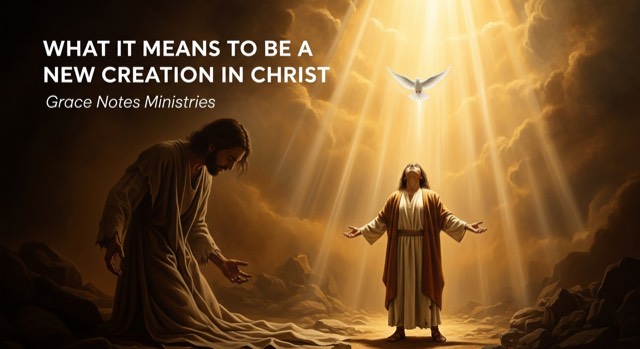
From Nets to Newness

It was a cold pre‑dawn on the Sea of Galilee; the moon hung low as James and John hauled in their nets, hands numb, eyes half closed. Their father Zebedee stood beside the boat, his voice low, urging them to pull one more cord. Suddenly a man stepped onto the shore, eyes bright, voice steady, and said, "Follow me." The brothers glanced at each other, hearts beating fast, and left the boat without a final word to their father. The night air seemed to hold its breath as they stepped onto the sand, not knowing that this act would mark the beginning of a radical transformation. Their nets were left behind, but something far greater was about to be caught.

The call that rippled through the water was not a mere invitation to walk; it was the first breath of a new identity. In that moment the fishermen heard, "And he called them," a phrase that echoes through every calling of the Gospel. The call was not to better their fishing skill but to be reshaped by Him who called them from the ordinary into the extraordinary. The Scripture that follows, 2 Corinthians 5:17—"Therefore if any man be in Christ, he is a new creature: old things are passed away"—takes that very instant of leaving the boat and declares it a death to the past self. The verse does more than label; it guarantees that what was once bound by flesh is now liberated by the Spirit. Thus the simple act of stepping onto shore becomes the first step into a new creation, where the old fisherman is passed away and a follower of Christ begins to rise.

And he called them.— Matthew 4:21, KJV

The Failure of Self‑Reliance

When the night fades and the day begins, many of us still clutch our own plans like a weathered net, believing that effort alone will secure safety. We schedule prayers, read devotionals, attend meetings, and trust that our own good works will patch the holes in our souls. Yet the Apostle Paul reminds us, "For all have sinned, and come short of the glory of God." (Romans 3:23). The verse does not gently suggest imperfection; it declares universal failure, a condition that no amount of self‑discipline can reverse. Because the problem is not merely lack of effort but a broken nature that cannot be mended by human hands. Recognizing this truth forces us to abandon the illusion of self‑reliance and turn toward the only source that can truly restore.

In that turning, we encounter the finished work of Christ, a work that does not add to our efforts but replaces them. The cross stands as the decisive transaction: Christ lived, died, and rose so that we might be declared righteous. When Paul writes, "Therefore if any man be in Christ, he is a new creature," the phrase carries the weight of that transaction. It tells us that guilt has been cancelled, not by our merit but by His blood shed on Calvary. The new creation is not a project to be built but a status already granted, awaiting our acceptance. Thus the burden of self‑justification is lifted, and we are invited to rest in a righteousness that is not ours but His.

For all have sinned, and come short of the glory of God.— Romans 3:23, KJV
Biblical illustration — What It Means to Be a New Creation in Christ — In the beginning God created — Genesis 1:1 KJV
✦ In the beginning God created — Genesis 1:1 KJV
View Full Scripture Illustrated Gallery →

Living as a New Creation

Imagine a mother stirring coffee at 3 a.m., the house quiet, her mind replaying yesterday's arguments with a teenage son. She feels the weight of failure pressing on her chest, wondering if she can ever be a better parent. Yet as a new creation, she is no longer defined by the past mishandlings; instead, "I am crucified with Christ: nevertheless I live; yet not I, but Christ liveth in me." (Galatians 2:20). That truth reframes her morning: the coffee is not a symbol of weary endurance but an offering of grace to a household in need. She can speak words that are not her own strength but the Spirit's compassion, allowing the child to feel love despite previous conflict. In this way, daily messes become arenas where the new creation lives out its identity.

I am crucified with Christ: nevertheless I live; yet not I, but Christ liveth in me.— Galatians 2:20, KJV

Standing on the Promise

The foundation of our new identity rests upon a promise that does not waver with circumstance: "Behold, I make all things new." (Revelation 21:5). This declaration is not a distant future hope alone; it is the present reality for anyone who belongs to Christ. The verse anchors us in a certainty that transcends the shifting sands of life, offering a rock upon which we can build our daily walk. When doubts arise, we can look back to the moment of calling and forward to this promise, seeing that the old self has been truly passed away. The assurance is not abstract theology but a living guarantee that God's power sustains the new creation.

Behold, I make all things new.— Revelation 21:5, KJV

So, dear friend, if you have ever felt the weight of your own failures, remember that in Christ you are no longer bound by them. The verse "Therefore if any man be in Christ, he is a new creature: old things are passed away" does not merely suggest improvement; it pronounces a complete break with the past. Let that truth settle deep within you, shaping each decision, each conversation, each breath. May the assurance of God's unchanging promise guide you as you step out each day, clothed not in your own merit but in the righteousness of Him who called you. Walk forward with confidence, knowing that the new creation lives not by its own strength but by His.