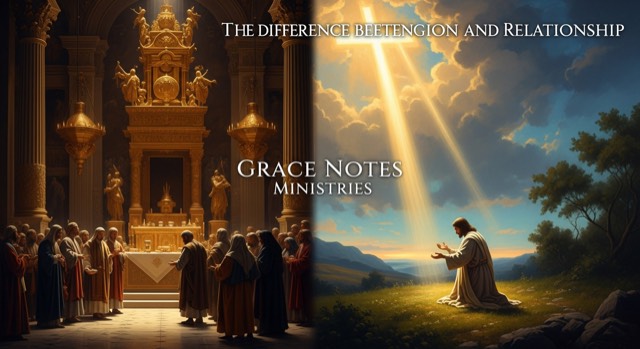
It was three in the morning; the house silent except for a distant refrigerator hum. I lay awake, thoughts drifting to unfinished tasks and the strain of my marriage. In that stillness, I felt the familiar tug of inadequacy—a nagging sense that I was merely trying to earn peace by checking off a mental list of spiritual duties. I was operating in the realm of religion, where the goal is performance and the reward is relief. Yet, Jesus' prayer reminded me that life eternal is not a future reward for the diligent, but a present knowledge of the Father.
It was three in the morning; the house silent except for a distant refrigerator hum. I lay awake, thoughts drifting to unfinished tasks and the strain of my marriage. In that stillness, I felt the familiar tug of inadequ...
- Eternal Life as a Relationship: Trusting God's Word through life's deepest trials and seasons of waiting.
- The Failure of Performance-Based Religion: Trusting God's Word through life's deepest trials and seasons of waiting.
- The Simplicity of Christ's Finished Work: Trusting God's Word through life's deepest trials and seasons of waiting.
Eternal Life as a Relationship
When we speak of "religion," we describe a system of rules, rituals, and requirements designed to bridge the gap between man and God. It is a ladder we climb, rung by rung, hoping our effort will bring us into God's favor. But "relationship" is entirely different: a living connection, the difference between knowing about someone and truly knowing them. While religion asks, "How well have I obeyed?" relationship asks, "How deeply do I know the One who loves me?"
And this is life eternal, that they might know thee the only true God, and Jesus Christ, whom thou hast sent. — John 17:3 (KJV)
In the economy of God's grace, eternal life is defined not by length but by quality. The Greek word ginosko in John 17:3 implies an intimate, experiential acquaintance—the kind of knowledge shared between a husband and wife or a father and child. To know God through ginosko is to move beyond the textbook of theology into the warmth of a living presence.
The Failure of Performance-Based Religion
I once watched a brother labor over a checklist of church duties, his brow furrowed as he tried to fit every box. He measured devotion by the number of programs he ran, believing each extra effort earned more favor in God's eyes. Yet as his list grew longer, his joy grew thinner. He treated his faith as a career to be managed rather than a gift to be enjoyed.
This is the tragedy of legalism: it turns God's grace into a wage to be earned. When we operate in a religious mindset, we forget that the "work" of salvation was completed two thousand years ago on a rugged cross. We add layers of ritual—extra prayers, stricter fasts—thinking these additions make Christ's finished work "more complete." In doing so, we replace reverence with performance and peace with exhaustion.
The Simplicity of Christ's Finished Work
To move from religion to relationship, we must anchor our hearts in the simplicity of Christ's finished work. In His high priestly prayer, Jesus reveals the source of our security. He does not pray for more rules to follow but for the life that comes through His authority. The phrase "as many as thou hast given him" reminds us that our standing with God is based on the Father's sovereign grace and Christ's perfect obedience. There is no merit in the recipient; there is only mercy in the Giver.
Practical Steps for Living in Relationship
On a weekday evening, I watched my teenage daughter wrestle with a decision about her friends. She came to me not for a set of rules, but for the steady presence that had guided my own steps. Living in a relationship with God is much like the relationship between a parent and child—it is not about avoiding the "scolding" of a Father, but seeking the "heart" of a Father.
To transition from a religious walk to a relational one, we must shift our priority. Instead of asking, "What must I do for God?" we begin to ask, "How can I abide in God?" This involves a conscious decision to seek His Kingdom first—not as a duty, but as a delight. When we prioritize the presence of God over the programs of religion, our spiritual life begins to bloom.