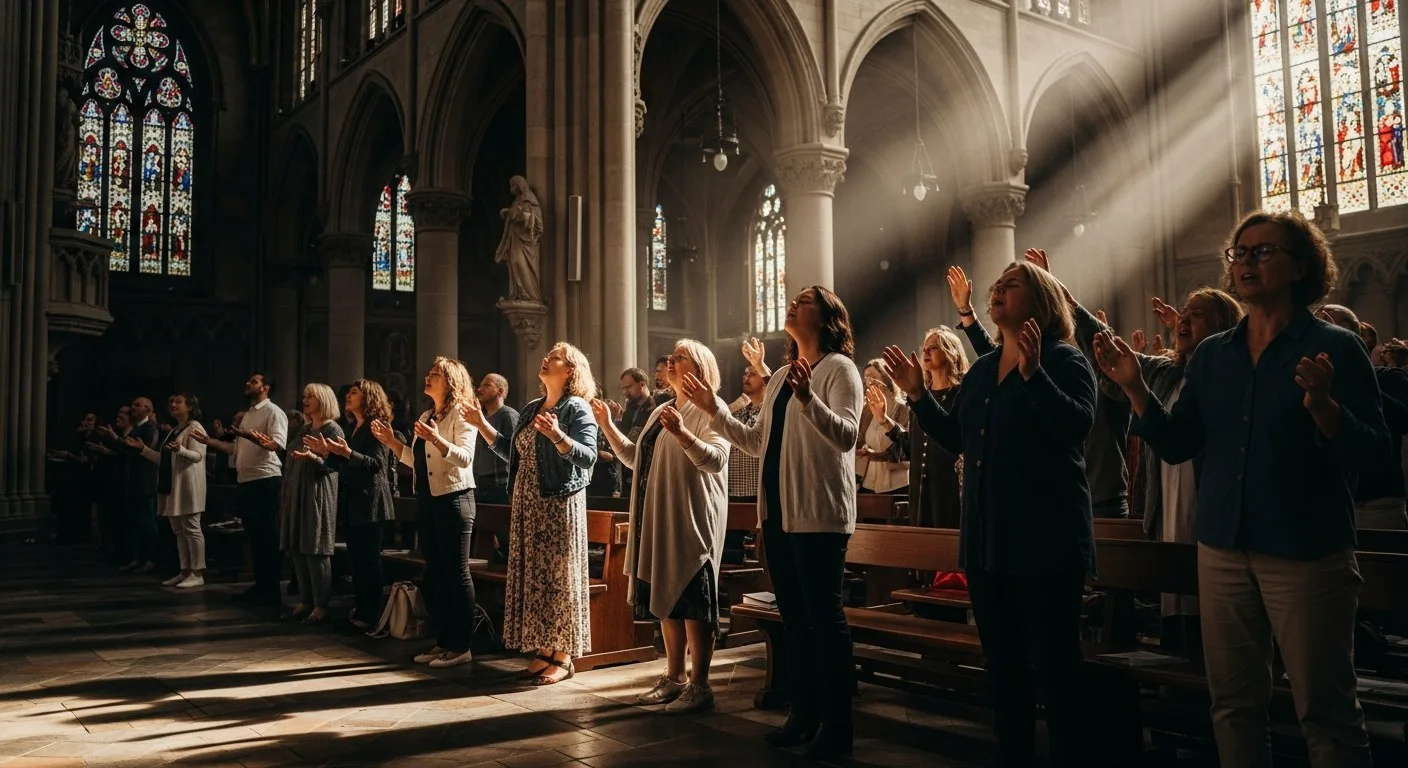
The Soul's Deepest Longing
We've all known those quiet, predawn hours when the house is still and the world is asleep, yet our minds race with questions that feel heavier than the night itself. In those moments a burden may press down, a decision looms large, or a gnawing sense of emptiness whispers, "Is this all there is?" We try to find footing in the shifting sands of circumstance, searching for purpose, meaning, and something solid and true. It is then—stripped of our usual distractions—that the soul's deepest longing for connection and significance rises to the surface, a silent plea for something beyond ourselves. The Psalmist captures this thirst: "My soul panteth [Hebrew צָמַא, *tsamah*] after God" (Psalm 42:2), reminding us that our yearning points to a source far greater than our own limited understanding.
Into this very human ache Christ speaks, not with a command to strive harder, but with a prayer of profound intimacy for His own. As He prepares to return to the Father, He looks out at His disciples and then through them to us, uttering words that reveal the heart of God's "requirement" for worship. He says, "And now I am no longer in the world; these things I speak, that they might have My joy made full in themselves" (John 17:13, NASB), a promise that believers would share the divine joy (*Greek χαρά, *chará*) He enjoys. This is not a demand for something He lacks; rather it is an outpouring of His desire to secure for us a joy so complete that it can only be experienced in union with Him and the Father. The verse connects the New Covenant promise of relational intimacy to the Old Covenant call to love God with all our heart, soul, and mind (Deut 6:5), showing continuity in God's redemptive plan.
Responding to a Rescuing Love
So, how does this profound truth about Christ's self-sanctification and our subsequent sanctification play out in the everyday, messy reality of our lives? It means that when you wake up feeling inadequate, when the kids are squabbling, when the bills pile up, or when you falter yet again in that struggle you thought you'd overcome, your worth isn't diminished, and God's love isn't withdrawn. Instead of striving to fix yourself or to muster up enough goodness to feel acceptable, you turn your heart back to the one who has already fixed everything, the one who has already declared you holy through His sacrifice. Worship, in this context, becomes less about a scheduled activity and more about a constant posture of the heart, a moment-by-moment recognition of His active presence and unchanging grace, even amidst the chaos and imperfection of our human experience.
My dear friend, you don't have to try and earn what's already been freely given to you. You can rest. Christ's keeping, the very essence of His prayer in John 17:15, "I pray not that thou shouldest take them out of the world, but that thou shouldest keep them from the evil," is not a passive hope but an active, ongoing work. He is continually interceding for you, protecting you, and preserving you in this broken world, guarding your heart and mind from the evil that seeks to ensnare. You worship not because you're strong enough to keep yourself, but because He is mighty enough to keep you, upholding you by His own name and securing your place in His eternal kingdom. Let this truth sink deep into your soul, allowing His unwavering commitment to you to be the bedrock of your peace and the wellspring of your gratitude.
Walking in this grace day by day means cultivating a keen awareness of His presence, a willingness to acknowledge His hand in the big moments and the small, in the triumphs and the trials. It means allowing His truth, which is His word, to continually sanctify you, to reshape your thinking, to renew your spirit, and to guide your steps. When John 17:17 declares, "Sanctify them through thy truth: thy word is truth," it's a powerful reminder that our growth in holiness isn't a self-improvement project but a supernatural work powered by His revealed wisdom. We worship by living in the light of this truth, allowing it to penetrate every facet of our being, transforming us from the inside out, making us more like Him, and enabling us to truly experience the joy He prayed for us to have.
I pray not that thou shouldest take them out of the world, but that thou shouldest keep them from the evil.— John 17:15, KJV
Our Unshakeable Foundation
Let's stand firm, then, on the unshakeable bedrock of these KJV truths, for they form the very foundation of our faith and the reason for our worship. We've seen Christ's tender prayer for our unity and joy, a desire rooted in the Father's heart, and His powerful intercession to keep us from evil in a world that hates His followers. We've borne witness to His ultimate self-sanctification on the cross, a profound act of love in Matthew 27 that secured our own sanctification and made us holy in God's sight. These aren't abstract theological concepts; they are the living, breathing promises of God, the unyielding ground upon which our hope is built, making our worship not a desperate plea, but a confident, joyful response to His finished work and His unwavering faithfulness.
So, let's guard our hearts against the subtle whisper that tries to draw us back into the chains of performance, the insidious thought that we must somehow earn God's favor or prove our worthiness through our own efforts. Worship, in its truest form, is the antithesis of religious guilt and striving; it is the grateful overflow of a soul captivated by the magnitude of God's grace, freely given through Christ. Never forget that His 'requirement' for worship is for *our* good, for our deepest joy and our eternal security, a beautiful invitation to live in the freedom and unity He prayed for. We worship because He is worthy, yes, but also because in Him alone do we find our wholeness, our purpose, and the fulfillment of every longing within our souls.
Sanctify them through thy truth: thy word is truth.— John 17:17, KJV
✨ What To Do Today
- Journal prompt: Reflect on a time you tried to earn God's favor. How does Christ's prayer in John 17:13 and His sacrifice in Matthew 27:31 reframe your understanding of His love and your worth?
- Scripture meditation: Read John 17:11-20 and Matthew 27:31-40 slowly. Ask God: 'How does Your active keeping and Christ's finished work invite me to deeper, more joyful worship today?'
- Practical step: Today, identify one area where you feel pressure to perform for God. Consciously lay that expectation down and instead, thank Him for His complete work on the cross.
- One act of surrender: Identify one area of self-reliance, perhaps a stubborn problem you've been trying to solve on your own. Name it, lay it down, and cling to John 17:15, trusting Him to keep you from evil and to guide your steps.
My dear friends, remember this profound truth: God's desire for your worship isn't a sign of His neediness, but an overflowing testament to His boundless love for you, a love so vast He sent His Son to secure your joy and your eternal belonging. You are not called to strive, but to receive; not to perform, but to respond with gratitude to the One who has already done everything necessary for your salvation and sanctification. Let your life, in its entirety, become a living testament to His preserving grace, a beautiful, continuous act of worship, rooted in the finished work of Christ and nurtured by the unwavering truth of His word, knowing that He keeps you, He loves you, and He desires your joy above all else.