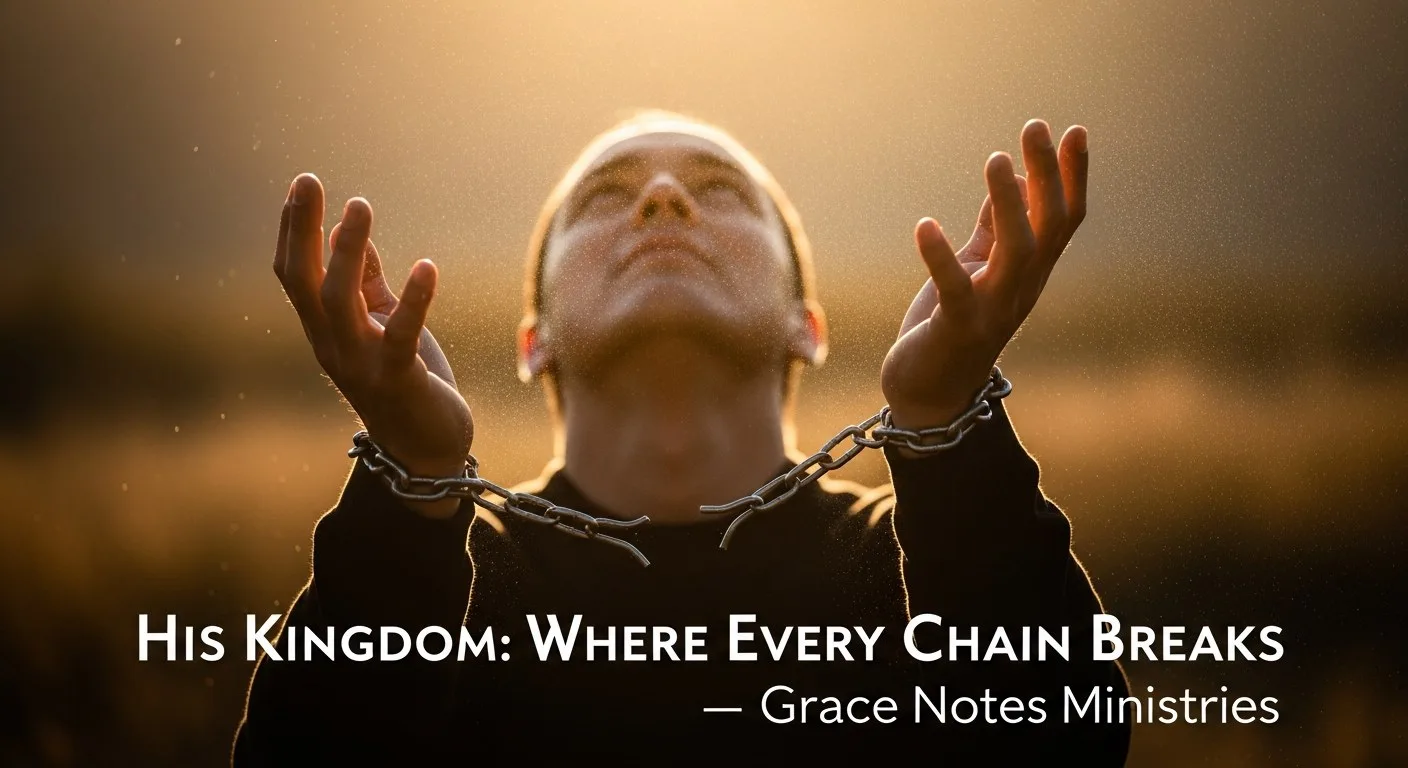
Sometimes the questions that haunt us are not shouted from rooftops but whispered in the quiet hours before dawn, those gentle stirrings that rise when our defenses are down. You may be wrestling with a troubling Old‑Tes...
- The Weight of Unanswered Questions: Trusting God's Word through life's deepest trials and seasons of waiting.
- The Yoke of Legalism and the Freedom of Grace: Trusting God's Word through life's deepest trials and seasons of waiting.
- Living in Liberating Servitude: Trusting God's Word through life's deepest trials and seasons of waiting.
The Weight of Unanswered Questions
Sometimes the questions that haunt us are not shouted from rooftops but whispered in the quiet hours before dawn, those gentle stirrings that rise when our defenses are down. You may be wrestling with a troubling Old‑Testament narrative—a story that seems to clash with the character of the God who is Love—leaving a knot of unease in your heart. Yet the very difficulty you feel points forward to the redemptive work of Christ; the covenant promises in Exodus and Deuteronomy anticipate a Messiah who will bring true liberation (the theological bridge). As Romans 6:22 reminds us, “the fruit of righteousness leads to sanctification…and the end result is eternal life,” affirming that God breaks every bond that enslaves us. This is not a failure of faith but the honest cry of a soul seeking the light of truth amidst mystery. In that pursuit we are invited to join the lineage of Jacob, who wrestled with God at Peniel (Genesis 32:28 KJV), emerging transformed.
In His earthly ministry Jesus confronted the oppressive structures of His day, not by defending them but by unveiling a radically new order. He declared to His disciples, “But he that is greatest among you shall be your servant,” (Matthew 23:11)—where “servant” (Greek doulos) carries the weight of humble obedience. By redefining greatness, He turned the worldly paradigm upside‑down, showing that true authority rests in self‑sacrificial love rather than dominion. Rather than merely “walking in the lightness of His love,” we are called to experience the tangible outpouring of His grace through daily acts of mercy and forgiveness. This invitation invites us to taste the kingdom that Christ inaugurated, a kingdom where every chain is broken and every heart set free. In responding, we participate in the very mission that dismantles human oppression with divine compassion.
This divine reversal, spoken from the lips of God incarnate, instantly shifts our perspective from human systems of control to God's order of grace and liberation. The world measures greatness by wealth, influence, and power, but Christ declares a kingdom where exaltation flows from abasement. To truly walk in that kingdom is to receive the tangible experience of His grace—feeling its healing power as it shatters the chains of fear, guilt, and injustice. The New‑Testament fulfillment of the covenant promises that the Messiah would bring freedom to those bound (cf. Psalm 68:20, “He who is our God shall rescue us from the hands of sinners”). Thus, every oppressive structure is exposed and dismantled by a love that offers life instead of bondage. As we embrace this radical love, we become instruments of the very freedom that Christ modeled.
The Yoke of Legalism and the Freedom of Grace
The very real 'slavery' that Jesus consistently railed against was the bondage of religious performance, the crushing weight of human-made rules and traditions that suffocated the spirit and shut people out of God's grace. He saw the scribes and Pharisees, those who claimed spiritual authority, not as liberators but as enslavers, piling heavy burdens upon the backs of the common people, burdens they themselves wouldn't lift a finger to move. Their meticulous adherence to outward ritual created a false sense of righteousness, making them blind guides who loved the gold of the temple more than the temple itself, the gift more than the altar that sanctified it, twisting God's law into a tool of control and self-exaltation.
Jesus didn't mince words when confronting this spiritual tyranny, pronouncing a series of "woes" upon these religious hypocrites, not because they were sinners, but because they actively prevented others from entering the kingdom of heaven with their rigid legalism. He saw past their long prayers and their zeal to make proselytes, identifying the true tragedy: they devoured widows' houses and made their converts "twofold more the child of hell than yourselves." This wasn't just about their personal sin; it was about their system, a system that trapped people in a cycle of never-ending obligation and guilt, a form of spiritual bondage far more insidious than any physical chain, because it held the soul captive.
It's into this landscape of spiritual captivity that Christ steps with a message of profound liberation, a message beautifully encapsulated in His encounter with the self-righteous Pharisees who questioned His table fellowship with sinners. "They that are whole need not a physician; but they that are sick," He declared with unwavering clarity, effectively dismantling the entire edifice of earned righteousness. He didn't come for those who believed themselves already good enough, already righteous by their own efforts; He came for the broken, the lost, the sick, the ones who knew their desperate need for a Healer. This is the heart of the New Covenant, a radical departure from the old, as profound as putting "new wine into old bottles," an act that would burst the old wineskins of legalism and ritual, ushering in an era of grace where freedom, not bondage, is the hallmark of relationship with God.
But woe unto you, scribes and Pharisees, hypocrites! for ye shut up the kingdom of heaven against men: for ye neither go in yourselves, neither suffer ye them that are entering to go in.
Woe unto you, scribes and Pharisees, hypocrites! for ye shut up the kingdom of heaven against men: for ye neither go in yourselves, neither suffer ye them that are entering to go in.— Matthew 23:13, KJV
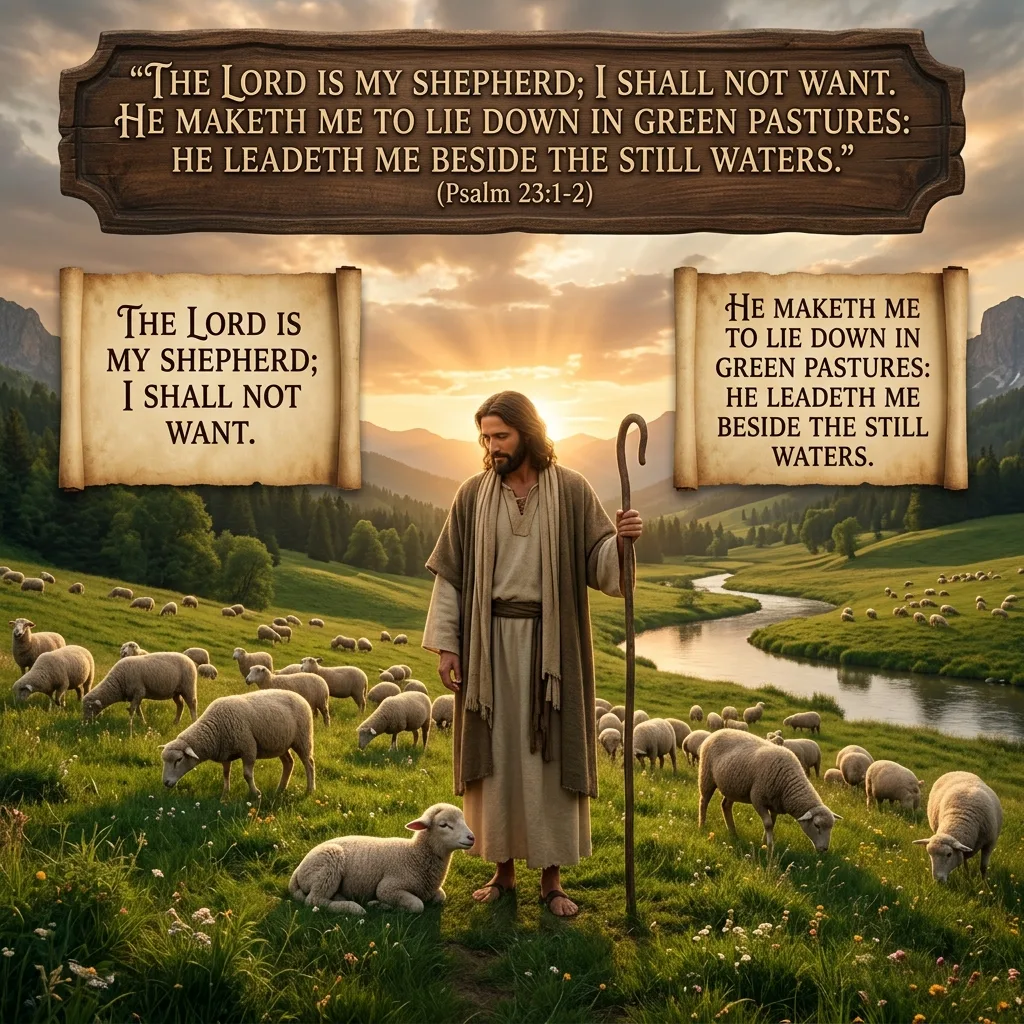
Living in Liberating Servitude
So, what does this radical freedom look like in the grit and grind of our daily lives, far from the ancient temples and dusty roads? It means waking up each morning knowing that your worth isn't tied to your performance, your achievements, or even your failures, but is eternally secured in Christ's finished work. It means when the pressures of life squeeze you tight, whether it's the demands of a job, the complexities of family relationships, or the quiet anxieties that try to steal your peace, you don't have to carry the burden of proving yourself. You're free to serve, not out of a frantic need to earn love or acceptance, but from an overflow of a love already given, a grace already received, a peace that transcends all understanding, making every act of service a genuine expression of gratitude and joy.
My friend, you don't need to justify God's ways to others or even to yourself by trying to make sense of human systems through His divine lens; His grace has already justified you. The answer to the deep, troubling questions about God's character isn't found in intellectual gymnastics or strained apologies for human brokenness, but in the person of Jesus Christ, who perfectly embodied God's heart. He calls us to rest, to lay down the heavy yoke of self-reliance and the crushing weight of religious expectations, and to simply receive the unconditional love and complete forgiveness He offers. You are not meant to be a slave to anything—not to sin, not to fear, not to human systems, and certainly not to the endless striving of religion. You are free in Him.
To walk in this grace day by day means embracing the beautiful paradox that true freedom is found in surrendering to Him, in willingly becoming His servant, which is the complete antithesis of human slavery. It’s not a forced submission but a joyful allegiance, a loving choice to follow the One who gave everything to set us free. This is the ultimate liberation: to live no longer for ourselves, driven by fear or obligation, but for Christ, compelled by His boundless love, recognizing that in His kingdom, servanthood is the path to exaltation, and every chain, whether physical, emotional, or spiritual, is utterly broken by His nail-pierced hands.
They that are whole need not a physician; but they that are sick.
They that are whole need not a physician; but they that are sick.— Luke 5:31, KJV
Standing on Solid Ground
The scriptural baseline for our understanding of God's heart is immovably anchored in the person and teachings of Jesus Christ, who, by His life, death, and resurrection, established a kingdom where the least are the greatest and the servant is exalted. He systematically dismantled the oppressive structures of His time, not with political revolution, but with a spiritual one, showing us that the God of Abraham, Isaac, and Jacob is ultimately a God of liberation, always moving His people from bondage to freedom. Any human institution that oppresses, enslaves, or demeans another human being stands in direct opposition to the spirit of Christ and the radical, liberating love of God. Our God does not endorse; He redeems, He sets free, and He calls us to do the same.
So let us stand firm on this solid ground, guarding our hearts against the insidious pull of legalism, the subtle whispers of self-righteousness, or the temptation to justify God's character through the broken lenses of human history or flawed interpretations. The cross did what religion could never accomplish: it broke every chain, canceling all debt, and proclaiming an everlasting freedom that is ours, not by our striving, but by His grace. Never return to the chains of performance or religious guilt, for Christ has made you free; stand therefore in the liberty wherewith Christ hath made us free, and be not entangled again with the yoke of bondage.
And whosoever shall exalt himself shall be abased; and he that shall humble himself shall be exalted.
And whosoever shall exalt himself shall be abased; and he that shall humble himself shall be exalted.— Matthew 23:12, KJV
✨ What To Do Today
- Journal prompt: Reflect on any areas in your life where you feel a 'yoke of bondage,' whether from past hurts, current anxieties, or self-imposed expectations. How does Christ's call to humility and servanthood offer a path to release?
- Scripture meditation: Read Matthew 23:11-12 and Luke 5:31-32 slowly. Ask God: 'Where am I trying to exalt myself, or where do I still believe I need to be 'whole' for You?'
- Practical step: Identify one small act of humble service you can perform today for someone else, without seeking recognition or reward. Let it be a tangible expression of Christ's servanthood.
- One act of surrender: Name one area where you've been trying to justify yourself or earn God's favor. Lay it down before Him, cling to Luke 5:31, and receive His grace as the only physician you need.
My dear friends, remember this always: the God we serve is not a God who binds, but a God who breaks every bond, a God who liberates the captive, and a God whose heart yearns for the complete freedom of His beloved children. His kingdom is not built on human power structures or oppressive systems, but on the radical, subversive love of a Savior who came not to be served, but to serve, and to give His life as a ransom for many. Rest in that profound, beautiful truth today, letting His grace wash over every lingering question and every heavy burden. Walk in the lightness of His love, knowing that in Him, you are utterly free, completely cherished, and eternally secure, living out the glorious freedom He purchased for you on the cross.