It was 3 a.m., the house empty, the clock ticking like a heartbeat in the dark. I lay awake, wondering why my own name felt heavy, as if it were a burden placed by the world. The wind whispered through cracked windows, a...
- The Echo of a New Name in the Wilderness: Trusting God's Word through life's deepest trials and seasons of waiting.
- Renaming as the Curtain of Covenant: Trusting God's Word through life's deepest trials and seasons of waiting.
- Living Out a Renamed Identity in Everyday Life: Trusting God's Word through life's deepest trials and seasons of waiting.
The Echo of a New Name in the Wilderness
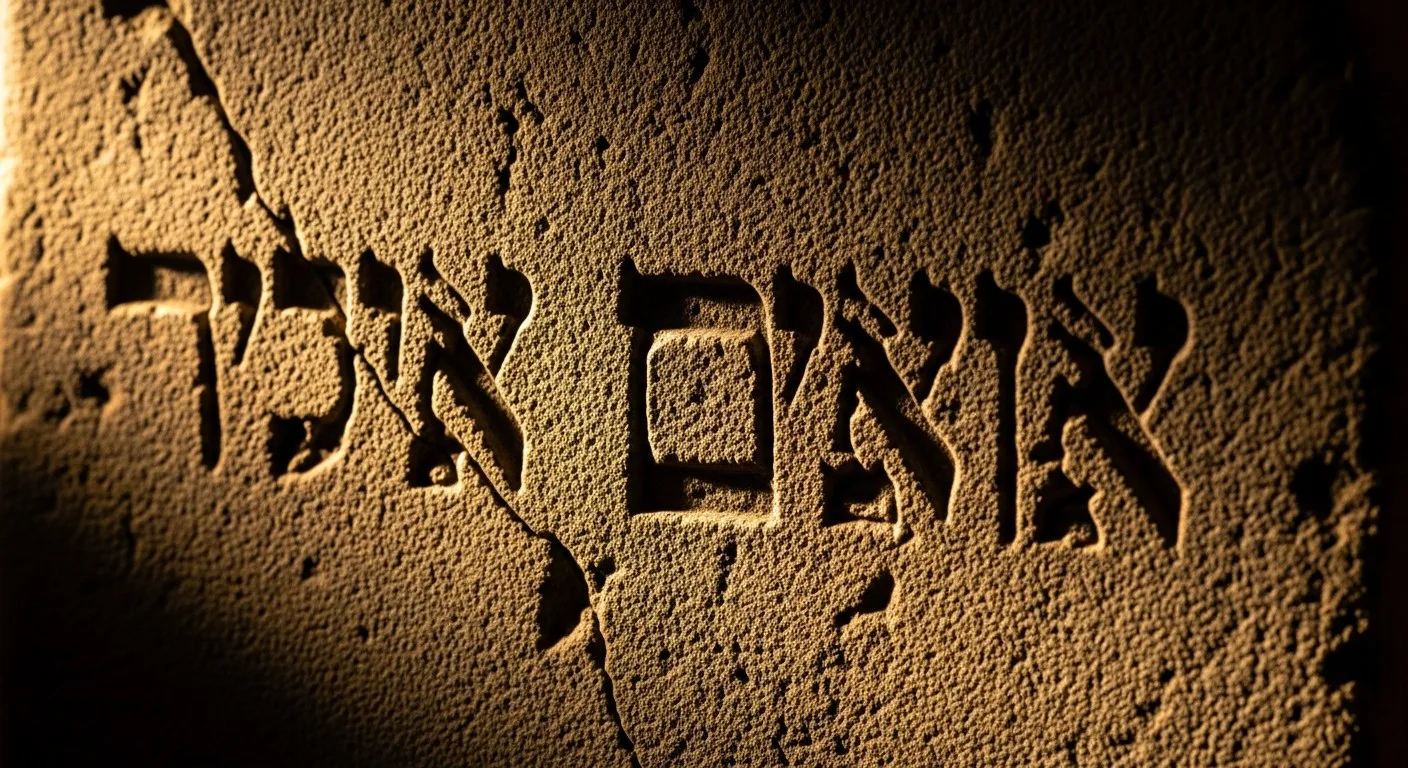
It was 3 a.m., the house empty, the clock ticking like a heartbeat in the dark. I lay awake, wondering why my own name felt heavy, as if it were a burden placed by the world. The wind whispered through cracked windows, and I remembered Abram hearing God's call, "Abram," and his heart leapt. The night seemed to ask why the Almighty would bother with a mere syllable, and I felt my own doubts rise like smoke. Yet the Scripture reminded me that a name carries covenant, promise, and destiny, not just identity.
The narrative of Genesis 17:5‑6 records God's spoken word, "Neither shall thy name be called Abram any more, but thy name shall be Abraham; for a father of many nations have I made thee." In that moment the Almighty did not merely rename; He declared a purpose, a divine vocation. The verse shows that God's renaming is always accompanied by a covenantal promise—"I have made thee a father of many nations." The renaming is the seal of a new relationship, not an arbitrary label. Thus Christ's words to the Pharisees, "Render unto Caesar the things which are Caesar's; and unto God the things that are God's," (Mark 12:17) remind us that what belongs to God carries a different weight and identity.
When we read the whole of Genesis 17, we see that God's renaming is a transformation point. Abraham's new name marks the shift from a wandering patriarch to the father of promise, and it is anchored in God's covenant. The name Abraham means "father of many," a meaning that could not have been true for Abram without God's intervention. Likewise, when God called Jacob "Israel," He signified a new nation set apart for His glory. The pattern is clear: God's change of name signals a divine re‑creation, an invitation to step into the destiny He has prepared.
"And Abram called the name of the Lord that appeared unto him, THE LORD GOD ARISETH!"— Genesis 12:8, KJV
Renaming as the Curtain of Covenant
Human effort seeks identity through titles, achievements, and self‑made reputations, yet Scripture reminds us that such foundations are as sand under a storm. The patriarch Jacob clung to his birth name, but after wrestling with the Divine (Genesis 32:28 KJV), God said, “Your name shall no longer be Jacob, but Israel (Hebrew: Yisra’el, ‘he who strives with God’),” a renaming that sealed the covenant promise. The Mosaic Law, with its intricate rituals and animal sacrifices (Leviticus 17:11 KJV), pointed outwardly to holiness but could not rewrite the heart’s name before the Almighty. In other words, the sacrificial system was a shadow of the deeper transformation that God would later accomplish through renaming. Thus, the Old Testament sacrificial system prepares the way for a far richer reality: God’s internal renaming that changes a person’s very identity.
Christ entered history and declared that the old designation “sinner” is cancelled by His blood. He says, “If the Son therefore shall make you free, ye shall be free indeed” (John 8:36 KJV), and the freedom He offers includes a new identity as “children of God” (Romans 8:14 KJV). The apostle Paul reminds us, “I have called thee in righteousness” (2 Timothy 2:19 KJV), indicating that the Spirit’s seal is a divine name‑stamp. This New Testament renaming is not merely a label; it is the seal of redemption that supersedes any human title. When believers receive this spiritual imprint, they become participants in the covenantal promise first given to Abraham.
The theme of renaming reverberates in Acts 13:33, where Paul cites Psalm 2:7, “Thou shalt receive the blessing of Abraham,” showing that the name Abraham (Hebrew: Avraham, ‘father of many’) carries covenantal weight. By linking believers to Abraham’s name, Paul demonstrates that the New Covenant inherits the same divine promise (Galatians 3:29 KJV). The name change, therefore, is not decorative but covenantal—each divine renaming signals that God has entered into a binding relationship with the person. As the covenant progresses from Abraham’s earthly promise to Christ’s redemptive work, our new name places us within the same unbreakable family of promise. In every scriptural instance where a new name appears, we see God’s purpose: to bind us irrevocably to His redemptive plan.
"Therefore, if anyone is in Christ, the new creation has come: the old has gone, behold, the new has come."— 2 Corinthians 5:17, KJV

Living Out a Renamed Identity in Everyday Life
Imagine a mother named Sarah (Hebrew: Sarai, ‘my princess’), weary after a long day, when her child calls her “Mama” instead of the formal “Mrs. Smith.” The shift in address instantly changes the relational weight, infusing the moment with love, trust, and belonging. Likewise, when God renames a person—calling them “beloved child” (Isaiah 43:4 KJV) or “son of God” (John 1:12 KJV)—the everyday rhythm of work, bills, and fatigue is transformed by divine intimacy. The apostle Paul exhorts us to “walk worthy of the calling” (Ephesians 4:1 KJV), meaning that our daily actions should reflect the identity we have received in Christ. Whether we are cooking dinner, serving a neighbor, or praying at night, each act becomes an offering that honors the new name God has given us. In this way, the renamed identity is lived out not as a distant theological concept but as a tangible reality that shapes every ordinary moment.
Standing on the Unchanging Name of Christ
All of Scripture points to a single, unchanging name that anchors every other: Jesus. In Philippians 2:9‑11 we read, "Wherefore God also hath highly exalted him, and given him a name which is above every name; That at the name of Jesus every knee should bow..." The passage declares that Christ's name alone carries universal authority and redemption. When we cling to our own names, we forget that the true name by which we are saved is Jesus. The permanence of His name provides a firm foundation for believers whose identities might otherwise shift with circumstance.
The danger of returning to self‑made titles lies in the subtle theft of glory. When we begin to trust our own achievements, we echo the pride of the Pharisees who tried to trap Jesus with a question about tribute. Their reliance on human wisdom led them into ruin, while Christ's response pointed to the higher authority of God's name. The warning is clear: if we replace God's naming work with our own, we become enslaved to performance and guilt. The gospel calls us back to the assurance that Christ's name alone secures our standing.
"Render unto Caesar the things which are Caesar's; and unto God the things that are God's."— Mark 12:17, KJV
✨ What To Do Today
- Journal prompt: Write about a name you carry—family, work, or nickname—and ask God how He would rename you for His purpose.
- Scripture meditation: Read Genesis 17:1‑8 and Mark 12:15‑17; ask God: "What new identity am I called to walk in today?"
- Practical step: Choose one area of life where you rely on your own reputation; speak aloud, "I am a child of God," and act from that truth.
- One act of surrender: Identify a self‑reliant habit, name it publicly (e.g., "I surrender my need for approval"), and cling to Philippians 2:9‑11.
As we close, remember that every name God inscribes upon a heart is a promise sealed with His blood. The old labels we cling to—"failed employee," "unworthy parent," "lonely sinner"—are replaced by the glorious title of "child of God." That replacement does not erase our past; it redeems it, weaving each stumble into the tapestry of redemption. Walk forward confident that the name God has placed upon you is unchangeable, unfailing, and sufficient for every trial. May the peace of Christ, who gave His name that we might have life, guard your steps today.