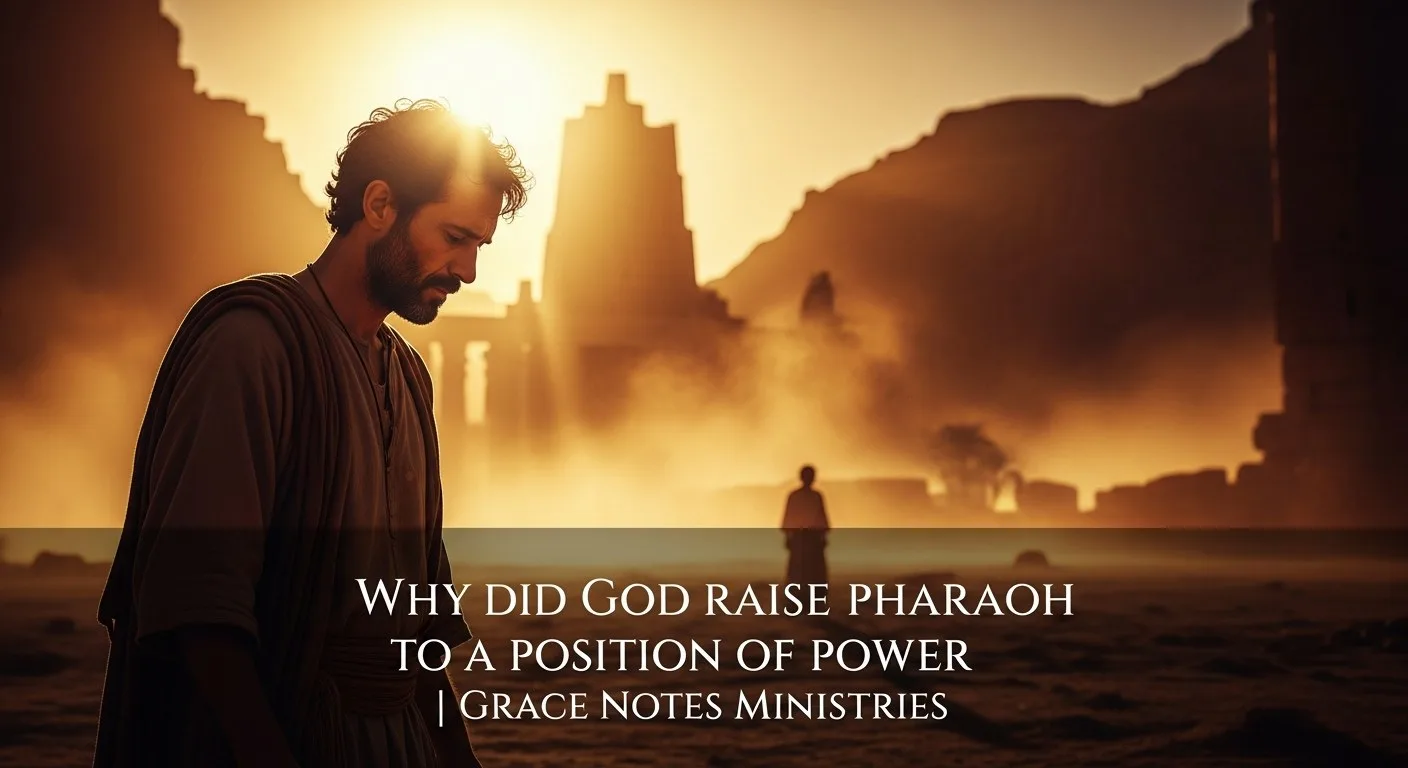
It was the hour before dawn, the desert air cool against my skin as I sat on a stone wall watching the campfire’s embers sputter. A lone camel passed, its silhouette stretching like a prayer across the sand, and I felt m...
- The Hardened Heart of Pharaoh: Trusting God's Word through life's deepest trials and seasons of waiting.
- Divine Purpose in a World of Rebellion: Trusting God's Word through life's deepest trials and seasons of waiting.
- Living Out God's Sovereign Mercy: Trusting God's Word through life's deepest trials and seasons of waiting.
The Hardened Heart of Pharaoh
It was the hour before dawn, the desert air cool against my skin as I sat on a stone wall watching the campfire’s embers sputter. A lone camel passed, its silhouette stretching like a prayer across the sand, and I felt my own stubbornness rise—a prideful whisper urging me to decide without counsel. The night reminded me of Pharaoh’s palace, where the Nile shone like a mirror for a king who trusted his own wisdom above all counsel. In that quiet I sensed the tension between human self‑reliance and divine direction that once clashed in Egypt. The scene pressed me to ask: why would the Almighty place a hard‑hearted ruler at the helm of his own people?
The Scriptures answer with a precise portrait: Exodus 9:16 (KJV) frames Pharaoh not as an accidental tyrant but as a divine instrument; God deliberately elevated him so that His power would be unmistakably displayed (Hebrew root חָזַק, *chazaq*, “to strengthen”). The New Testament mirrors this purpose in Mark 11:15 (KJV), where Jesus clears the temple, declaring that it has become a den of thieves—a judgment against those who have turned God’s house into a place of corruption. Both passages reveal that God can use even a hardened heart to bring about the revelation of His glory, linking the Old‑Testament judgment on Egypt with the New‑Testament cleansing of Jerusalem.
Theologically, the raising of Pharaoh fulfills a pattern where God lifts a sinner to expose sin. By granting him authority, He set the stage for miracles that would shatter Egypt's false security and point Israel to a living God. The act is not an endorsement of oppression but a strategic placement that forces the divine narrative forward (Greek *σκληρόω*, skleróō, “to harden”). When Pharaoh's heart was hardened, the plagues unfolded as unmistakable signs that Israel's deliverer was not a mortal king but the Almighty Himself. Thus, each act of oppression becomes a canvas on which God's justice is painted in vivid color, and the covenant promise of deliverance (cf. Psalm 136:12 KJV—“Who gave the Israelites a deliverer among them”) finds its dramatic expression.
"Nevertheless I will raise thee up, that thou mayest show forth My signs and wonders in the midst of Egypt: but unto thee will I bring a great judgment, that My people may go forth from hence."— Exodus 9:16, KJV
Divine Purpose in a World of Rebellion
Consider the moment when Moses stood before Pharaoh, staff in hand, heart pounding like a drum. The Egyptian ruler sat on his throne, surrounded by golden ornaments that glittered as if to proclaim his own greatness. Yet Moses spoke of a God whose power could split the sea, not of any earthly wealth. The scene illustrates how human ambition crumbles when confronted by divine purpose; self‑reliance is a house built on sand. When we lean on our own cunning, we miss the chance to witness God's hand moving mightily through history.
The finished work of Christ overturns any notion that we must earn favor through power. In Mark 11:15 Jesus declares, "Is it not written, My house shall be called of all nations the house of prayer? but ye have made it a den of thieves." The same voice that rebuked the temple merchants also condemns any system that elevates a ruler for personal glory apart from God's will. Christ's sacrifice shows that true authority comes only when we submit our ambitions to the Cross.
Examining Romans 9:20, we hear the apostle ask, "Shall the thing formed say to him that made it, Why hast thou made me thus?" The verse underscores that God's sovereign choice often appears puzzling to human eyes, yet it serves a higher narrative. When God raised Pharaoh, He was not merely allowing cruelty; He was orchestrating a stage where His power could be unmistakably displayed. The plagues, the parting of the Red Sea, and the subsequent exodus all point back to a Creator who can use even the most obstinate heart for His glory.
"And he taught, saying unto them, Is it not written, My house shall be called of all nations the house of prayer? but ye have made it a den of thieves."— Mark 11:15, KJV
Living Out God's Sovereign Mercy
In the kitchen of my own home, I watch my teenage son wrestle with a stubbornness that mirrors Pharaoh's pride; he refuses to put his phone away, eyes fixed on the screen as if it were a throne. I am tempted to discipline him with force, yet I recall that God raised Pharaoh not to bless his tyranny but to bring about a greater revelation of divine mercy. Romans 9:19‑21 (KJV) reminds us, “Then shall he who potters have power over the clay…?—so also He hath mercy on whomever He will.” This truth softens my heart, showing that a hardened stance can become the soil in which God's redemptive grace is sown. As I pray for my son, I ask the Lord to use his resistance as a backdrop against which His love shines brighter, just as the plagues highlighted God's faithfulness to Israel. In doing so I join a long line of believers who trust that God’s sovereign purposes can transform even our most stubborn moments into testimonies of His mercy.
Anchored in His Unfailing Word
The foundation of all these reflections rests on the immutable promise that God's purposes endure beyond any human scheme. Exodus 14:21 shows the sea parting at God's command, not because of any human strategy but because His word is unshakable. When we anchor our hope in that same divine reliability, the shifting sands of power and oppression lose their terror.
A final warning rings clear: if we return to the mindset that our own cleverness can replace God's sovereignty, we invite chaos back into our lives. The danger lies in believing that we can out‑maneuver the very One who raised Pharaoh for a holy cause. Let us, therefore, cling to Scripture as our compass, remembering that God's authority supersedes any earthly throne.
"But who art thou, O man, that repliest against God? shall the thing formed say to him that made it, Why hast thou made me thus?"— Romans 9:20, KJV
✨ What To Do Today
- Journal prompt: Where in your life right now is God asking you to trust His sovereignty over a situation that feels out of control or unjust? Write two sentences about it.
- Scripture meditation: Read Exodus 9:13–16 slowly, then Romans 9:19–21. Ask God: "What are You displaying in this season of my life?"
- Pray for a "Pharaoh" in your world — someone whose stubbornness or opposition frustrates you. Ask God to reveal what He may be doing through them.
- One act of surrender: Identify one area where you are relying on your own cleverness instead of God’s word. Name it, lay it down, and cling to a single Scripture as your anchor today.
As the sun climbs over the horizon, casting gold upon the river where Pharaoh once stood, we see that God's hand lifts even the oppressor to fulfill a divine narrative. The same hand who raised Pharaoh also raises us from our pride, inviting us into the freedom purchased by Christ's blood. May we walk each day with eyes fixed on that sovereign purpose, trusting that every circumstance—no matter how harsh—serves a greater redemption. Let our lives echo the psalmist's cry, "And he raised up Pharaoh, and delivered the people of Israel," knowing that our deliverance flows from the same source. In this assurance, may we rest, rejoice, and proclaim that God's ways are higher than our understanding.