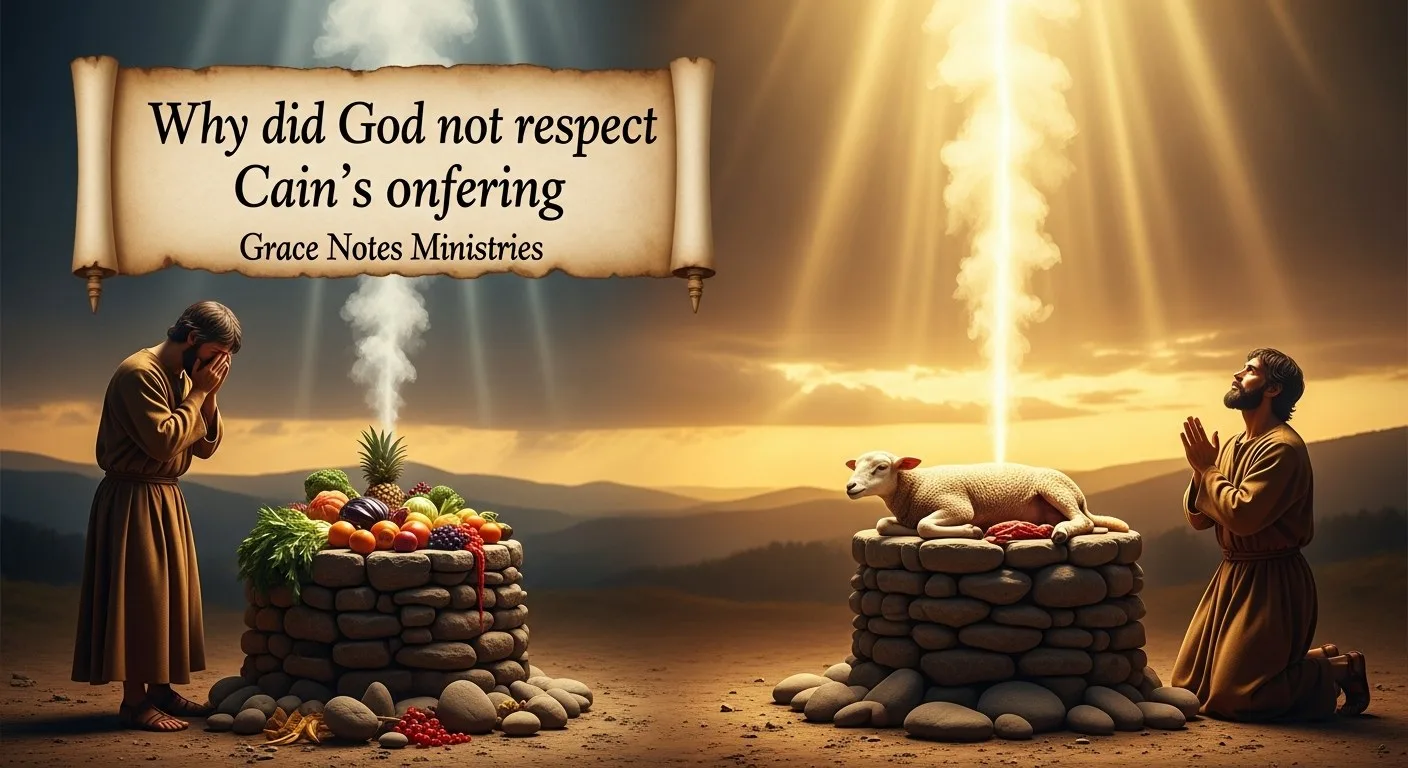
The account of Cain and Abel is one of the most profound narratives in the early pages of Holy Scripture. It sets a foundational precedent for how humanity must approach a holy God. While both brothers brought an offering to the Lord, God accepted one and rejected the other. To understand why God did not respect Cain's offering, we must look closely at the biblical text, the nature of their sacrifices, and the spiritual condition of their hearts.
The account of Cain and Abel is one of the most profound narratives in the early pages of Holy Scripture. It sets a foundational precedent for how humanity must approach a holy God. While both brothers brought an offerin...
- The Difference Between the Offerings: Trusting God's Word through life's deepest trials and seasons of waiting.
- The Heart of the Matter: Trusting God's Word through life's deepest trials and seasons of waiting.
- God's Gracious Warning to Cain: Trusting God's Word through life's deepest trials and seasons of waiting.
The Difference Between the Offerings
The Genesis account details the specific offerings brought by each brother. Cain, a tiller of the ground, brought the fruit of his labor. Abel, a keeper of sheep, brought a blood sacrifice from his flock.
"And in process of time it came to pass, that Cain brought of the fruit of the ground an offering unto the LORD. And Abel, he also brought of the firstlings of his flock and of the fat thereof. And the LORD had respect unto Abel and to his offering: But unto Cain and to his offering he had not respect. And Cain was very wroth, and his countenance fell." (Genesis 4:3-5)
Abel’s offering required the shedding of blood, acknowledging the gravity of sin and the necessity of substitutionary atonement. Cain’s offering, while representing hard work, was the product of the ground which God had previously cursed. It was an offering of human effort rather than divine prescription.
The Heart of the Matter: Faith vs. Works
The physical difference in the offerings pointed to a deeper, spiritual reality. The New Testament provides the divine commentary on this event, revealing that the primary distinction lay in the faith of the presenter.
"By faith Abel offered unto God a more excellent sacrifice than Cain, by which he obtained witness that he was righteous, God testifying of his gifts: and by it he being dead yet speaketh." (Hebrews 11:4)
Abel’s sacrifice was offered in faith—obediently responding to God's revealed will. Cain’s offering lacked this faith. He approached God on his own terms, presenting the work of his own hands. This represents the eternal divide between the religion of human works and the true faith of divine grace.
God's Gracious Warning to Cain
Even after Cain's offering was rejected, God did not immediately cast him off. Instead, the Lord approached Cain with a gracious warning and an invitation to repentance, demonstrating His long-suffering nature.
"If thou doest well, shalt thou not be accepted? and if thou doest not well, sin lieth at the door. And unto thee shall be his desire, and thou shalt rule over him." (Genesis 4:7)
God assured Cain that acceptance was entirely possible if he would simply submit to God's way. Rather than humbling himself, Cain allowed anger, pride, and jealousy to fester, ultimately leading to the murder of his brother. Cain's reaction proved that his heart was far from God from the very beginning.
The Ultimate Sacrifice of Jesus Christ
The contrast between Cain and Abel points directly to the Gospel. We cannot approach God through our own merits, good deeds, or the "fruit of our ground." The only way to find acceptance with God is through the blood of the ultimate Sacrifice, Jesus Christ.
Like Abel, our faith must rest entirely on the finished work of Christ. When we trust in His shed blood, we are declared righteous in the sight of God. Let us offer our lives in response to this great salvation, presenting ourselves to Him in true faith and obedience.
"I beseech you therefore, brethren, by the mercies of God, that ye present your bodies a living sacrifice, holy, acceptable unto God, which is your reasonable service." (Romans 12:1)