
The clock struck three, and the night wind rattled the shutters of my old farmhouse. I stood on the porch, eyes fixed upon the empty field where my father once led his stubborn ox to the mizbeach (altar, Hebrew מִזְבֵּחַ...
- The ancient altar in a midnight field: Trusting God's Word through life's deepest trials and seasons of waiting.
- The failure of self‑reliance: Trusting God's Word through life's deepest trials and seasons of waiting.
- Living out grace in the messy day: Trusting God's Word through life's deepest trials and seasons of waiting.
The ancient altar in a midnight field
The clock struck three, and the night wind rattled the shutters of my old farmhouse. I stood on the porch, eyes fixed upon the empty field where my father once led his stubborn ox to the mizbeach (altar, Hebrew מִזְבֵּחַ, from זבח “to draw near”) of his ancestors. The sky stretched like a black canvas, and the hoot of an owl reminded me that I was alone with my doubts. In that hush a question as ancient as the flood rose within me: why did a holy God require dam (blood, Hebrew דָּם) as payment? As I opened my Bible, Matthew 25:14‑30 (KJV) presented the parable of the talents, and the fearful servant said, “I was afraid, and went and hid thy talent in the earth” (Matt. 25:27‑28, KJV). This passage reveals a God who does not delight in terror, but in the opportunity to multiply what He has given.
Yet the fear that drove the servant to hide his gift mirrors the pagan belief that silence appeases a deity. The New Testament turns that fear on its head by presenting Christ, the θυσία (sacrifice, Greek θυσία, from θύω “to offer voluntarily”) of a Lamb whose αἷμα (blood, Greek αἷμα, from αἱμᾶ “life‑giving fluid”) already paid the debt. Hebrews 10:12 (KJV) declares, “But this man, after he had offered one sacrifice for sins, sat down on the right hand of God.” To understand this, we must recall Leviticus 16:15‑19 (KJV), where the high priest entered the Holy of Holies with a bull and a goat, sprinkling their dam upon the mercy seat to obtain atonement for Israel. Those repeated animal offerings were tsalmaveth (shadow, Hebrew צַלְמָוֶת, from צלם “image”) of the true atonement—an imperfect covering that pointed forward to Christ, whose once‑for‑all offering (Hebrews 9:12, KJV) entered the heavenly sanctuary and obtained eternal redemption.
Thus the midnight field becomes a place of gratitude: the old altar was a typological classroom that prepared us to receive the perfect sacrifice of the Son, who satisfied the Father completely. Hebrews 10:1 (KJV) teaches that “the law having a shadow of the good things to come, but not the very image thereof.” The shadow (tsalmaveth) of the law finds its fulfillment in Christ’s finished work, and the field that once echoed with animal cries now resounds with the victorious cry of the risen Lamb. The farmer’s ox is replaced by the cross, and the shaking earth acknowledges a peace that no longer requires our trembling. In this light the question loses its sting; God never needed our terror, He needed a heart that would offer Him willingly.
"But this man, after he had offered one sacrifice for sins, sat down on the right hand of God."— Hebrews 10:12, KJV
The failure of self‑reliance
I once tried to earn God’s favor by clocking extra hours at the factory, believing my sweat could buy acceptance. The more I pressed, the lighter my spirit became, as if each extra shift shaved away a piece of my soul. Scripture warns that “the works of the law are but a shadow (tsalmaveth) of the good things to come” (Hebrews 10:1, KJV), and my effort was merely a pale echo of true righteousness. The pressure of performance built a tower of anxiety that threatened to collapse under its own weight, until Romans 3:23‑24 (KJV) shouted, “For all have sinned, and come short of the glory of God; being justified freely by his grace through the redemption that is in Christ Jesus.” The Greek dikaiosune (righteousness, δικαιοσύνη, from δίκαιος “just”) here is not earned by our deeds but granted as a gift through faith.
Then I remembered that the apostle wrote, “But God commendeth his love toward us, in that, while we were yet sinners, Christ died for us” (Romans 5:8, KJV). The haima (blood, Greek αἷμα) of the Lamb covers every missed deadline and hidden sin, so my ledger no longer needs tallying. The law, which demanded continual dam (blood) as a temporary covering, functioned as a diatheke (covenant, Greek διαθήκη, from δια‑ “through” + θέσις “setting”) tutor that led us to Christ—just as a schoolmaster disciplines his pupils until they are ready for independence. Hebrews 9:11‑12 (KJV) explains that Christ “having obtained eternal redemption by the blood of Jesus Christ, have passed into the holy places, having a more excellent ministry…” The covenant (diatheke) of Moses pointed forward to the New Covenant sealed by Christ’s blood, and the sacrificial system served as a divine schoolroom where we learned that true worship is trust, not transaction.
Paul’s letter to the Romans declares, “For by grace are ye saved through faith; and that not of yourselves: it is the gift of God” (Eph. 2:8, KJV). Grace does not come because we have earned merit, but because the Creator chose to pour out mercy on a fallen world. The law, which demanded continual blood, was a tutor that led us to Christ, who fulfills the requirement once for all. In this framework the altar becomes a classroom, teaching us that true worship is trust, not transaction. When we internalize this, the old system of sacrifice fades into a foreshadowing that points us to the One who satisfied the Father completely.
"For all have sinned, and come short of the glory of God; Being justified freely by his grace through the redemption that is in Christ Jesus."— Romans 3:23-24, KJV
Living out grace in the messy day
Yesterday, after my son spilled juice on the living‑room carpet, irritation rose in me like a sudden gust of wind. The stain spread as my frustration did, and I caught myself muttering about the unfairness of life. Yet as I knelt beside the mess, I recalled Matthew 5:16 (KJV), “Let your light so shine before men,” and the verse reminded me that my response is a testimony, not a transaction. The Apostle Paul urges us in Romans 12:1 (KJV) to offer “your bodies as a living sacrifice, holy, acceptable unto God,” turning everyday obedience into worship that flows from gratitude for the finished work of Christ.
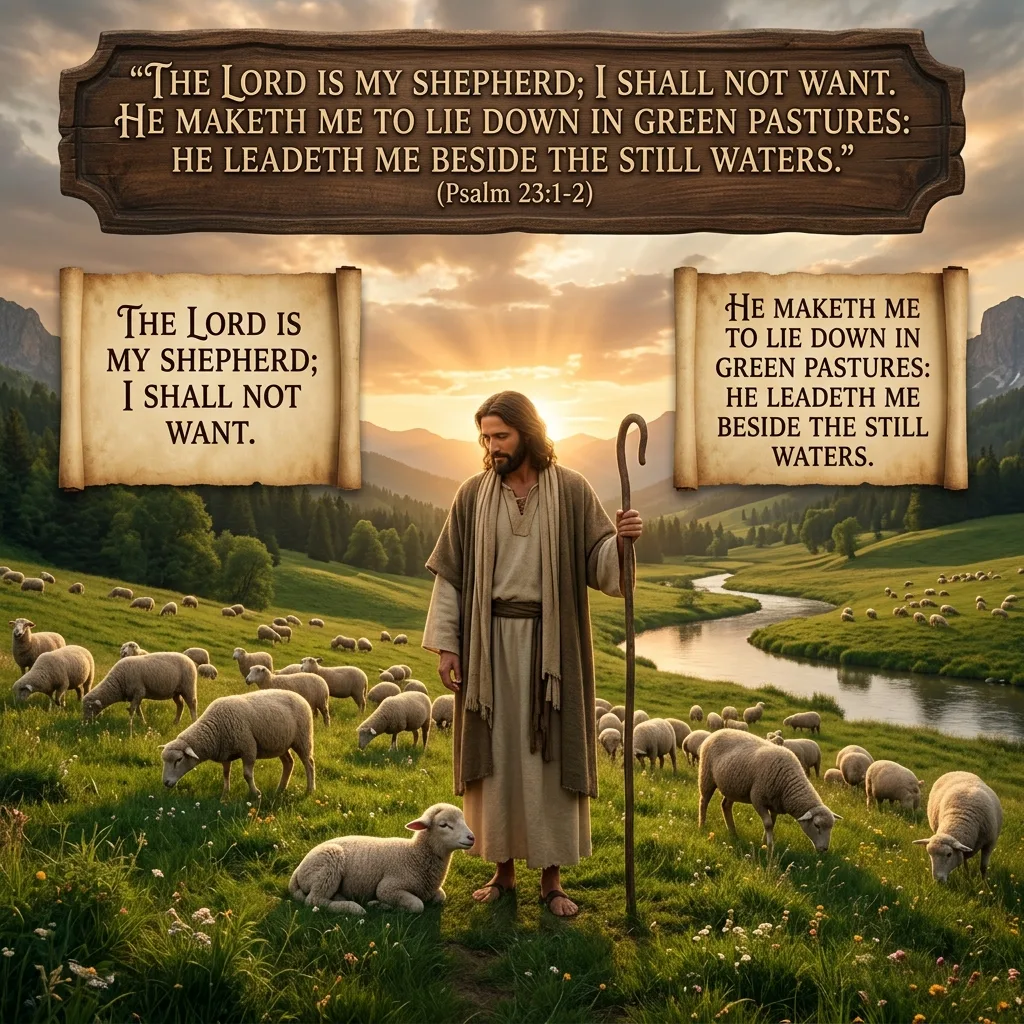
When we view each spilled cup, each broken plan, as a river that carries away the dust of our self‑reliance, we echo the imagery of Psalm 23:2 (KJV), “He maketh me to lie down in green pastures,” where the Shepherd leads us beside still waters. The true sacrifice is not a burnt offering of our labor, but a heart that trusts in the grace already poured out. As we let the Spirit transform our ordinary moments into fragrant incense, the messy day becomes a garden where the fragrance of Christ’s love is evident to all who pass by. Let us therefore walk each day with the confidence that we are covered (tsalmaveth) by Christ’s perfect sacrifice, and let our lives shine as a living testimony to the mercy that never required our terror.
Each sunrise now greets me with the reminder that I walk not by my own strength, but by the Spirit who dwells within. The promise that "the Lord is my shepherd; I shall not want" steadies me when the path grows rough. Grace is not a one‑time ticket; it is a daily supply that meets me at the kitchen sink, the office desk, the hospital bedside. When I pause to thank Him for a simple breath, the ordinary transforms into holy communion. The danger lies in treating grace as a license to ignore growth, but the true gift propels us toward deeper likeness to Christ. So I walk each day with eyes fixed on the cross, letting its shadow guide every step.
"I am crucified with Christ: nevertheless I live; yet not I, but Christ liveth in me."— Galatians 2:20, KJV
Standing on the Rock of Promise
The culmination of this journey lands us at Matthew twenty‑five, where the master declares, "Well done, thou good and faithful servant." Those words echo through the ages, reminding us that God's reward is rooted in faithfulness, not fear. The promise that "unto every one that hath shall be given" assures us of divine generosity when we steward what He entrusts. This assurance anchors our hope, even when the world whispers that we are insufficient. The rock upon which we stand is not the altar of blood, but the finished work of Christ, solid and unshakable. When we build our lives on that foundation, the tremors of doubt cannot dislodge us.
Yet the danger remains that some will retreat to the old system, believing that more sacrifice can earn favor. The Bible warns that "the wages of sin is death," and the endless cycle of offering only deepens our bondage. If we cling to performance, we trade the freedom of grace for a prison of self‑condemnation. The servant who buried his talent illustrates the tragic end of those who trust in their own cleverness rather than in God's provision. Let us not be like him, but rather embrace the invitation to "enter into the joy of thy Lord." The joy awaits those who rest in Christ, not those who labor for a reward they cannot earn.
"His lord said unto him, Well done, thou good and faithful servant; thou hast been faithful over a few things: I will make thee ruler over many things: enter thou into the joy of thy lord."— Matthew 25:21, KJV
As the sun sets on this meditation, I feel the weight of God's love settle like a warm blanket over my shoulders. The ancient question, why God needed sacrifices, now shines with a new answer: He needed a heart that would point to Him. Christ offered Himself, so we need not repeat the bloodshed, but rather live lives that reflect His mercy. May you walk each day with the confidence that your worth is sealed by His finished work, not by your effort. Let the promise of "enter thou into the joy of thy Lord" be your compass as you navigate life's twists. And may the peace that surpasses understanding guard your heart, for you are already accepted.