It was a cold night, the clock ticking past three, and my mind was a restless sea of doubts about debt, health, and family. I had been praying for a sign, but the silence felt like a wall of stone. Then a friend whispere...
- The Instant of New Birth: Trusting God's Word through life's deepest trials and seasons of waiting.
- The Failure of Self‑Reliance: Trusting God's Word through life's deepest trials and seasons of waiting.
- Living Out the New Identity: Trusting God's Word through life's deepest trials and seasons of waiting.
The Instant of New Birth
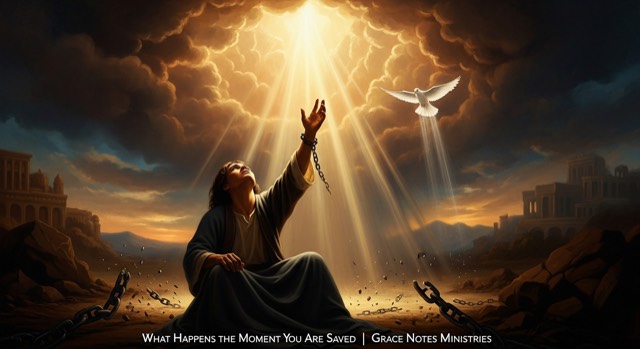
It was a cold night, the clock ticking past three, and my mind was a restless sea of doubts about debt, health, and family. I had been praying for a sign, but the silence felt like a wall of stone. Then a friend whispered about the promise that when you believe, you become new. My heart leapt as I recalled a verse that seemed to whisper directly to my trembling soul. In that moment, the weight of my past slipped away like a cloak left on a chair. I felt a fresh breath, as if the Spirit had opened a window in my chest.
The Scripture that steadied me was 2 Corinthians 5:17, which declares, "Therefore if any man be in Christ, he is a new creature: old things are passed away; behold, all things are become new." The apostle Paul writes as if he were announcing a birthright. This verse does not merely describe change; it pronounces an identity that has already been granted. When I read "new creature," the language of renewal struck like a hammer on an old, rusted gate. The phrase "old things are passed away" cut through my guilt as a sharp blade, showing that the past no longer clings to me. The promise of "all things are become new" painted a horizon where hope is not distant but present.
The theological import of that verse rests on the work of Christ, who said, "Except a man be born again, he cannot see the kingdom of God" (John 3:3). The KJV records His words as a call to a radical transformation. When the Holy Ghost moves, He does not merely add righteousness; He replaces our old self with a new nature. This replacement is not gradual but instantaneous, like a switch being flipped from darkness to light. The moment of salvation therefore marks the termination of our former estate and the inauguration of a divine citizenship. All that once defined us is now behind us, and we step forward clothed in grace.
"Therefore if any man be in Christ, he is a new creature: old things are passed away; behold, all things are become new."— 2 Cor 5:17, KJV
The Failure of Self‑Reliance
I had spent years stacking good deeds like bricks, hoping they would form a wall strong enough to keep shame at bay. Each Sunday I tried harder, each prayer I measured, yet the interior of my heart remained hollow. The philosophy that our merit could earn favor left me exhausted, as if I were trying to lift a mountain with my own hands. When the pressure built, my spirit cracked, and I realized that every effort was a futile attempt to patch a leaking roof. The realization hit like cold water: I could not add anything that would satisfy the divine standard.
The apostle Paul writes, "There is therefore now no condemnation to them which are in Christ Jesus" (Romans 8:1). This declaration is a blanket that covers every failure, wiping clean the record of our missteps. The word "condemnation" is a legal term, and Paul declares that the courtroom has been closed to us. The only reason we stand before God now is because Christ has taken our place, not because of any tally we could produce. The finished work on the cross is the foundation upon which our new life rests, and it does not depend on the size of our own effort. In that truth, my former striving fell away like a garment that no longer fits.
Luke 9:35 records the voice from the cloud saying, "This is my beloved Son: hear him." Though spoken by the Father, it points to the authority of Christ's teaching. When He declares, "I am the way, the truth, and the life," He is not offering a path to be earned but a door already opened. The moment we place our trust in Him, the voice of judgment is silenced, and the invitation to life becomes immediate. The cloud that once obscured the disciples now clears, revealing a landscape where our own works are no longer required. The result is a peace that settles deep within, not because we have earned it, but because it has been granted.
"There is therefore now no condemnation to them which are in Christ Jesus."— Rom 8:1, KJV
Living Out the New Identity
The first week after my salvation, I found myself in the kitchen, the sink piled with dishes, while my teenage son complained about school. I remembered that "all things are become new" and sensed a shift in how I approached the chaos. Instead of reacting with irritation, I paused, inhaled, and whispered a prayer for patience. The tension in my shoulders eased, as if the Spirit had softened the edges of my frustration. In that small moment I experienced the reality that my new nature produces a calmness beyond my own strength. The ordinary task of washing plates became a quiet altar where grace was lived out.
Paul reminds us that "the grace of God which bringeth salvation hath appeared to all men" (Titus 2:11). Grace is not a distant doctrine but a present help that meets us in the mess of daily life. When we recognize our identity as "new creatures," we cease to see ourselves as victims of circumstance and begin to view each trial as a place where Christ's power can be displayed. The kitchen scene thus transforms from a battlefield to a chapel, and the stale air is replaced by the fragrance of forgiveness. This perspective does not erase difficulty but equips us to meet it with a confidence that stems from belonging to Christ.
John 10:10 declares, "The thief cometh ... but I am come that they might have life, and that they might have it more abundantly." The promise of abundance does not mean a life free from trouble, but a life enriched by the presence of Christ amid those troubles. In my daily walk, I have learned to ask, "Where does the Spirit want me to demonstrate this abundance today?" The answer often comes as a simple act of kindness, a word of encouragement, or a moment of patience. Each time I obey, the reality of my new creation becomes more palpable, and the world around me begins to reflect the light within.
"The thief cometh ... but I am come that they might have life, and that they might have it more abundantly."— John 10:10, KJV
Standing on the Unshakable Promise
The anchor of my confidence is Hebrews 6:19, which states, "Which hope we have as an anchor of the soul, both sure and steadfast." This verse grounds me in a hope that does not sway with circumstance. When the river of life rushes fast, I cling to this promise, knowing that my identity as a new creation is secured by the blood of Christ. The assurance it offers is not fragile; it is a rock that does not erode with time or trial. In the darkest night, this anchor holds me firm, and I am reminded that my salvation is a present reality, not a future hope.
If we were to return to the old pattern of earning favor, we would quickly find ourselves trapped in a cycle of guilt and performance. The danger lies in believing that our worth hinges on the size of our good works rather than on the finished work of Christ. Such a mindset brings back the heavy cloud that once silenced the disciples on the mount. The voice from the cloud warned, "Hear him," and that warning still applies: we must listen to the One who has already declared us righteous. To cling to self‑reliance now would be to step off the solid rock and onto shifting sand.
"Which hope we have as an anchor of the soul, both sure and steadfast."— Heb 6:19, KJV
So, dear friend, when the moment of salvation arrives, it is not a gradual unfolding but an instant replacement: the old self is cast aside and a new creation steps forward, clothed in Christ's righteousness. This transformation begins with the spoken word of Scripture and ends with a life lived out in the quiet corners of daily routine. May you rest in the assurance that "there is therefore now no condemnation" and may your days be marked by the peace that flows from being "new creatures." Let each breath you take remind you that your identity is anchored in an unshakeable hope, and may the light of Christ illuminate every path you walk.