The Heavy Weight of the Ledger
The clock on the nightstand glows a cold, unblinking blue at three in the morning, casting long, sharp shadows across the creaking floorboards of my study. You sit there in the silence with a ceramic cup of black coffee that went cold hours ago, staring blankly at a mental list of names and offenses burned deep into your memory. It is the secret, heavy ledger we all keep in the dark when the rest of the world is fast asleep. We count the debts with agonizing precision, tallying up every slight, every broken promise, and every betrayal that left us bleeding in the dust. We want justice, we want recompense, and yet we are utterly exhausted by the sheer, soul-crushing energy it takes to hold onto the grudge day after day. Your hands shake slightly as you realize that carrying this silent ledger is slowly, surely killing your spiritual life.
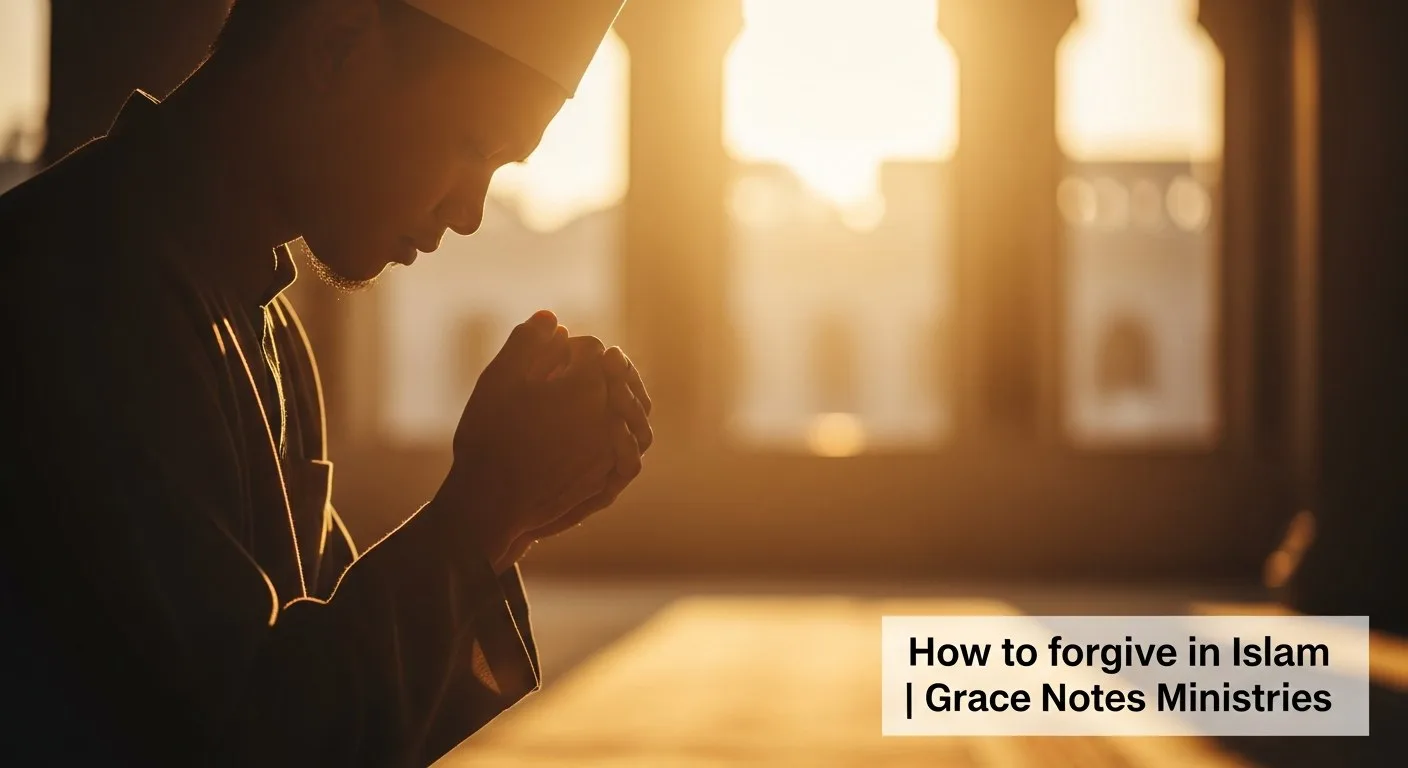
When we look at how different traditions handle this heavy ledger, we find a deep, universal human longing for clean slates and quiet consciences. Many seeking peace look to the rigorous scales of performance, asking how to forgive in Islam or other highly structured faiths where mercy is often conditional on human repentance and divine discretion based on our deeds. But Jesus cuts straight through our legalistic accounting with a radical, upside-down economy of grace that leaves no room for human boasting. He links our daily bread directly to our daily release of others, teaching us to pray in the quiet hours of our need. This is not a transaction of merit where we earn our pardon by being good enough to overlook an insult. It is the natural, inevitable overflow of a heart that has been completely undone and put back together by the absolute, unmerited mercy of the Father.
This prayer is not a heavy wooden paddle designed to beat your weary soul into submission. It is a golden key to your prison cell, handed to you by the one who paid your ransom with His own life. Christ knew the human heart would try to hoard grace while rationing mercy to those who hurt us most. He warns us plainly that if we refuse to release others, we lock ourselves in a dark vault of our own making. He is not setting up a ladder of works for us to climb with trembling knees. He is showing us that a closed fist cannot receive the free, abundant flow of heaven's rain.
And forgive us our debts, as we forgive our debtors.— Matthew 6:12, KJV
The Shattered Scales of Calvary
We try so hard to fix our broken lives by raw willpower, gritted teeth, and religious sweat. We look at complex systems of religious law, hoping that if we balance the scales just right, the persistent pain in our chest will finally stop. In many works-based frameworks, forgiveness is a transaction earned through meticulous prayers, specific rituals, and hoping our good deeds finally outweigh the bad on some final, terrifying day of reckoning. But that kind of performance-based living breaks us when the hurt goes bone-deep and the night is long. Your willpower runs dry when the betrayal is staring you in the face over the kitchen table at breakfast. You cannot wash away a deep-seated grudge with outward washing, structured recitations, or human effort.
Praise God, our standing before the throne does not hang on the trembling, unstable balance of our daily performance. Christ shattered the scales forever on a hill called Calvary, tearing the veil and canceling the record of our debt. He did not leave us to wonder if we have done enough, wept enough, or begged enough to earn a scrap of divine pity. His blood purchased a total, irreversible cancellation of our massive debt. Because He stood in our place, we are not merely tolerated; we are fully adopted, deeply loved, and eternally secure in His grace. This finished work is the only ground steady enough to stand on when we are called to release those who have ruined our lives.
Look closely at the Apostle Paul’s letters, where the mechanics of this grace are laid bare for suffering, wounded believers. He does not tell us to muster up human strength to overlook offenses or pretend the hurt does not exist. Instead, the forgiveness scripture in Ephesians 4:32 anchors our behavior entirely in a past-tense reality. Notice that tiny, monumental phrase: "for Christ's sake." Your ability to release that person who broke your trust does not come from their apology or your emotional maturity. It flows directly from the cross where your own pardon was signed in crimson ink.
And be ye kind one to another, tenderhearted, forgiving one another, even as God for Christ's sake hath forgiven you.— Ephesians 4:32, KJV
The Daily Bread of Release
This truth has to work when you are scraping burnt toast in a silent kitchen while your spouse ignores you. It has to work when the phone rings and it is the same relative who has spent years dragging your name through the mud. We want a dramatic, one-time crisis of surrender that fixes everything forever with no lingering pain. But real life is a series of quiet, unspectacular choices to drop the heavy stones we are holding. You will have to forgive that same offense twenty times in a single afternoon when the memory stings again. In those moments, you are not performing for a distant judge. You are simply breathing in the grace that kept you from drowning this morning.
My friend, stop trying to manufacture a feeling of warmth toward the person who devastated you. The enemy wants to convince you that your struggle to let go means you are a hypocrite or a spiritual failure. Do not listen to that lie. Take a deep breath and let your weary heart rest in the finished work of Jesus. You do not have the strength to heal your own shattered heart, and He never asked you to. He only asks you to hide yourself in His wounds and let His life live through you.
Walking in this reality means we stop looking at our abusers and offenders through the narrow lens of our own pain. We begin to see them as fellow debtors, desperately in need of the same mercy that saved us from our own dark corners. This does not mean we tolerate abuse or pretend that evil is good. It means we hand the courtroom gavel over to the only righteous Judge in the universe. We step down from the bench, pack up our folders of evidence, and walk out into the sunlight. We are finally free to live because we are no longer required to play God.
For if ye forgive men their trespasses, your heavenly Father will also forgive you:— Matthew 6:14, KJV
Standing on Solid Ground
We stand on a foundation that cannot be shaken by the shifting winds of human emotion or religious trends. The Word of God remains settled in heaven, declaring that our sins are cast into the depths of the sea. Jesus spoke words of absolute assurance when He promised that all manner of sin and blasphemy shall be forgiven unto men. This is the anchor for your soul when the waves of guilt and resentment threaten to pull you under. You are safe in His grip. His promises are not conditional on your perfect execution of forgiveness, but on His perfect sacrifice.
Do not slip back into the cold, dark prison of trying to earn your way into God's good graces. The moment you make your peace with God or your release of others about your own spiritual performance, you have wandered back to the law. You will find nothing there but condemnation and dry bones. Keep your eyes fixed on the empty tomb and the scarred hands of your Savior. When the ledger calls your name in the dead of night, point it to the cross. Let the blood of Jesus answer every accusation.
Wherefore I say unto you, All manner of sin and blasphemy shall be forgiven unto men: but the blasphemy against the Holy Ghost shall not be forgiven unto men.— Matthew 12:31, KJV
Go home to your quiet spaces today knowing that you are completely, irrevocably loved by the King of glory. You do not have to carry the crushing weight of your past or the heavy chains of resentment for another second. Lay your weary head on the breast of the Savior who gave His life to set you free. Let His peace, which passes all understanding, guard your heart and your mind as you walk out into the light of His grace. He has already provided the food, the forgiveness, and the freedom you need for this very hour. Rest in Him, and let the rest go.