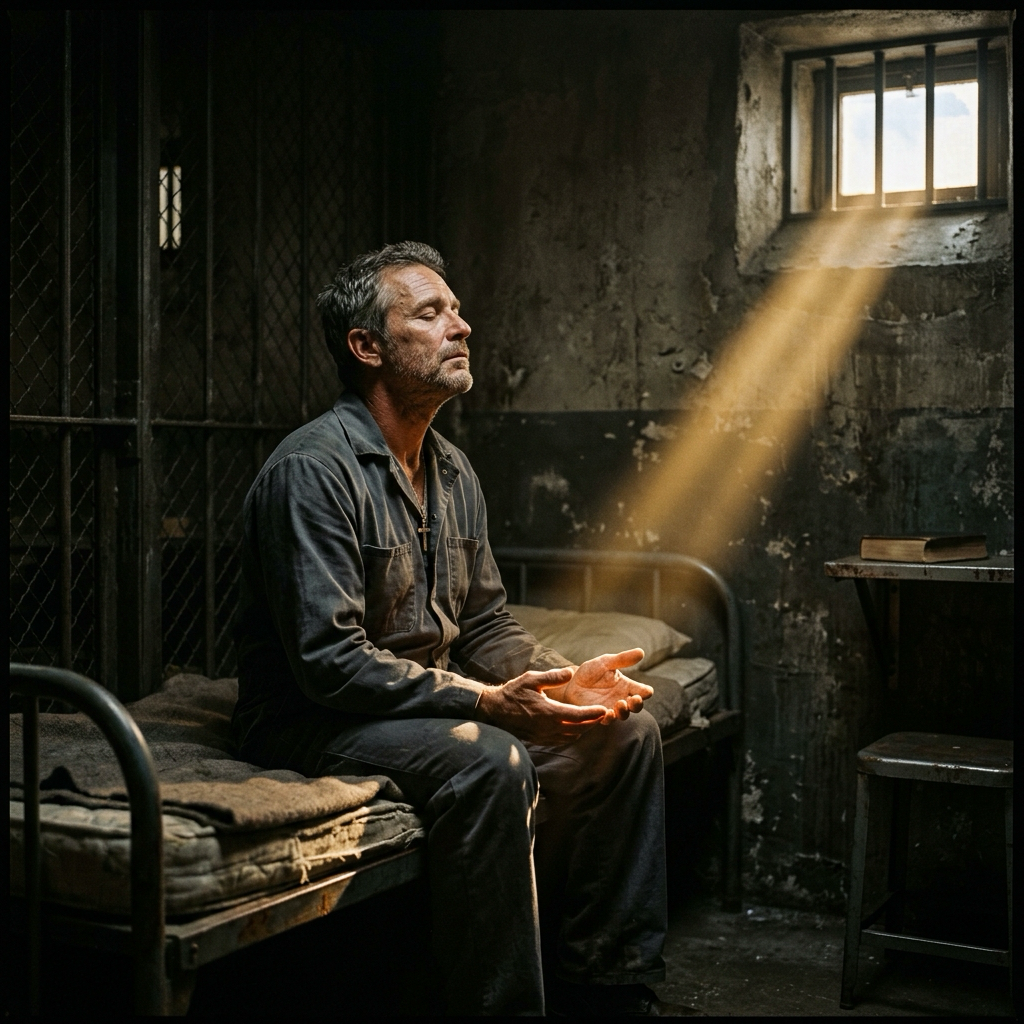
There is a verse that has been preached from pulpits, printed on mugs, quoted in motivational videos, and turned into a sales pitch for the prosperity gospel. You have probably heard it. You may have believed a version of it that quietly set you up for disappointment.
"The thief cometh not, but for to steal, and to kill, and to destroy: I am come that they might have life, and that they might have it more abundantly." — John 10:10, King James Version
The word "abundantly" gets the attention. And certain preachers have decided that word means houses. Cars. Financial breakthroughs. Health that never fails. A life that looks like a success story on the outside. They have turned Jesus into a prosperity consultant and the Gospel into a divine investment strategy.
But think about that for a moment. Really think about it. Would God bribe you with things? Would the Creator of heaven and earth — the One who spoke galaxies into existence, who formed you in your mother's womb, who sent His only Son to die on a cross — would He offer you a better driveway as the centerpiece of His promise?
That's not abundance. That's a sales pitch. And it insults what Jesus actually said.
There is a verse that has been preached from pulpits, printed on mugs, quoted in motivational videos, and turned into a sales pitch for the prosperity gospel. You have probably heard it. You may have believed a version o...
- The Subject Is Life — Not Things: Trusting God's Word through life's deepest trials and seasons of waiting.
- The Man With Everything and Nothing: Trusting God's Word through life's deepest trials and seasons of waiting.
- Paul Had It Right — in the Same Chapter: Trusting God's Word through life's deepest trials and seasons of waiting.
The Subject Is Life — Not Things
Read the verse again carefully. The thief comes to steal, kill, and destroy. What does a thief steal from a person? Not primarily money. A thief steals life — joy, peace, purpose, identity, hope, wholeness, the sense that your existence means something. That is what sin steals. That is what addiction steals. That is what shame and regret steal. That is what a life lived entirely for yourself eventually takes from you, even if you are wealthy while it happens.
Jesus doesn't come back with more money to counter that. He comes back with more life. You cannot bribe a man out of a death sentence with a car. You bring him back from the dead.
The Greek word translated "abundantly" here is perisson — it means superabundance, overflow, more than is needed. But the subject of that overflow is life itself. Not the accessories of life. Life. The kind that runs deeper than your bank account, outlasts your good health, survives your worst season, and remains when everything else has been stripped away.
The Man With Everything and Nothing
The person this verse confronts most directly is not the one at the bottom. It is the one at the top. The man whose calendar is full. Whose mortgage is paid. Whose family looks fine from the outside. Who has accomplished what he set out to accomplish and found that it did not fill the space he thought it would. He lies awake at night in a house that cost more than most people earn in a decade, and something in him is still quietly asking: Is this it?
That hollow feeling is not a scheduling problem. It is not a success problem. It is a life problem. He has acquired things but he has not yet encountered the One who came to give him life — and not just life, but life that overflows.
The prosperity gospel offers that man a bigger version of what he already has and already knows is insufficient. Jesus offers him something altogether different — something that does not compete with his circumstances at all, because it does not depend on them.

Paul Had It Right — in the Same Chapter
The Apostle Paul wrote some of the most honest lines in all of Scripture about what abundant life actually looks like in practice. He wrote them from prison. He wrote:
"I have learned, in whatsoever state I am, therewith to be content. I know both how to be abased, and I know how to abound: every where and in all things I am instructed both to be full and to be hungry, both to abound and to suffer need." — Philippians 4:11–12, KJV
Three verses later he wrote the verse about God supplying all your need according to His riches in glory. The prosperity gospel quotes verse 19 every Sunday. It rarely mentions verses 11 and 12. But you cannot understand what God supplies without first understanding what Paul already possessed — a contentment that did not require a change of circumstances. That is the abundant life. That is what Jesus came to give.
Paul was beaten. Shipwrecked. Imprisoned. Hungry. He had the abundant life. Not in spite of those things — the abundant life was present through those things, because it does not live in your bank account. It lives in you.
What This Means for You — Right Now
You may be reading this in a season of genuine difficulty. Or you may be reading this in a season that looks fine from the outside but feels hollow from the inside. Either way, the offer of Jesus in John 10:10 is not conditioned on your circumstances changing first.
The thief — sin, shame, the accumulated weight of living without God — stole something from you that no human accomplishment has been able to give back. Not the job. Not the relationship. Not the achievement. Not the substance that numbed it for a while. Those things can be good. But they are not life. They are not abundant life.
What Jesus offers is different in kind, not just in degree. It is not more of what the world already offers. It is joy that does not evaporate when the good thing ends. Peace that, as Paul writes, "passeth all understanding" — meaning it makes no sense given what you are going through, and yet it is there. Satisfaction that is not contingent on what you have or where you are or what people think of you.
That is what abundant means. And the door to it is not a financial seed or a positive confession. It is the same door it has always been:
"I am the door: by me if any man enter in, he shall be saved, and shall go in and out, and find pasture." — John 10:9, KJV
One verse before the promise of abundant life. The door is Jesus. Not a method. Not a formula. Not a transaction. The man Himself. Step through that door and you find life — more of it than you have ever known, running deeper than any season of your existence can reach.
That is the Gospel. That is what He meant.