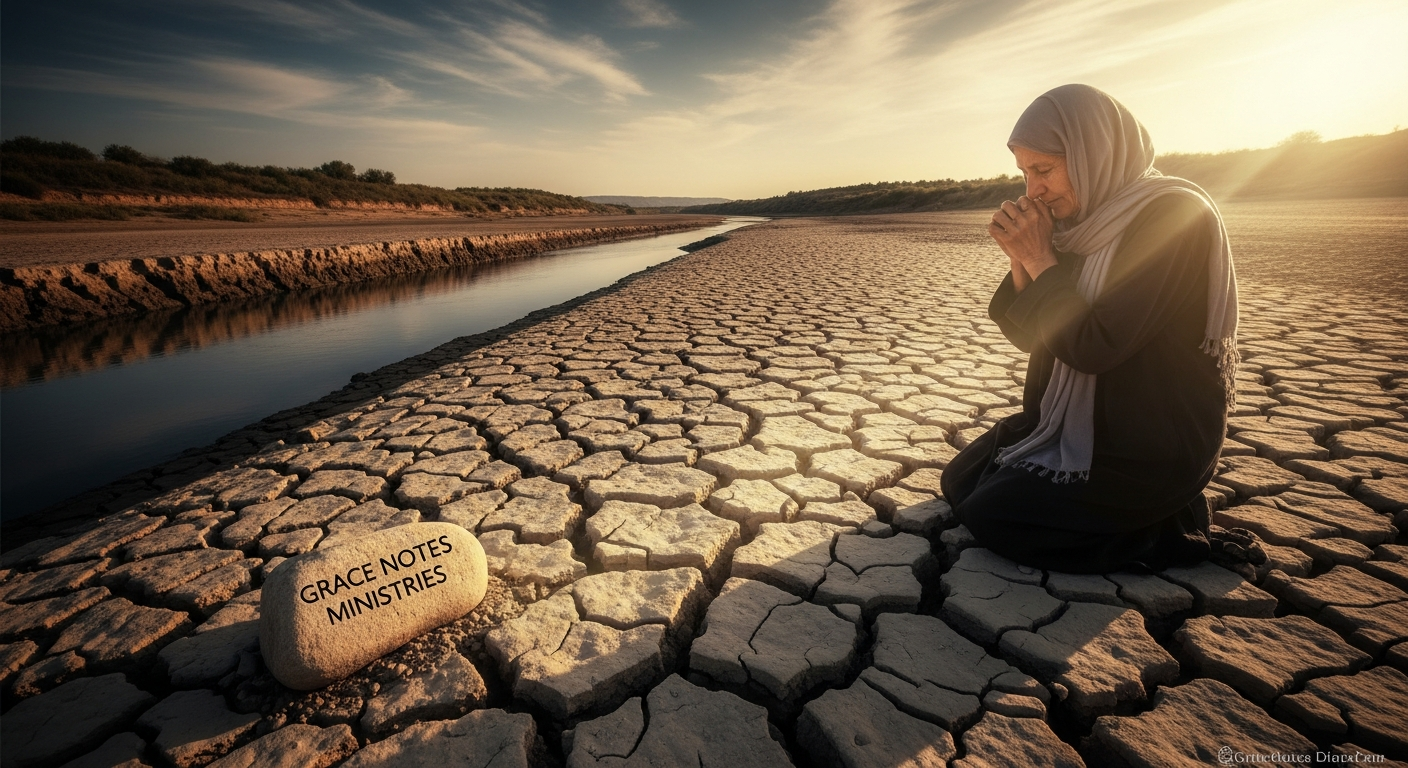
When you hear questions about what the Bible says about the Euphrates river drying up, fear often whispers louder than faith. In our modern world, headlines frequently draw our attention to ecological shifts, political i...
- The Mystery of the Drying Waters: Trusting God's Word through life's deepest trials and seasons of waiting.
- The Historical and Covenantal Significance of the Euphrates: Trusting God's Word through life's deepest trials and seasons of waiting.
- The Spiritual Underpinnings: Trusting God's Word through life's deepest trials and seasons of waiting.
The Mystery of the Drying Waters
When you hear questions about what the Bible says about the Euphrates river drying up, fear often whispers louder than faith. In our modern world, headlines frequently draw our attention to ecological shifts, political instability, and the literal drying of ancient waterways. The imagery in Revelation 16:12 describes the sixth angel pouring out his vial upon the great river Euphrates, and the water thereof is dried up, that the way of the kings of the east might be prepared. It is a scene of cosmic upheaval, designed to stir the heart and awaken the soul to the reality of God's sovereign plan.
Yet, amidst the trembling of nations, the King James Scripture reminds us that our focus must remain fixed on the One who holds history in His hands. We are not called to live in terror of signs, but in trust of the Savior who has already conquered the grave. The drying of the river is not the end of our story, but a prelude to the final triumph of grace over chaos.
What the Bible teaches us here is not merely about geography or geopolitics, but about the absolute certainty of God's word. Just as the stone was sealed and a watch was set at the sepulchre, the world may try to contain or deny the truth, but it cannot stop the hand of God. The preparations being made are for a divine purpose that transcends our earthly anxieties.
And the sixth angel poured out his vial upon the great river Euphrates; and the water thereof was dried up, that the way of the kings of the east might be prepared.— Revelation 16:12, KJV
The Historical and Covenantal Significance of the Euphrates
To fully grasp the weight of this prophetic event, we must look back to the beginning of Holy Writ. The Euphrates is not a minor geographical footnote; it is one of the foundational landmarks of biblical history. First mentioned in Genesis 2:14 as one of the four rivers flowing out of the Garden of Eden, it has stood for millennia as a boundary marker between the promised inheritance of God’s people and the pagan empires of the world. In Genesis 15:18, the LORD established His covenant with Abraham, defining the borders of the promised land by this very river:
In the same day the LORD made a covenant with Abram, saying, Unto thy seed have I given this land, from the river of Egypt unto the great river, the river Euphrates:— Genesis 15:18, KJV
Throughout the Old Testament, the Euphrates served as a natural barrier. To cross the Euphrates was to step out of the land of promise and into the territory of Babylon and Assyria—empires that frequently served as instruments of judgment against Israel's rebellion. When God speaks of drying up this great river, He is not merely describing a meteorological event; He is declaring the removal of a barrier.
Historically, God used the drying of waters to deliver His people and judge His enemies, such as the parting of the Red Sea and the Jordan River. In the prophetic books, the drying of Babylon's waters was foretold as the mechanism of her downfall.
A drought is upon her waters; and they shall be dried up: for it is the land of graven images, and they are mad upon their idols.— Jeremiah 50:38, KJV
Therefore thus saith the LORD; Behold, I will plead thy cause, and take vengeance for thee; and I will dry up her sea, and make her springs dry.— Jeremiah 51:36, KJV
This was literally fulfilled when Cyrus the Great diverted the Euphrates River, allowing his Medo-Persian army to march directly into the city of Babylon along the dry riverbed. Thus, when Revelation speaks of the Euphrates drying up, it draws upon a rich tapestry of historical truth, signaling that the ultimate spiritual Babylon is about to face its final, sovereign judgment.
The Spiritual Underpinnings: Cross-Referencing Revelation 9
The drying of the Euphrates in the sixth vial is closely linked to an earlier judgment in the Book of Revelation. Under the sounding of the sixth trumpet, we see that this great river is also a place of spiritual confinement. The Apostle John writes:
Saying to the sixth angel which had the trumpet, Loose the four angels which are bound in the great river Euphrates. And the four angels were loosed, which were prepared for an hour, and a day, and a month, and a year, for to slay the third part of men.— Revelation 9:14-15, KJV
This passage reveals that the Euphrates is a boundary not only in the physical realm but also in the spiritual realm. It restrains fallen angelic forces of immense destructive power. When the sixth trumpet sounds, these forces are loosed to bring judgment upon a rebellious world. When we reach the sixth vial in Revelation 16, the physical drying of the river serves as the outward manifestation of this spiritual reality, clearing the path for the "kings of the east" to assemble for the battle of that great day of God Almighty, commonly known as Armageddon.
Navigating the Eschatological Interpretations
Bible scholars and commentators throughout church history have approached the drying of the Euphrates through different theological lenses. Understanding these perspectives helps us appreciate the depth of the text without losing our anchor in Christ.
- The Preterist View: Preterist interpreters believe that the majority of Revelation's prophecies were fulfilled in the first century, particularly during the fall of Jerusalem in AD 70 or the collapse of the pagan Roman Empire. In this view, the drying of the Euphrates represents the Roman auxiliary forces or the Parthian armies crossing the eastern border to bring judgment upon apostate Israel or Rome.
- The Historicist View: Historicists view the Book of Revelation as a continuous panorama of church history from the first century to the second coming. For centuries, historicist commentators identified the Euphrates with the Ottoman (Turkish) Empire, which controlled the region of the Euphrates. They interpreted the "drying up" of the river as the gradual decline, loss of territory, and political evaporation of the Ottoman power during the nineteenth and early twentieth centuries, which paved the way for the restoration of geopolitical focus to the Middle East.
- The Futurist View: The futurist perspective, which aligns with a literal, dispensational reading of Scripture, looks forward to a literal fulfillment during the future Tribulation period. Futurists believe that the physical Euphrates River will literally dry up—whether through supernatural intervention, extreme drought, or geopolitical manipulation of modern dams—to allow a massive military coalition from the East (the "kings of the east") to march unimpeded into the Middle East for the final campaign of Armageddon.
Whichever interpretive framework one holds, the spiritual truth remains unchanged: God is the supreme director of history. He sets the bounds of the nations, He restrains the forces of darkness, and He determines the exact timing of every epoch. The drying of the river is not an accident of nature or a victory for the enemies of God; it is a meticulously timed event in the divine calendar.
Anchored in the Resurrection
In times of global shaking and prophetic speculation, we must look to the empty tomb where the last error was rendered null by the power of life. It is easy to become consumed by charts, timelines, and geopolitical anxieties, but the Holy Spirit always points us back to the person and finished work of Jesus Christ. Salvation is not a legalistic religion of fear, nor is it a system of decoding future events to escape the realities of today. Salvation is a living, born-again relationship with the Lord Jesus Christ.
When the chief priests and Pharisees feared the disciples would steal the body of Jesus and claim He rose from the dead, they sought to secure the grave by their own power:
So they went, and made the sepulchre sure, sealing the stone, and setting a watch.— Matthew 27:66, KJV
They tried to secure their fear, but they could not secure the future against the promise of God. Just as the sealed stone and the Roman watch could not hold the Prince of Life, no geopolitical alliance, demonic army, or drying river can disrupt the sovereign plan of God for His children. Jesus Christ did not leave us in the shadow of the grave. He spoke words of unity and love that bind us to the Father, ensuring that we are not abandoned to the turmoil of the times.
While the world looks for signs in the drying rivers, the believer looks to the risen Lord who invites us to be with Him where He is, to behold His glory, and to rest in the love that loved us before the foundation of the world. Jesus prayed for us in His high priestly prayer:
Father, I will that they also, whom thou hast given me, be with me where I am; that they may behold my glory, which thou hast given me: for thou lovedst me before the foundation of the world.— John 17:24, KJV
Resting in the Promise of the Rock of Ages
Do not let the shaking of the world shake your faith in the Rock of Ages. While the rivers may dry up and the foundations of society may tremble, the love of Christ remains constant and unchanging. You are held by the same hand that rolled away the stone, and you are loved with an eternal love that death cannot extinguish.
The drying of the Euphrates is a solemn reminder that this world is passing away, and the judgments of God are true and righteous altogether. But for the believer, it is also a signpost that our redemption draweth nigh. Rest in His promise, keep your eyes on the Savior, and walk daily in the assurance of your personal relationship with Him. He is preparing a place for you, and He is coming again.