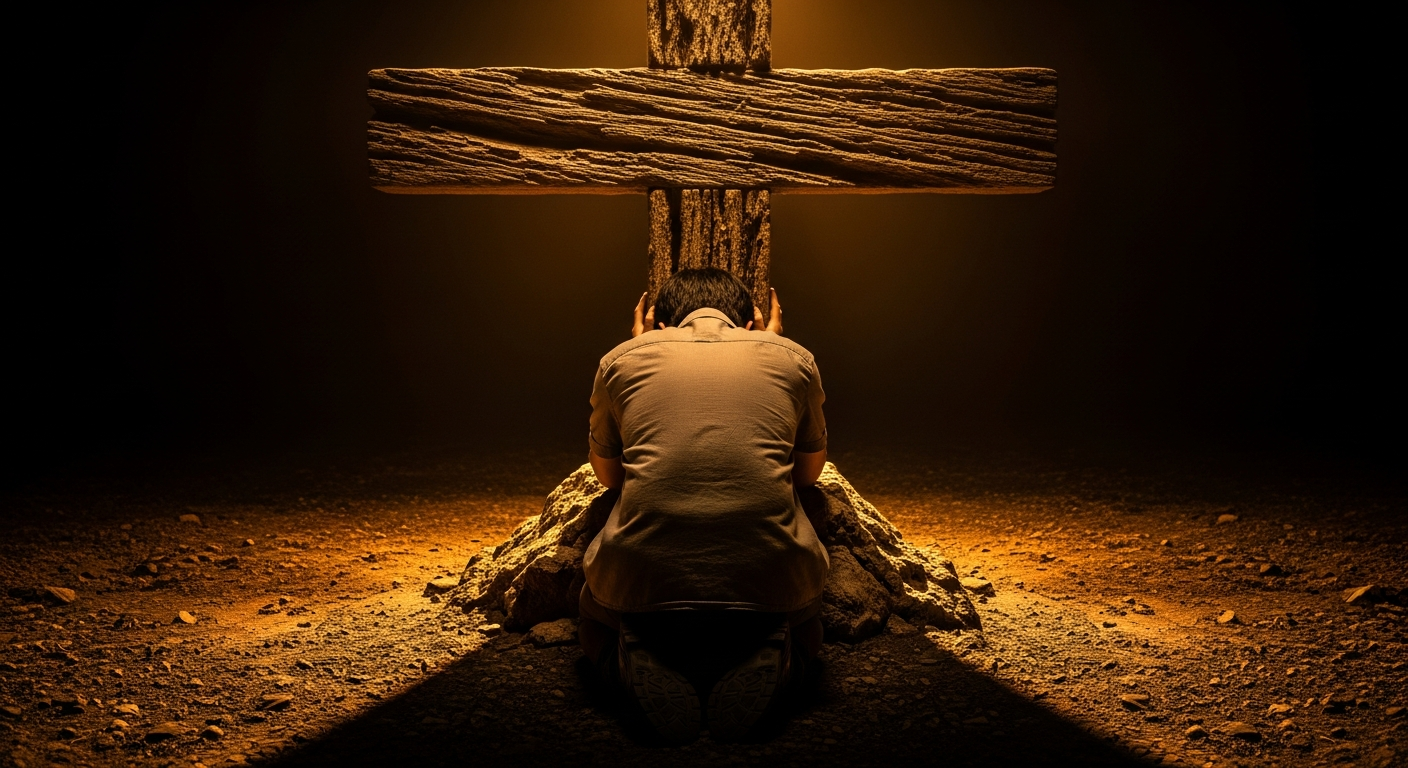
If you are reading this, your soul might feel heavy with the crushing weight of regret. You may wonder if your past mistakes, secret failures, or persistent shortcomings have permanently disqualified you from God’s love.
- The Weight of Our Brokenness: Trusting God's Word through life's deepest trials and seasons of waiting.
- Godly Sorrow vs. Worldly Regret: Trusting God's Word through life's deepest trials and seasons of waiting.
- The Freedom of Returning Home: Trusting God's Word through life's deepest trials and seasons of waiting.
The Weight of Our Brokenness
If you are reading this, your soul might feel heavy with the crushing weight of regret. You may wonder if your past mistakes, secret failures, or persistent shortcomings have permanently disqualified you from God’s love. In our moments of deepest failure, it is easy to feel trapped by shame, believing the lie that we must somehow fix ourselves, clean up our lives, and present a polished version of our character before we can dare to approach the Father.
But what does the Bible say about repentance? Scripturally understood, repentance is not a legalistic checklist of good deeds, nor is it a self-inflicted penance designed to earn God's favor. It is a radical, grace-empowered return to the arms of a compassionate Savior.
We often fall into the trap of thinking repentance means earning forgiveness through our own human strength. However, the truth of the Gospel is far more tender and profound. God does not wait for you to achieve moral perfection before He welcomes you; He waits for you to be honest.
He sees the hidden pain behind your sin, the exhaustion of your rebellion, and the deep longing in your heart to be made whole again. This is the first step of saving grace: acknowledging that we are utterly bankrupt in ourselves and cannot save our own souls. True repentance begins when we stop defending our righteousness and start confessing our need.
When we feel unworthy, our natural, fallen inclination is to run away from God, much like Adam hiding among the trees of the Garden. But Jesus invites us to run *to* Him, not away from Him. He knows our frame; He remembers that we are dust.
His ultimate desire is not to condemn you, but to restore you to a vibrant, born-again relationship with Himself. Repentance is simply turning your face back toward Him, turning away from the darkness of self-will, and trusting that His mercy is infinitely greater than your deepest failure.
For God so loved the world, that he gave his only begotten Son, that whosoever believeth in him should not perish, but have everlasting life.— John 3:16, KJV
Godly Sorrow vs. Worldly Regret
To truly understand what the Bible teaches about repentance, we must distinguish between genuine, biblical repentance and mere worldly remorse. The Apostle Paul provides a vital theological distinction in his second epistle to the Corinthian church. He reveals that not all sorrow over sin is created equal. There is a sorrow that leads to life, and a sorrow that leads to spiritual ruin.
For godly sorrow worketh repentance to salvation not to be repented of: but the sorrow of the world worketh death.— 2 Corinthians 7:10, KJV
Worldly sorrow is rooted in pride, selfishness, and the fear of consequences. It is the regret of getting caught, the shame of a damaged reputation, or the bitter disappointment of failing our own self-image. Worldly sorrow looks inward, leading to despair, self-pity, and ultimately spiritual death. We see this vividly in the life of Judas Iscariot, who was filled with remorse after betraying Christ, yet his sorrow led him to hang himself rather than seek the mercy of the Savior.
Conversely, godly sorrow looks upward. It is a grief that arises because we realize our sin is first and foremost an offense against a holy, loving God. Godly sorrow does not drive us into hiding; it drives us to the cross.
It produces a earnest desire to be cleansed, a holy indignation against sin, and a passionate pursuit of righteousness. Consider the Apostle Peter, who wept bitterly after denying his Lord three times. His sorrow was godly; it broke his pride, prepared him for restoration, and ultimately led him back into a deep, burning relationship with the resurrected Christ.
The Freedom of Returning Home
Consider the powerful historical account in Mark chapter 5 of the man possessed by a legion of unclean spirits in the country of the Gadarenes. He was a picture of absolute brokenness, isolation, and terror. He lived among the tombs, crying out night and day, cutting himself with stones, bound by chains that he repeatedly rent asunder. No man could tame him, and no human remedy could reach the depth of his torment. Yet, when he saw Jesus from afar, he ran and worshipped Him.
When Jesus cast the demons out, the transformation was instantaneous and complete. The local townspeople came out and saw the man who had been possessed "sitting, and clothed, and in his right mind." When Jesus was about to enter the ship to depart, the restored man begged to stay with Him, clinging to the physical presence of the Master who had delivered him. But Jesus gave him a different, profound command.
Howbeit Jesus suffered him not, but saith unto him, Go home to thy friends, and tell them how great things the Lord hath done for thee, and hath had compassion on thee.— Mark 5:19, KJV
This act of returning to his home and community was the physical manifestation of his repentance and transformation. He was sent back to the very place of his past shame, not to be condemned by it, but to stand as a living monument of God's redeeming grace. His life was no longer defined by his past bondage, but by the absolute freedom Christ had purchased for him.
What the Bible teaches is that true repentance leads to a completely new identity. You are no longer defined by the wreckage of your past; your story changes forever when you allow the Lord Jesus Christ to rewrite it.
The Anatomy of a Contrite Heart
To understand the heart of repentance, we must also look to the Old Testament, specifically to the life of King David. After his grievous sins of adultery with Bathsheba and the orchestrated murder of Uriah the Hittite, David spent months in silent agony, trying to cover his transgression. But when confronted by the prophet Nathan, David’s defenses collapsed. He did not offer excuses; he offered confession.
In Psalm 51, David lays bare the anatomy of a truly repentant heart. He does not plead his past service, his royal status, or his good intentions. He appeals solely to God's lovingkindness and the multitude of His tender mercies. He acknowledges that his sin is primarily against God Himself: "Against thee, thee only, have I sinned, and done this evil in thy sight." David understood that legalistic rituals and outward religious performances could never heal a fractured soul.
The sacrifices of God are a broken spirit: a broken and a contrite heart, O God, thou wilt not despise.— Psalm 51:17, KJV
This is the core of orthodox, biblical repentance. God is not looking for the sacrifice of our self-righteous efforts to make amends. He desires a broken spirit—a heart that has come to the end of itself, shattered by the reality of its sin, yet looking with absolute faith to the mercy of God. When we stop trying to cover our sins, God covers them with the precious blood of His Son.
He that covereth his sins shall not prosper: but whoso confesseth and forsaketh them shall have mercy.— Proverbs 28:13, KJV
Practical Steps: Walking in Repentance Daily
How do we translate this profound theological truth into our daily walk with Christ? Repentance is not a one-time historical event that occurs at salvation and is then forgotten; it is the ongoing posture of the Christian life. Here are four practical, biblical steps to walking in daily repentance:
1. Honest Acknowledgment: Stop hiding, rationalizing, or minimizing your sin. Bring it into the light of God's presence. If you have fallen, admit it plainly to God without making excuses for your circumstances or blaming others.
2. Heartfelt Confession: Confess your sins specifically. To confess means to "agree with God." It means calling your sin what God calls it—not a "mistake" or a "weakness," but an offense against His holiness that required the death of Jesus Christ on the cross.
3. Active Forsaking: True repentance involves a change of direction. As Proverbs 28:13 declares, we must not only confess but also *forsake* our sins. This means taking practical, decisive steps to cut off the avenues of temptation, fleeing youthful lusts, and pursuing righteousness in the power of the Holy Spirit.4. Resting in Christ's Finished Work: Once you have confessed and forsaken your sin, do not continue to carry the guilt. Believe God's promise of forgiveness. Salvation is a living, born-again relationship with Jesus Christ, not a performance-based religion. Rest in the assurance that His blood has cleansed you completely.
Step Into His Grace
Today, you do not need to have your entire life figured out before you turn to God. You only need to take one step of faith toward Him. Let go of the false narrative that you are too broken, too dirty, or too far gone to be repaired. The very same power that calmed the raging Galilean storm, cast out the legion of demons, and raised Jesus Christ from the dead is available to you right now. He is waiting to reset your heart, restore your joy, and renew your spirit.
Create in me a clean heart, O God; and renew a right spirit within me.— Psalm 51:10, KJV
Repentance is not the tragic end of your story; it is the glorious beginning of a brand-new chapter written in the ink of His grace. You are loved, you are known, and in Christ Jesus, you can be fully forgiven. Come to Jesus today, not with the pride of your accomplishments, but with the humility of your broken heart. He will catch you, He will heal you, and He will send you out into the world with a powerful testimony that brings eternal glory to His holy name.