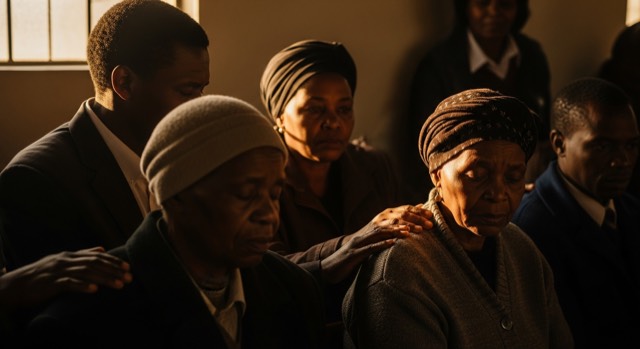
The Daily Bread and the Daily Debt
Some words are heavier than others. They get stuck in the throat, thick with the dust of old wounds and the rust of unspoken resentment. 'I forgive you.' In the Xhosa language, you might say, 'Ndiyakuxolela.' But like any phrase in any tongue, the syllables themselves are weightless, just puffs of air, until they are filled with the gravity of a changed heart. We know the feeling, don't we? The cold stone that sits in the pit of the stomach when we see that person, the one who left the scar. We rehearse the argument in the shower, we win it in the car, we catalog the injustice in the quiet hours of the night, building a case file in our soul so thick it blocks out the light. That debt they owe us feels so real, so substantial, that to cancel it seems not just unfair but utterly impossible, a violation of some cosmic law of justice.
And then we come to the Lord's prayer. Right there, wedged between our plea for daily bread and our cry for deliverance from evil, is this staggering, terrifying petition. It's a hinge. A pivot point. 'And forgive us our debts, as we forgive our debtors.' Jesus places our spiritual sustenance on the same plane as our physical sustenance, suggesting we need one as desperately and as daily as the other. We can't survive without bread, and Christ is telling us we can't truly live without a constant flow of forgiveness, both coming in and going out. He's teaching us a rhythm, not a one-time transaction. It's the very breath of the kingdom: receive grace, release grace. The forgiveness we ask from the Father is inextricably linked to the forgiveness we extend to our brother.
Here's the thing that stops us cold. Christ follows this prayer with a direct commentary, a clarification so sharp it should make us tremble. He says, 'For if ye forgive men their trespasses, your heavenly Father will also forgive you: But if ye forgive not men their trespasses, neither will your Father forgive your trespasses.' Now, this isn't God setting up a cruel transactional system where we earn His pardon by our performance. No, it's a diagnosis of a spiritual condition. A heart that refuses to forgive is a heart that has never been truly broken and remade by the astonishing reality of its own pardon. It's a closed fist. A sealed jar in a downpour. An unforgiving spirit demonstrates a fundamental misunderstanding of the Gospel, revealing that we're still trying to operate on the world's economy of merit and debt, not heaven's economy of pure, unmerited grace.
For if ye forgive men their trespasses, your heavenly Father will also forgive you: But if ye forgive not men their trespasses, neither will your Father forgive your trespasses.— Matthew 6:14-15, KJV
A Line Drawn in the Sand
We are experts at drawing lines. We build intricate systems of sin-grading, creating ledgers in our minds where we categorize offenses. This little annoyance, this slight, this mistake—that's forgivable. But that betrayal? That deep, deliberate wound? That crosses a line. That goes in a different column, the one marked 'unpardonable.' This is the very essence of self-righteous religion: it creates a manageable system of righteousness where we are the judges, and our standards are the law. It works fine for the small stuff, but when real, devastating sin enters the picture—either our own or someone else's—the whole flimsy structure collapses. We find ourselves holding a debt so massive we can't forgive it, or carrying a guilt so heavy we can't imagine it being forgiven. Our man-made systems of grace always have a breaking point.
Then Jesus speaks, and His words shatter our pathetic little systems forever. 'Wherefore I say unto you, All manner of sin and blasphemy shall be forgiven unto men.' Stop and let that sink in. All manner. Every kind. The secret thought, the public failure, the repeated mistake, the malicious act. Every category of sin you've ever invented, every line you've ever drawn, is washed away in that one, sweeping declaration. He paid for it all. The cross was not a partial payment. The blood of Christ was not a down payment on our debt. It was the cancellation. The receipt, stamped 'Paid in Full.' The only exception He names is the one sin that, by its very nature, turns its back on the only remedy: the blasphemy against the Holy Ghost.
So what is this one, terrifying exception? It's not a careless word uttered in a moment of anger. It's not a season of doubt or rebellion. The blasphemy against the Holy Ghost is a final, settled, and deliberate state of the heart. It is looking at the undeniable, light-filled, life-giving work of the Spirit of God—the very Spirit who testifies that Jesus is Lord—and consciously attributing it to Satan. It is a heart so hardened, so committed to its own darkness, that it calls light evil. It's not a sin one commits by accident; it's a permanent rejection of the only Person who can bring you to repentance and faith. If you are worried that you have committed it, that very concern is the Spirit's witness in you that you have not. The unforgivable sin is the one for which you will never seek forgiveness.
Wherefore I say unto you, All manner of sin and blasphemy shall be forgiven unto men: but the blasphemy against the Holy Ghost shall not be forgiven unto men.— Matthew 12:31, KJV
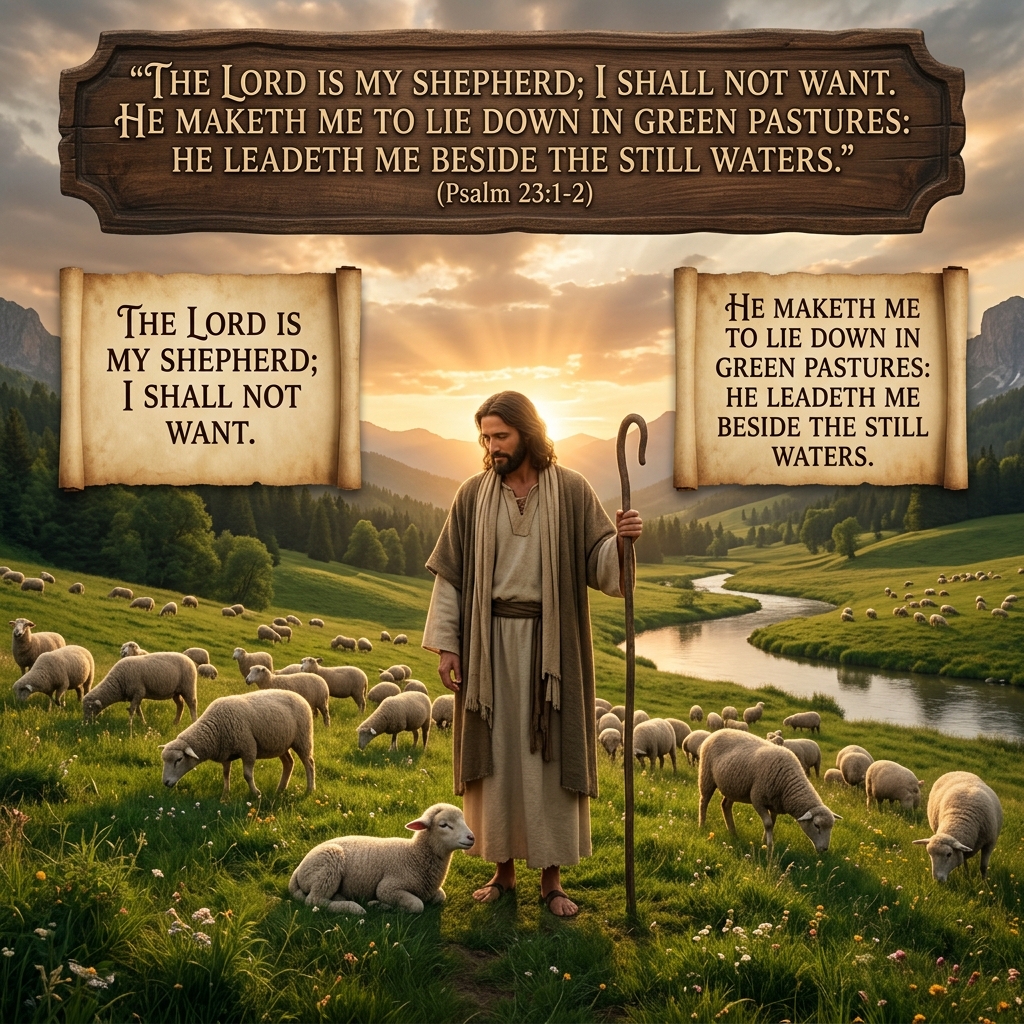
Kindness as a Currency
This high theology has to walk down the stairs and live in our kitchens, in our cars, in our text messages. What happens when the person who wounded you calls? What happens when you're sitting across the table from the family member whose words still echo in your mind? Forgiveness isn't a feeling you conjure up; it's a decision you make, an act of the will empowered by the Spirit. It is a deliberate choice to look at the ledger where you've recorded all their debts against you, and then to turn your eyes to the cross, where your own infinite, unpayable debt to a holy God was wiped clean. In that moment, you choose to pick up the pen, and in an act of defiant grace, you write 'Canceled' across their page, not because they deserve it, but because you've been given a mercy you could never deserve.
Please, friend, hear this. Stop trying so hard to fix yourself. Stop trying to dredge up a feeling of forgiveness from the bottom of your own empty well. You can't do it. Instead, rest in what has already been done for you. The Apostle Paul gives us the mechanics of it in Ephesians: 'And be ye kind one to another, tenderhearted, forgiving one another, even as God for Christ's sake hath forgiven you.' The command to forgive is built on the foundation of a past-tense reality. You forgive *because* you have been forgiven. The power to release them from their debt flows directly from the power that released you from yours. It's not your resource; it's His. You are just the conduit through which His grace flows.
So what does it mean to walk this out? It means taking seriously Christ's warning not to lay up for ourselves treasures on earth. Bitterness is an earthly treasure. Resentment is a treasure that moth and rust corrupt, eating away at your joy and peace from the inside. A grudge is a thief that breaks through and steals your spiritual vitality. Forgiveness, then, is the act of laying up treasure in heaven. It is an investment in your own freedom. It's a declaration that you will no longer be chained to another person's sin. Every time you choose to forgive, you are choosing to live out of your identity as a pardoned child of God, operating from your heavenly account which can never be overdrawn, rather than your earthly account of hurts and slights, which is always bankrupt.
And be ye kind one to another, tenderhearted, forgiving one another, even as God for Christ's sake hath forgiven you.— Ephesians 4:32, KJV
Standing on Solid Ground
Let's put it all together on solid ground. The prayer Jesus taught us creates an unbreakable link between our daily bread and our daily forgiveness. The condition for receiving is not our worthiness, but our willingness to let the grace we receive flow through us. This isn't a precarious, quid-pro-quo transaction. It is the fundamental law of the Kingdom of God. Water flows downhill. Light dispels darkness. And a forgiven heart forgives. The pardon we have received in Christ is not a static legal declaration; it is a dynamic, living power that transforms us from debtors into creditors who have the authority and the joy of canceling the debts of others. This is the unshakeable, bedrock promise of the Gospel working itself out in our relationships.
The great danger, then, is forgetting. The danger is to walk away from the throne of grace, where our pardon was secured, and to walk back to the prison of bitterness. We become our own jailers. Christ’s stark warning in Matthew 6:15 is not a threat that He will snatch back His salvation if we fail. It is a description of the grim reality that a heart clinging to unforgiveness is a heart that is, in that moment, choosing to live outside the felt reality and joy of its own pardon. You cannot breathe the free air of grace while voluntarily shackling yourself to someone else's offense. To refuse to forgive is to slam the door on the very grace that is your only hope, cutting yourself off from the circulation of God's life-giving love.
But lay up for yourselves treasures in heaven, where neither moth nor rust doth corrupt, and where thieves do not break through nor steal:— Matthew 6:20, KJV
In the end, the Xhosa words, 'Ndiyakuxolela,' are just a vessel. What matters is what fills them. For us, they must be filled with the blood of Calvary. Forgiveness isn't a human language we struggle to learn; it is the native tongue of the kingdom we've been born into. It's the language of grace, spoken fluently by our Father. So speak it. Speak it when your voice trembles. Speak it when your heart aches. Speak it when every fiber of your being screams for justice. Speak it not from your own strength, but from the unshakeable reality that God, for Christ's sake, looked at your infinite debt, smiled, and said, 'It is finished.' In that divine declaration, He gave you everything you will ever need to do the same for others. This is your inheritance. This is your freedom. Go, and walk in it.