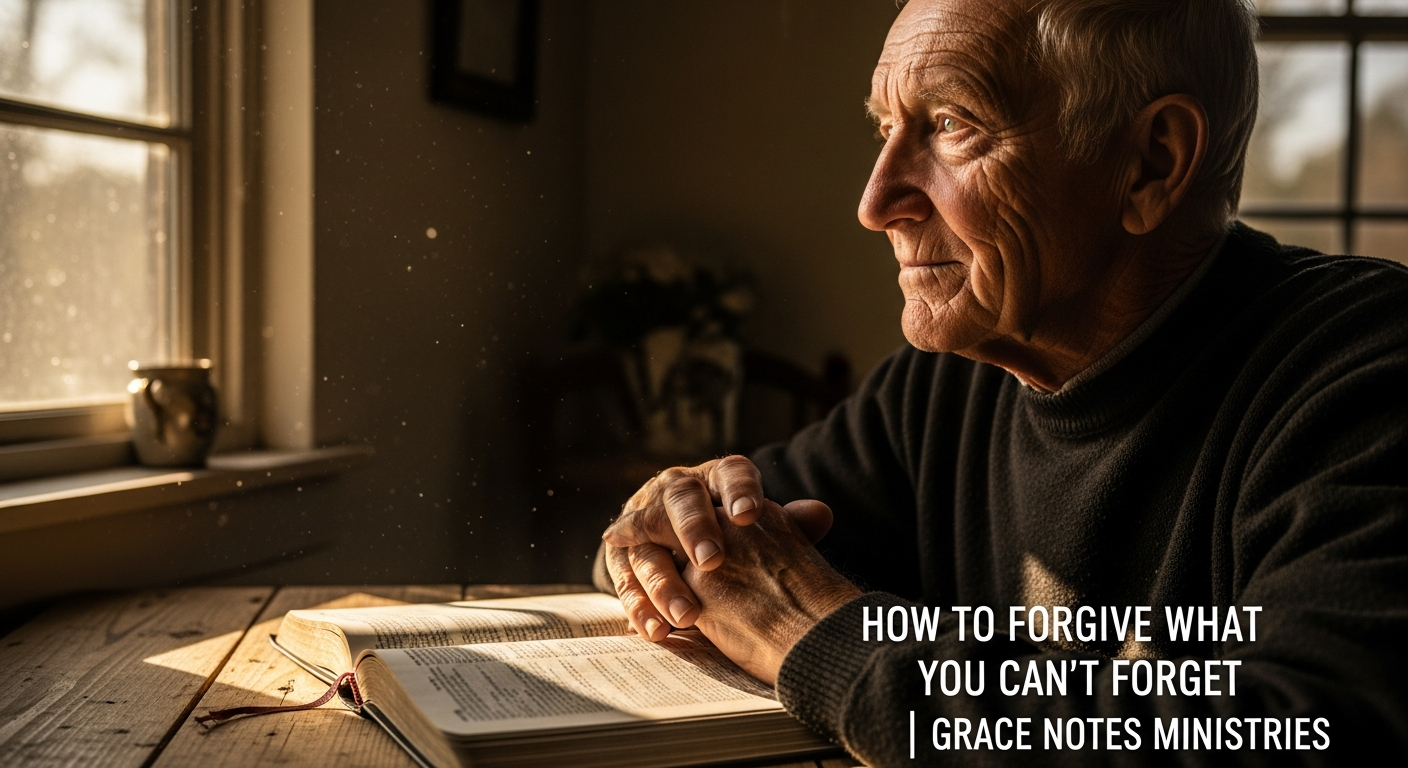
One of the greatest challenges in the Christian walk is the call to forgive those who have deeply hurt us. Often, we mistake forgiveness for forgetting. We believe that if the memory of the pain remains, we must not have truly forgiven. However, biblical forgiveness is not a selective amnesia; it is a conscious decision to release an offender from the debt they owe us, trusting God with the ultimate justice.
One of the greatest challenges in the Christian walk is the call to forgive those who have deeply hurt us. Often, we mistake forgiveness for forgetting. We believe that if the memory of the pain remains, we must not have...
- The Biblical Mandate for Forgiveness: Trusting God's Word through life's deepest trials and seasons of waiting.
- The Weight of Unforgiveness: Trusting God's Word through life's deepest trials and seasons of waiting.
- The Source of Our Strength: Trusting God's Word through life's deepest trials and seasons of waiting.
The Biblical Mandate for Forgiveness
Scripture does not minimize our pain, but it does provide a clear path forward. In his letter to the Colossians, the Apostle Paul instructs believers on how to live in community with one another, pointing directly to the ultimate standard of forgiveness:
Forbearing one another, and forgiving one another, if any man have a quarrel against any: even as Christ forgave you, so also do ye.— Colossians 3:13, KJV
To "forbear" means to hold back or show tolerance, while to "forgive" means to bestow favor unconditionally. We are called to extend this grace not because the offender deserves it, but because we have received the exact same grace from Jesus Christ. Our forgiveness of others is a direct reflection of the mercy we have received at the cross.
The Weight of Unforgiveness
Holding onto bitterness does not punish the person who hurt us; instead, it binds us to the past. Jesus spoke solemnly about the spiritual consequences of harboring an unforgiving heart during His Sermon on the Mount:
For if ye forgive men their trespasses, your heavenly Father will also forgive you: But if ye forgive not men their trespasses, neither will your Father forgive your trespasses.— Matthew 6:14-15, KJV
This warning highlights the spiritual barrier that unforgiveness creates between us and God. When we refuse to forgive, we close our hearts to the daily, relational fellowship with our Heavenly Father. Forgiveness is the key that unlocks our own spiritual prison, allowing us to walk in the fullness of God's peace.
The Source of Our Strength
Forgiving what we cannot forget is humanly impossible. It requires a supernatural source of strength. We cannot muster this kind of grace on our own; we must draw from the infinite well of Christ's redeeming work:
In whom we have redemption through his blood, the forgiveness of sins, according to the riches of his grace;— Ephesians 1:7, KJV
Because we have been redeemed through His blood, we have access to "the riches of his grace." When the memory of the hurt returns, we can take those thoughts captive and surrender them to the Lord. We may not forget the offense, but through Christ, we can remember it without the sting of bitterness, knowing that His grace is sufficient to heal every wound.