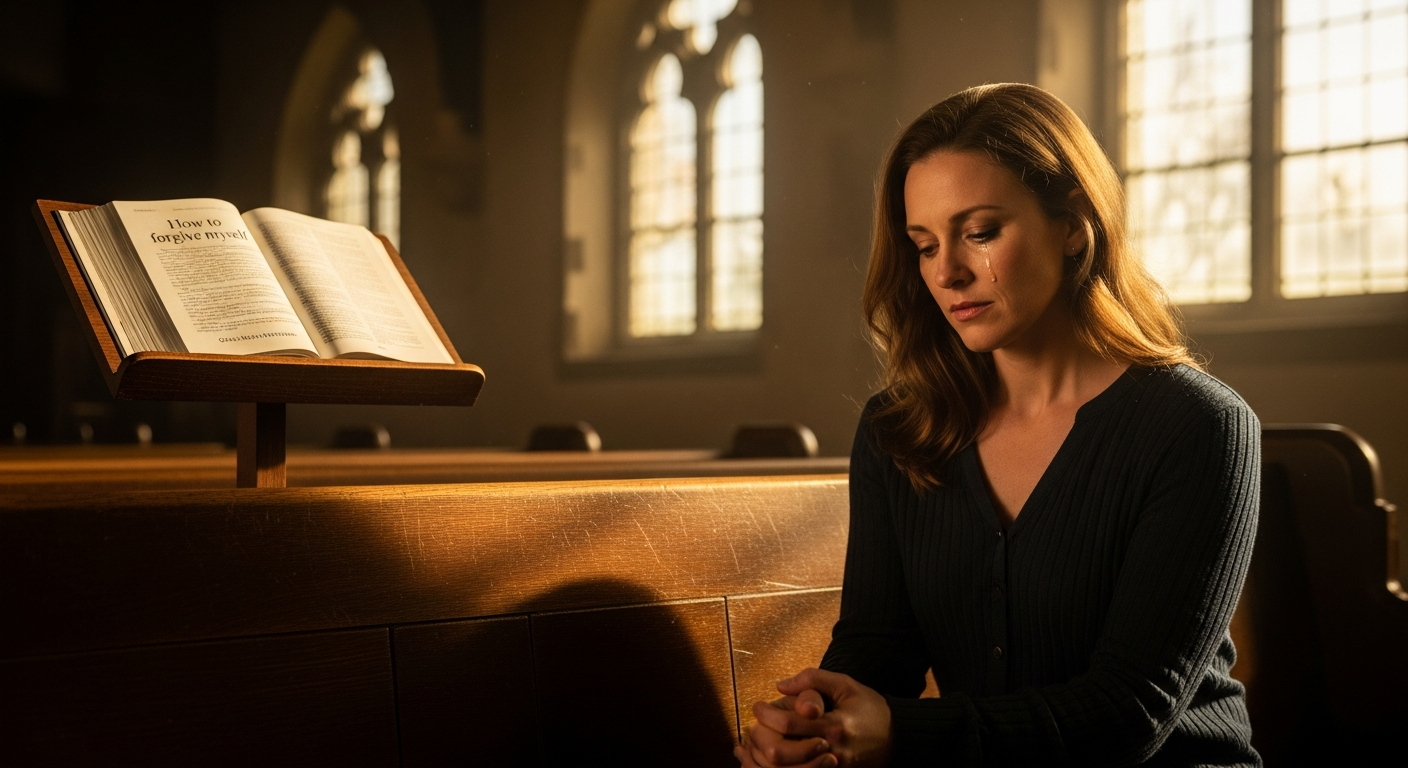
It is 3 AM, and the silence of the room feels louder than the noise of the day. You replay your mistakes, letting the weight of past decisions press against your chest. You wonder if you are too broken to be loved, too f...
- The Heavy Burden of Guilt: Trusting God's Word through life's deepest trials and seasons of waiting.
- The Courtroom of the Heart: Trusting God's Word through life's deepest trials and seasons of waiting.
- Understanding True Forgiveness Scripture: Trusting God's Word through life's deepest trials and seasons of waiting.
The Heavy Burden of Guilt
It is 3 AM, and the silence of the room feels louder than the noise of the day. You replay your mistakes, letting the weight of past decisions press against your chest. You wonder if you are too broken to be loved, too flawed to be forgiven. This is the trap of shame, whispering that your error defines your identity. It is a spiritual paralysis that binds many believers, keeping them chained to a past that God has already dealt with at Calvary.
But grace does not arrive in the darkness of self-condemnation; it comes with the morning light. As we seek how to forgive ourselves, we must first acknowledge that we are not the final judges of our worth. The enemy wants you to stare at the mud, but God invites you to look at the Maker who cleanses you.
When we refuse to forgive ourselves, we are inadvertently setting up our own tribunal, declaring our judgment to be more righteous than the sovereign decree of the Almighty. We must step down from the judge's seat and allow the true Judge of all the earth to have the final word.
For if ye forgive men their trespasses, your heavenly Father will also forgive you:— Matthew 6:14, KJV
The Courtroom of the Heart: Who is the Final Judge?
To understand how to release self-condemnation, we must examine the legal reality of our justification. In the economy of God's grace, salvation is not a legalistic religion of self-flagellation; it is a born-again relationship with Jesus Christ. When you are in Christ, your legal standing before God is completely transformed. The Apostle Paul addresses this profound truth in his epistle to the Romans, declaring the absolute security of the believer's standing.
There is therefore now no condemnation to them which are in Christ Jesus, who walk not after the flesh, but after the Spirit.— Romans 8:1, KJV
If God, who is the ultimate Lawgiver, declares that there is "now no condemnation," by what authority do we continue to condemn ourselves? To harbor lingering self-hatred and refuse to accept God's pardon is to commit an act of spiritual pride. It is asserting that our standard of holiness is higher than God's, or that Christ's sacrifice was sufficient for the sins of the world, but somehow insufficient for ours. We must align our minds with the objective truth of Scripture rather than the subjective, fluctuating feelings of our hearts.
Understanding True Forgiveness Scripture
We often misunderstand forgiveness as a feeling that comes before action. However, biblical forgiveness is a command rooted in the reality of Christ's sacrifice. When you ask for daily bread, you also ask for daily mercy. The same Father who sustains your life also covers your failures. True forgiveness is not an emotional state we manufacture; it is a judicial reality we receive by faith.
It is vital to remember that Jesus spoke of forgiveness not as an optional blessing, but as a fundamental posture of the heart. He linked our reception of grace to our willingness to extend it. To forgive others is to walk in the freedom He purchased for you.
This freedom must eventually turn inward, allowing you to accept the pardon already granted. If the blood of Jesus is sufficient to wash away the sins of those who have wronged us, it is infinitely sufficient to wash away the sins we have committed against ourselves and others.
And be ye kind one to another, tenderhearted, forgiving one another, even as God for Christ's sake hath forgiven you.— Ephesians 4:32, KJV
Notice the tense of the Apostle's words: "hath forgiven you." It is a finished transaction. On the cross, Jesus did not offer a partial payment. He did not leave a balance for you to pay off through years of guilt, depression, or self-punishment. When He cried out, "It is finished," the debt-book of your life was closed forever. To walk in self-condemnation is to act as though the bill is still outstanding.
The Difference Between Godly Sorrow and Worldly Shame
In our journey toward spiritual freedom, we must distinguish between the conviction of the Holy Spirit and the condemnation of the enemy. The Holy Spirit convicts us of sin to draw us closer to the Father, leading to restoration. The enemy, however, uses shame to drive us into isolation and despair.
For godly sorrow worketh repentance to salvation not to be repented of: but the sorrow of the world worketh death.— 2 Corinthians 7:10, KJV
Godly sorrow is productive; it points us to the cross and produces a sweet, life-giving repentance. Worldly sorrow, on the other hand, is sterile and destructive. It is a toxic loop of self-pity and guilt that leads only to spiritual death and paralysis. If your guilt is driving you away from God, it is not from Him. If it is whispering that you are beyond hope, it is a lie from the father of lies. God's voice always calls you home, bidding you to run *to* Him, not *from* Him.
Practical Steps to Release Guilt
Releasing deep-seated guilt is not a matter of mental gymnastics; it requires active, scripture-backed exercises that align your soul with God's truth. Here are three practical steps to help you walk out of the prison of self-condemnation:
1. Confess and Agree with God
True confession is not begging God for what He has already promised; it is agreeing with Him about the nature of your sin and the reality of His cleansing power. We must take Him at His Word.
If we confess our sins, he is faithful and just to forgive us our sins, and to cleanse us from all unrighteousness.— 1 John 1:9, KJV
Exercise: Write down the specific failure that haunts you on a piece of paper. Verbally confess it to God, acknowledging the pain it caused. Then, write 1 John 1:9 directly over it. Thank Him that because He is "faithful and just," that sin is completely cleansed. Destroy the paper as a physical reminder that the record of that sin no longer exists in the courts of heaven.
2. Reckon the Old Man Dead
Your old self—the one who committed that devastating mistake—was co-crucified with Christ. You are a new creature in Him. You must stop trying to resurrect and punish a person whom God has already buried.
Exercise: When the voice of accusation rises at 3 AM, speak the truth of Romans 6:11 aloud: "Likewise reckon ye also yourselves to be dead indeed unto sin, but alive unto God through Jesus Christ our Lord." Remind yourself: "The person who made that mistake is dead in Christ. I am alive today to serve Him in newness of spirit."
3. Meditate on the Nailing of Your Debt
Scripture tells us that our debt was not merely forgiven; it was violently executed on the cross of Calvary.
Blotting out the handwriting of ordinances that was against us, which was contrary to us, and took it out of the way, nailing it to his cross;— Colossians 2:14, KJV
Exercise: Close your eyes and visualize the Roman soldiers driving the nails through the hands of our Savior. Realize that pinned beneath those nails was the "handwriting of ordinances" against you—every failure, every secret shame, every regret. It is nailed there, taken out of the way, and covered by His precious blood.
Personal Reflection Prompts
- What specific failure are you holding onto that you secretly believe is "too big" or "too shameful" for the blood of Jesus Christ to cover?
- In what ways has your refusal to forgive yourself hindered your fellowship with God and your service to others?
- How would your daily walk change if you fully believed, without reservation, that God remembers your sins no more (Hebrews 8:12)?
Laying Down the Weight
You cannot forgive yourself by trying harder or suffering longer. You forgive yourself by believing that Christ’s work was sufficient for that specific failure. When you cling to your guilt, you are essentially saying that His blood did not cover it. That is a dangerous lie to believe. It robs you of the joy of your salvation and neutralizes your testimony to a hurting world.
Let your heart align with the truth that your debts have been paid in full. The struggle to forgive yourself often stems from a lack of understanding of how deeply you are loved. It is not about excusing the sin, but about accepting the Savior who bore the penalty. Peace comes when you stop fighting the verdict God has already declared over your life.
Wherefore I say unto you, All manner of sin and blasphemy shall be forgiven unto men: but the blasphemy against the Holy Ghost shall not be forgiven unto men.— Matthew 12:31, KJV
If you are worried that you have committed an unforgivable sin, let your heart be at peace. The very fact that you desire reconciliation and grieve over your distance from God is proof that the Holy Spirit is still tenderly working in your heart. The only unforgivable sin is the final, impenitent rejection of the Holy Spirit's testimony of Jesus Christ. Your failures are not beyond the reach of infinite grace.
Today, choose to lay down the heavy stone of self-judgment. Look up to the cross where the debt was paid, not by your effort, but by His grace. Walk in the freedom of the morning, knowing you are fully known and fully loved. Let forgiveness scripture guide your heart from shame to liberty. You are no longer defined by your past; you are defined by the Savior who redeemed you.