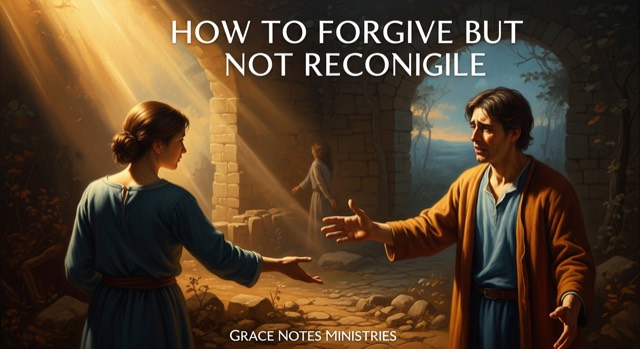
The Unpayable Debt We Carry
It’s three in the morning. Again. The ceiling above your bed becomes a screen, and the same old scratchy film begins to play, a grainy black-and-white reel of the wound that won't scar over. You can hear their voice, you can see their face, and you feel that cold, heavy knot tighten in your stomach all over again. It’s a debt. A real debt. They owe you an apology, an explanation, some kind of justice, but the payment never comes, and you're left holding the bill in the dark. So you lie there, the chief warden of a prison you built for them, never realizing you locked yourself inside with them, rattling the same bars night after night.
And then the Son of God kneels down beside you in that darkness, teaching you how to speak to the Father. He gets to the heart of it all. “And forgive us our debts,” He says, “as we forgive our debtors.” Notice the connection, the inseparable link He forges between the two. Our plea for mercy is conditioned on our practice of mercy. This isn't some cold, heavenly transaction where we earn points with God; it's the heartbeat of a transformed soul. Jesus uses the word 'debts' because this isn't about fuzzy feelings or forgetting what happened; it's about a spiritual ledger, a real accounting of wrongs, and He knows we are standing before the Father with an account so deep in the red that all the world's treasures couldn't begin to pay it down. Our refusal to cancel the pittance someone owes us is a glaring sign that we've never truly grasped the oceanic grace that canceled our own impossible debt.
Paul picks up this same theme, this same divine logic, and shines it like a lamp for the church in Ephesus. He tells them, "And be ye kind one to another, tenderhearted, forgiving one another, even as God for Christ's sake hath forgiven you." Look at the foundation. It's not their repentance. It’s not their apology. It's not whether they deserve it or have earned it back. The entire basis for our forgiveness toward another human being is what God has already, completely, and eternally accomplished for us through the finished work of His Son. It’s a done deal. Forgiveness, then, stops being about them and what they did, and it becomes about you and what God has done. You are not the initiator of grace; you are a responder to it, a mirror reflecting the light that first shone on you.
For if ye forgive men their trespasses, your heavenly Father will also forgive you: But if ye forgive not men their trespasses, neither will your Father forgive your trespasses.— Matthew 6:14-15, KJV
Canceling the Debt vs. Reopening the Account
So we try other ways. We try to manage the wound. We build high, thick walls around our hearts and call it wisdom, when really it’s just a well-decorated cell of bitterness. We rehearse the story of our injury, polishing our right to be angry until it gleams, justifying the poison we sip every morning hoping the other person will die. We might even put on a religious show, mouthing the words 'I forgive you' while our heart keeps a meticulous record of the wrong, a performance for an audience of one in heaven. But it doesn't work. It can't work. The root of bitterness, as Hebrews warns, springs up to trouble us, and thereby many be defiled. This self-reliant path is a dead end because it’s powered by our own broken will, and our will is no match for the deep wounds of the soul.
True, biblical forgiveness is something else entirely. It's a legal declaration you make before the court of heaven, standing on the authority of Jesus Christ. It’s looking at the person who wounded you—whether they are sorry or not, whether they are near or far—and saying out loud to God, 'The debt they owed me is canceled. I will no longer demand payment for this sin, because my Savior’s blood has paid for all sin, including this one. I release them from my judgment and I hand them over to Yours.' This is a vertical act between your soul and your God. It’s an act of pure obedience. You are aligning your personal ledger with God’s cosmic one, the one where the entire debt of sin was nailed to a cross and stamped 'Paid in Full.'
And here is the distinction that will set so many of you free. Forgiveness is not the same as reconciliation. Forgiveness is your mandatory, unilateral response to the grace you've received. It is a command. You must do it to stay in fellowship with the Father. Reconciliation, on the other hand, is a bilateral process. It's a restored relationship. It requires two willing parties: one who repents and one who forgives. Trust must be rebuilt, and that can only happen where there is genuine sorrow for sin and a demonstrated change of heart. You can and must forgive the unrepentant spouse, the abusive parent, the dishonest business partner. But you are not commanded by God to restore them to a place of trust and influence in your life. To do so would not be gracious; it would be foolish, and it would enable their sin to continue.
Lay not up for yourselves treasures upon earth, where moth and rust doth corrupt... But lay up for yourselves treasures in heaven...— Matthew 6:19-20, KJV
Forgiveness in the Flesh
This plays out in the hard, unglamorous moments of a Tuesday afternoon. You see their car drive by your house, or their name pops up on your phone, and for a split second, all the acid rushes back into your throat. Your heart pounds. The anger feels as fresh as it did the day the wound was made. In that moment, forgiveness isn't a past-tense accomplishment; it becomes a present-tense choice. It’s the gritty work of saying, 'No. Lord, I feel it. I acknowledge the pain. But I will not pick up that offense again. I made a decision to cancel that debt, and I stand by it right now. I release them again.' Forgiveness isn't a single event; it's a discipline, a constant returning to the foot of the cross to lay down the weapon you keep wanting to pick back up.
My friend, please hear me. Stop trying to *feel* like forgiving. The feeling is not the point. Obedience is the point. Your emotions are the caboose, not the engine of this train. Make the decision. Do the act. Speak the words of release to God, and trust the Holy Spirit to eventually bring your heart into alignment with your will. Your assignment from Jesus isn't to generate a warm, fuzzy affection for the person who broke your life apart. Your assignment is to obey His command. Pray for their well-being. Ask God to grant them the same repentance and mercy He granted you. That is the brutal, beautiful, soul-stretching work of grace, and God honors the obedient choice far more than the fickle emotion.
To walk this out day by day means you make a conscious decision to starve the grudge. You stop telling the story. You stop rehearsing the details of the betrayal to yourself and to others, which only re-opens the wound and allows the infection to spread. You refuse to let their past sin have a present vote on your capacity for joy. Walking in this grace is to accept the jagged, untidy reality that some relationships will not be healed on this side of heaven. You learn to entrust final justice to the only righteous Judge, which frees you from the exhausting, impossible job of being their judge, jury, and jailer. You get on with living the life He has for you, a life defined by His grace, not their sin.
And forgive us our debts, as we forgive our debtors.— Matthew 6:12, KJV
Where Grace Draws a Line and Builds a Foundation
Let's be absolutely clear about the foundation here. Christ's words in Matthew are not a gentle suggestion. They are the constitution of His Kingdom. 'For if ye forgive men their trespasses, your heavenly Father will also forgive you: But if ye forgive not men their trespasses, neither will your Father forgive your trespasses.' This isn't a threat about losing your salvation; it's a diagnostic test of whether you've truly received it. A heart that has been genuinely crushed by the weight of its own sin and then resurrected by the scandalous mercy of God simply cannot sustain a spirit of unyielding bitterness. Our willingness to forgive is the evidence, the fruit, that we have understood the Gospel for ourselves. This is the solid ground we stand on. We forgive because we are forgiven. Period.
But we must stand on that ground with wisdom, not naivete. The command to forgive is absolute. The call to reconcile is conditional. Reconciliation demands proof of change. It requires repentance that bears fruit. To re-engage, to rebuild a bridge with someone who is actively and unrepentantly trying to burn it down is not holy, it's self-destructive. It's offering a pearl to someone who will only trample it underfoot. Look at God Himself. His offer of reconciliation is extended to all, but He only enters into that restored relationship with those who repent and turn to Him. You can, and you must, offer forgiveness from a distance. You can cancel the debt, pray for their soul, and keep the door locked. That is not a failure of forgiveness; it is the exercise of profound, God-given wisdom.
Wherefore I say unto you, All manner of sin and blasphemy shall be forgiven unto men: but the blasphemy against the Holy Ghost shall not be forgiven unto men.— Matthew 12:31, KJV
So the work of forgiveness is not a single, heroic act, but the quiet, daily rhythm of a surrendered heart. It's the hard, holy business of letting go. Letting go of your right to be angry. Letting go of the demand for an apology that may never come. It is not forgetting; it is a conscious refusal to let the memory have power over your present peace and your future hope. When you truly forgive, you are releasing a prisoner from a cell you have been guarding for years, and in the turning of that key, you discover that the prisoner was you all along. So lay down the ledger. Surrender the demand for payment. Christ has paid it all—the debt they owed you, and the infinitely greater one you owed God. In that shared, scandalous reality, you can finally, finally walk out into the light, unburdened and free.