Let’s be honest. When you’re in the middle of a storm, the last thing you feel is thankful. When the waves are crashing over the bow of your life, when the diagnosis has been given, when the relationship has fractured, t...
- The High Cost of a Hardened Heart: Trusting God's Word through life's deepest trials and seasons of waiting.
- Is Your Eye Evil Because I Am Good?: Trusting God's Word through life's deepest trials and seasons of waiting.
- From Murmuring to Marveling: Trusting God's Word through life's deepest trials and seasons of waiting.
The High Cost of a Hardened Heart
Let’s be honest. When you’re in the middle of a storm, the last thing you feel is thankful. When the waves are crashing over the bow of your life, when the diagnosis has been given, when the relationship has fractured, the command to 'give thanks' can feel like an impossible, even cruel, expectation. It can feel like spiritual malpractice, a dismissal of your very real pain. You might be thinking, 'You don't know what I'm walking through.
' I understand. I have been there. But what if gratitude isn't a response to a perfect life, but a weapon for an imperfect one? What if it’s not a feeling to wait for, but a choice that can save you?
The disciples knew what it was like to be in a storm. In the sixth chapter of Mark, we find them straining at the oars, terrified, as a storm rages around them. Jesus comes to them, walking on the water, stills the wind, and gets into the boat.
Their response? ' That sounds good, but the Holy Spirit gives us a devastating insight in the very next verse. The reason for their shock was not the purity of their faith, but the hardness of their hearts.
They were amazed because they had already forgotten what Jesus had done just hours before. They had witnessed Him feed five thousand people with a few loaves and fish, a miracle of impossible provision. But in the middle of the storm, the memory of the bread was gone. Their fear was a symptom of their forgetfulness.
A lack of gratitude for past deliverance will always harden your heart to present-day miracles. It creates a spiritual amnesia that leaves you feeling orphaned and alone in the storm, even when the Son of God is walking toward you on the water. Ingratitude is not a neutral state; it is a corrosive force that calcifies the heart, making it unable to perceive God's power in the present.
For they considered not the miracle of the loaves: for their heart was hardened.— Mark 6:52, KJV
Is Your Eye Evil Because I Am Good?
One of the most insidious enemies of a grateful spirit is comparison. It’s the thief that whispers, 'Look what they have. Look how easy their life is. God must love them more.' In the age of social media, we scroll through curated highlight reels, comparing our behind-the-scenes struggles with everyone else's public victories. This habit of comparison is the fast track to a bitter, resentful heart. Jesus addressed this sickness of the soul head-on in a parable about workers in a vineyard.
The story is familiar: a landowner hires workers at different times of the day but pays them all the same wage. Those who had worked all day, bearing the full heat and burden, were furious. They grumbled. They compared. They felt cheated. And the landowner’s response cuts to the very core of our own discontent. He asks a question that should echo in our hearts every time we feel the sting of envy: 'Is thine eye evil, because I am good?'
Notice what’s happening here. The workers’ focus wasn’t on their own blessing—they received exactly the fair wage they agreed to. Their focus was on the perceived unworthiness of someone else’s blessing. Their eye had become 'evil'—not because the landowner was unjust, but precisely because he was generous.
Comparison had blinded them to the goodness they held in their own hands. This is why the Apostle Paul, under the inspiration of the Holy Spirit, doesn't just suggest thankfulness; he commands it. ' This is God's will not because He needs our praise, but because we need the perspective that praise provides. The discipline of thankfulness, especially as found in `1 Thessalonians 5:18`, is the divine cure for the evil eye of comparison.
Is it not lawful for me to do what I will with mine own? Is thine eye evil, because I am good?— Matthew 20:15, KJV
From Murmuring to Marveling
Gratitude is what rewires your spirit from murmuring to marveling. It is the conscious shift from focusing on what’s wrong with your situation to what’s right with your God. The grumbling workers in the vineyard saw only injustice. But contrast their reaction with the crowd who witnessed Jesus heal a man sick with palsy.
Paralyzed, helpless, this man was brought by his friends to the feet of Jesus. When Jesus not only healed his body but forgave his sins, the crowd didn't analyze it, debate it, or compare it. They were overcome.
' They saw the power, they saw the mercy, and it produced an explosion of praise. This is the spiritual transaction that happens when we practice gratitude. It lifts our gaze from the mat of our paralysis to the face of our Healer.
It forces us to acknowledge that the Giver is greater than the gift we are asking for. The very air we breathe is a gift. The fact that the Word became flesh and dwelt among us, that the Light shines in the darkness, is a gift that dwarfs every trouble we could ever face.
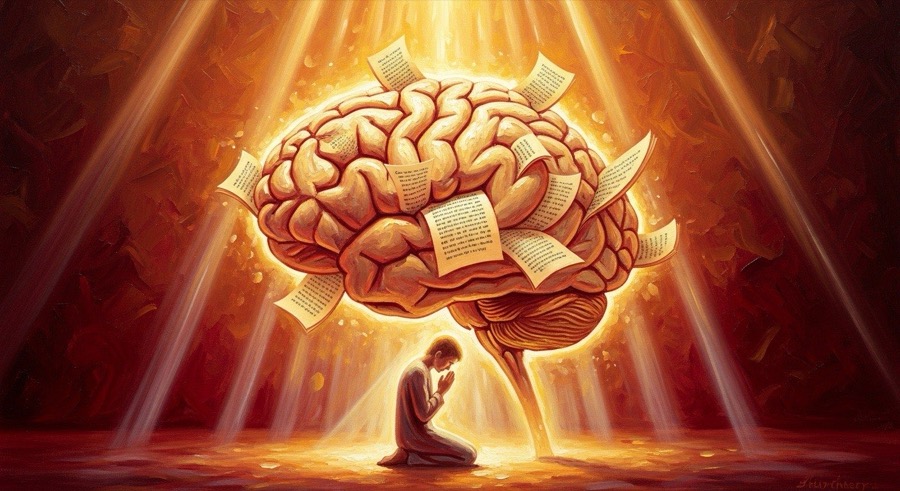
This is how gratitude changes your brain and your spirit. It's not about pretending pain doesn't exist. It’s about declaring that God is present in the pain. It’s a spiritual discipline that carves out new neural pathways of hope in a mind programmed for pessimism and fear.
When you choose thankfulness, you are not being unrealistic; you are being radically realistic about who God is. You are choosing to agree with heaven about your situation, even when earth is screaming a different story. You are moving from being a reactor, tossed about by every circumstance, to being a responder, anchored in the immutable goodness of God.
But when the multitudes saw it, they marvelled, and glorified God, which had given such power unto men.— Matthew 9:8, KJV
Gratitude is not a destination you arrive at when life gets good. It is the vehicle you take to navigate the road when life is hard. It is the stubborn, soul-stabilizing choice to 'consider the miracle of the loaves' even when the storm is raging. It is the refusal to let an 'evil eye' of comparison rob you of the joy of God’s goodness. Today, you can make that choice. Don't wait until you feel it. Start right where you are, in the mess and the pain.
Find one thing. Just one. Thank Him for it. Then find another. This is how the war is won. You anchor your soul to His faithfulness, one 'thank you' at a time, and you watch as the Light begins to break through the darkness.