Our Small Boxes for an Infinite God
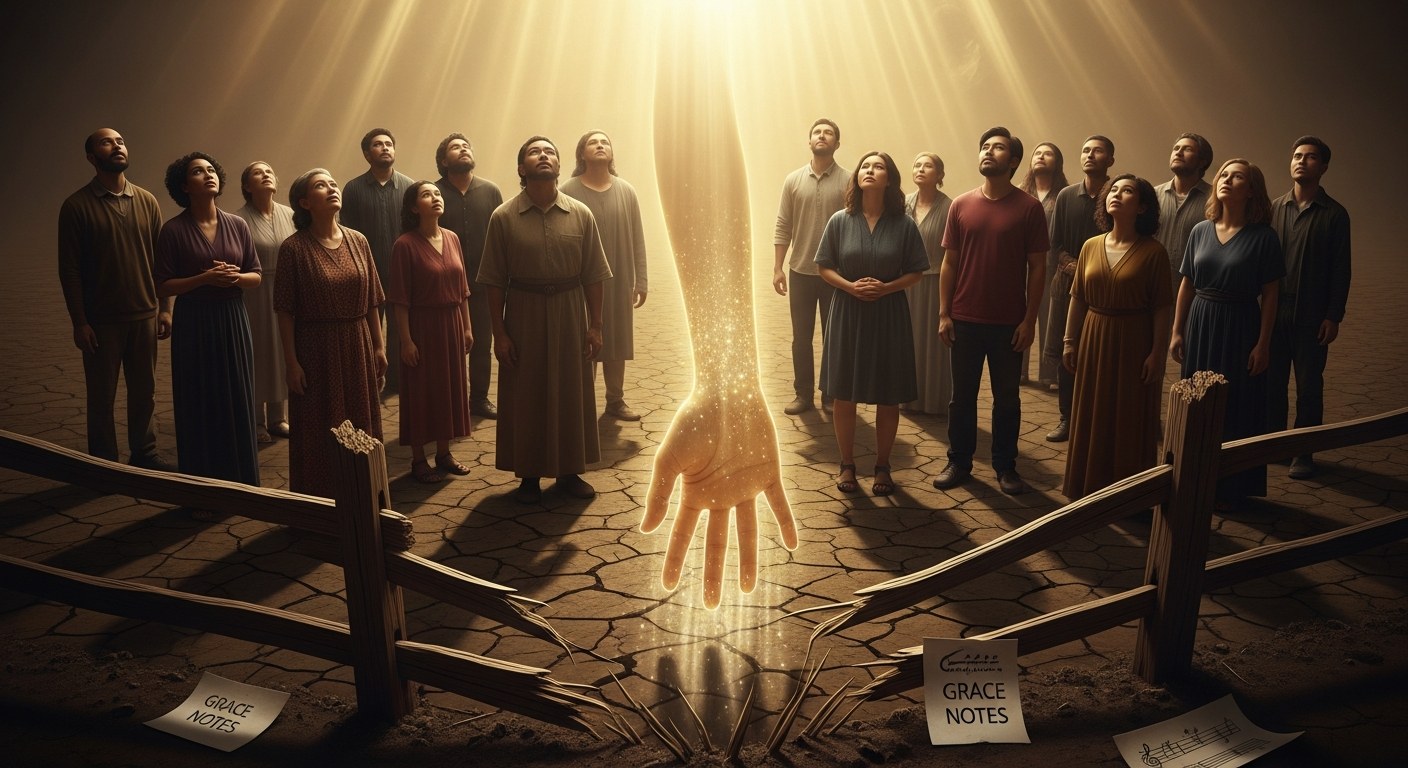
Late at night, perhaps 3 A.M., we find ourselves staring at the ceiling, wrestling with questions about God's purposes and why He allows certain events. In our longing to understand, we attempt to frame the infinite God within the limited boundaries of human thought, much as a child sketches a parent in simple lines. This tendency leads us to reduce the Creator to concepts that fit neatly into our cultural language or theological categories. Yet Scripture reminds us in Psalm 110:1 (KJV) that the Lord says to His Lord, 'Sit thou at my right hand,' a truth far beyond any human diagram. Our hearts ache to grasp the ungraspable, but we must remember that God is greater than any picture we can draw.
In the first century, the scribes clung tightly to their own expectations of the Messiah, insisting that He must be a political deliverer descending from David. When Jesus confronted them (Luke 20:41‑44 KJV), He asked, 'How is it that David calls him Lord, and yet he says, "He is my son"?' He was not merely challenging tradition; He was exposing a logical inconsistency in their understanding of the Davidic covenant (Hebrew root *דָּוִד* david, meaning 'beloved'). By pointing to Psalm 110, Jesus showed that the Messiah is both David's descendant (*ben* in Hebrew) and his Lord (*kyrios* Greek, meaning 'master'). This dual identity cannot be confined to a single human title.
God's character transcends the fences we construct from our limited theology. He does not fit into a cartoon sketch with a fixed number of fingers, nor does He stay confined within the scribes' narrow definition of 'David's son.' Instead, He continually breaks through our expectations, revealing Himself as the sovereign Lord who fulfills the covenant promises (cf. Genesis 22:18 KJV). His love is deeper than any human diagram can capture, and His grace reaches farther than our theological boxes allow. We are invited to encounter Him beyond the borders of our own concepts.
The psalmist declares, 'The Lord said unto my Lord, Sit thou at my right hand' (Psalm 110:1 KJV), a verse that the New Testament applies to Christ as both David's descendant and his Lord (cf. Luke 20:44). This connection bridges the Old Covenant promise with its fulfillment in the New Covenant, showing that God's plan was never limited to human expectations. In Christ we see the divine hand reaching beyond our theological fences, inviting us into a relationship that surpasses mere definition. He is not a character to be neatly categorized; He is the living God who meets us in grace. May we therefore let go of our boxes and encounter Him as He truly is.
David therefore calleth him Lord, how is he then his son?— Luke 20:44 (KJV)
When Religion Builds Fences, God Breaks Through
We see this struggle between human-made fences and God's boundless freedom played out vividly in the religious world of Jesus' time, a world much like our own where outward show often eclipsed inner truth. The scribes, for example, loved walking in their "long robes," craving "greetings in the markets," and desiring the "highest seats in the synagogues" and "chief rooms at feasts," all while devouring "widows’ houses" and making long prayers "for a shew." Their religion was a carefully constructed facade, a performance designed to impress others and, perhaps, even themselves, creating a rigid system that defined who was in and who was out, who was holy and who was not, effectively putting God in a box of human approval and legalistic observance.
But notice Christ's radical departure from these self-imposed boundaries. When the Pharisees started murmuring about Jesus making more disciples than John, He simply left Judea and departed for Galilee. And here's the thing, a detail often overlooked but profound in its implication: "And he must needs go through Samaria." This wasn't a scenic detour; it was a deliberate, grace-filled crossing of a deep cultural and religious chasm. Jews and Samaritans had no dealings, a fence built high with centuries of prejudice and theological disagreement, yet Jesus, the very embodiment of God, chose to walk right through it, demonstrating that His grace knows no such human-made boundaries.
He didn't wait for the Samaritan woman at Jacob's well to clean up her life, to get her theology straight, or to meet any religious prerequisites. He simply sat there, "being wearied with his journey," and when she came, a woman burdened by her past and ostracized by her community, He initiated the conversation. "Give me to drink," He said, a simple request that shattered social norms and opened the door to a profound revelation of living water, showing us that God's desire to connect with the broken and the marginalized far outweighs any human-made rule or religious expectation. He doesn't wait for us to perfect our 'five fingers' of piety; He reaches out with His own gracious hand.
And he must needs go through Samaria.
And he must needs go through Samaria.— John 4:4, KJV
Receiving the Uncontainable God
So often, we approach our relationship with God like we're still trying to figure out how many fingers He ought to have, or what specific robes He prefers us to wear, or which specific market we should be seen in. We try to earn His favor, to understand His complex will through our own intellectual might, or to perform enough good deeds to merit His attention, building internal fences of performance and self-reliance. This leads to exhaustion, to doubt, to a constant striving that leaves us feeling inadequate and perpetually missing the mark, because we're trying to grasp the infinite with finite hands, to define the undefinable with human words.
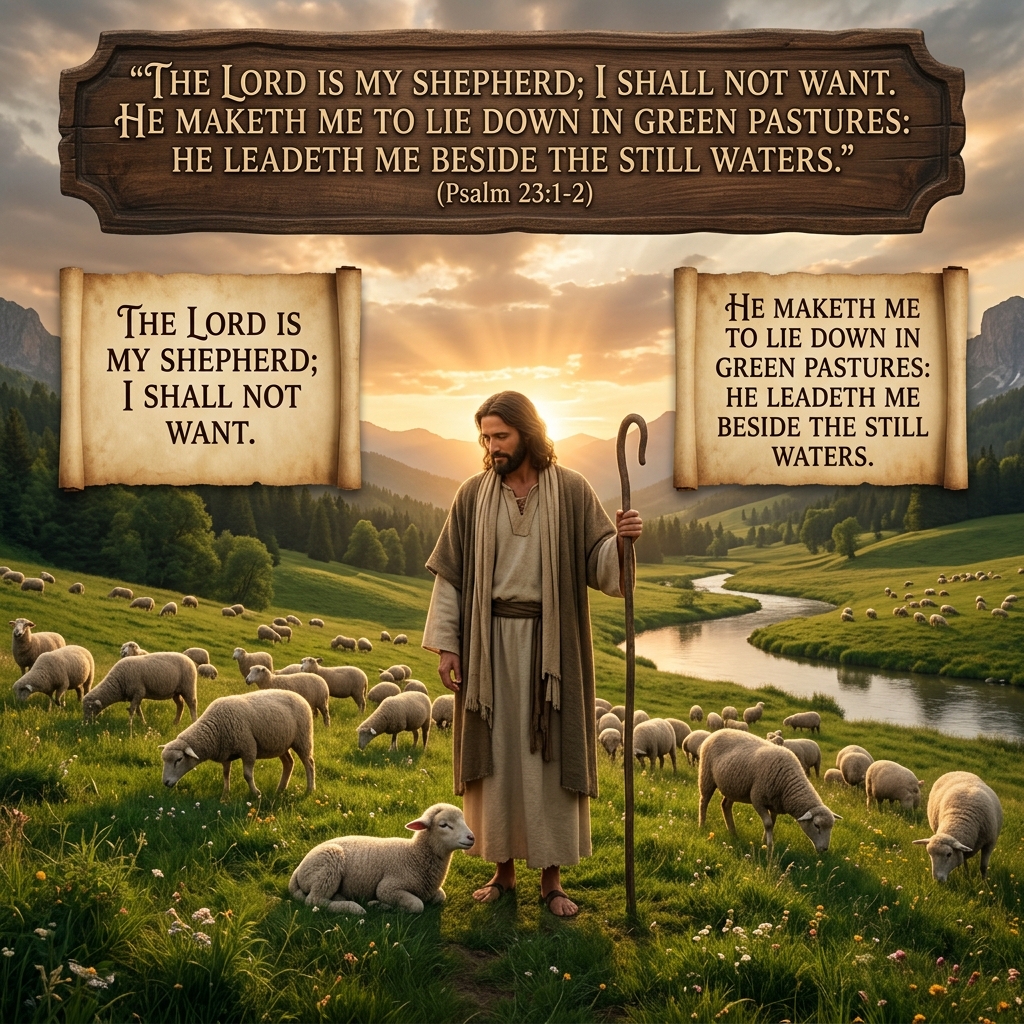
But beloved, you don't need to earn a single one of God's 'five fingers,' nor do you need to unravel all the mysteries of His divine will before you can receive His love. The good news, the truly liberating news, is that He has already reached out to you. His journey through Samaria, His weary sitting at the well, His simple request for a drink, all point to a God who comes to you, not expecting you to cross the chasm, but crossing it for you. You are invited to simply rest in the finished work of Christ, to lay down your striving, and to receive the living water He freely offers, a grace that covers every perceived inadequacy and every past failure.
Walking in this grace day by day means letting go of the need to perfectly understand or control God, and instead, embracing the beautiful mystery of His boundless love. It means recognizing that His nature is not defined by our anxieties or our limited perceptions, but by His unwavering faithfulness and His radical pursuit of the lost. When you encounter moments of doubt or confusion, remember the Samaritan woman; God is not waiting for your perfection, but for your willingness to simply engage with Him, to accept the living water that quenches a thirst no human effort could ever satisfy.
There cometh a woman of Samaria to draw water: Jesus saith unto her, Give me to drink.
There cometh a woman of Samaria to draw water: Jesus saith unto her, Give me to drink.— John 4:7, KJV
Standing on Solid Ground
The KJV Scripture gives us an unshakeable baseline: God is sovereign, eternally profound, and utterly beyond the scope of human attempts to contain Him, yet He is intimately accessible through Christ. His promises are not contingent on our ability to perfectly define Him or adhere to a set of human-made rules, but on His own unchanging character and the finished work of the Cross. This truth liberates us from the burden of trying to 'figure out' God's every move or to earn His favor, grounding us instead in the profound security of His unmerited grace that was always meant to flow freely, not to be earned by our efforts.
Let's not return to the chains of performance and religious guilt, to the futile exercise of drawing our own limited gods. Beware the spirit of the scribes, who devoured "widows’ houses, and for a shew make long prayers," for they shall "receive greater damnation." This isn't about condemnation for those who seek to understand, but a stark warning against substituting genuine encounter with God for outward show or rigid, self-serving systems. Embrace the God who is bigger than any cartoon, any creed, any fence, the One who runs toward the broken, not away from them, offering a grace that truly sets us free.
Beware of the scribes, which desire to walk in long robes, and love greetings in the markets, and the highest seats in the synagogues, and the chief rooms at feasts;
Beware of the scribes, which desire to walk in long robes, and love greetings in the markets, and the highest seats in the synagogues, and the chief rooms at feasts;— Luke 20:46, KJV
✨ What To Do Today
- Journal prompt: Reflect on a time you tried to 'figure God out' or define Him within your own understanding. What did you miss about His character in that effort?
- Scripture meditation: Read Luke 20:41-47 and John 4:1-10 slowly. Ask God: 'What fences have I built around You, or around myself, that You wish to break down today?'
- Practical step: Identify one area where you're trying to earn God's favor or understand His will through your own effort. Consciously release it to Him today.
- One act of surrender: Name your need to perfectly understand God. Lay it down. Cling to John 4:10: 'If thou knewest the gift of God...'
So, beloved, let the cartoon God with five fingers remind you not of His limitation, but of our own. He is not a character we can draw, a concept we can fully contain, or a set of rules we can perfectly follow. He is the living God, the One who 'must needs go through Samaria,' stepping over every fence of human expectation and religious prejudice to offer you living water, a grace so vast it defies definition, a love so personal it seeks you out. Rest in that boundless, beautiful truth today, knowing His hand is always reaching, not for your performance, but for your heart, freely given.