The digital clock on your nightstand glowed a stark 3:17 AM. You were wide awake, again. The familiar ache in your chest wasn't from indigestion; it was the heavy burden of regret, of things left undone, of things done terribly wrong. You’d tried everything to shake it off – distract yourself, numb yourself, even punish yourself with endless rumination. But here you were, in the quiet, suffocating darkness, the ghosts of your past whispering accusations that felt undeniably true. You felt stuck, trapped in a cycle you couldn't seem to break, a person you didn’t want to be, but one you didn't know how to escape. Maybe you even slipped out of bed, knelt beside it, and in a whisper so faint you weren't sure God could hear, you uttered a prayer. It wasn't eloquent, it wasn't perfect theology; it was just a desperate plea from the depths of a weary soul: "God, if You're real, if You're listening, I can't do this anymore. I need something different. I need… change. I need to be someone else."
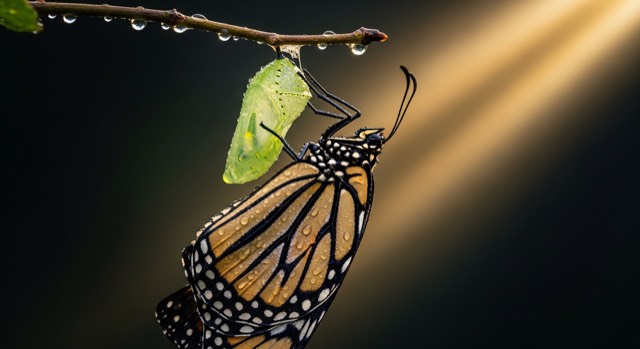
That raw, honest cry, echoing in the stillness of the night, is the very heartbeat of what it means to be truly made new. It's the moment we realize our own efforts fall short, and we yearn for a transformation that only a divine hand can bring. It's the longing for an identity unshackled from the chains of yesterday, an identity that feels clean, whole, and deeply, genuinely loved. In our fast-paced, often superficial world, we hear phrases like "born again" or "new creature" tossed around, sometimes with judgment, sometimes with misunderstanding. But at its core, this isn't about adopting a new set of rules or joining a club. It's about a radical, supernatural rebirth that addresses the deepest needs of that 3 AM soul. It's about God reaching into your brokenness and declaring, with absolute authority and unfathomable love, that He sees not what you were, but what you can become. It's about the stunning truth of 2 Corinthians 5:17, which proclaims, "Therefore if any man be in Christ, he is a new creature: old things are passed away; behold, all things are become new." This isn't just a promise; it's a declaration of a profound reality for every heart that turns to Him.
The digital clock on your nightstand glowed a stark 3:17 AM. You were wide awake, again. The familiar ache in your chest wasn't from indigestion; it was the heavy burden of regret, of things left undone, of things done t...
- The Weight of "Old Things" — Why We Need to Be Made New: Trusting God's Word through life's deepest trials and seasons of waiting.
- A Divine Exchange — How "All Things Become New": Trusting God's Word through life's deepest trials and seasons of waiting.
- Living as a New Creature — Practical Implications of a Transformed Identity: Trusting God's Word through life's deepest trials and seasons of waiting.
The Weight of "Old Things" — Why We Need to Be Made New
Before we can truly grasp the wonder of being made new, we must first honestly confront the reality of the "old things" that pass away. For many, these "old things" are not just minor character flaws; they are deeply ingrained patterns of thought, destructive habits, and painful memories that define their self-perception. They are the guilt of past mistakes, the shame of repeated failures, the sting of words spoken in anger, the emptiness of pursuits that promised fulfillment but delivered only fleeting satisfaction. The Bible calls this condition "sin," a term that often feels heavy and condemning, but at its heart, it simply describes anything that misses God's perfect mark – anything that separates us from His life-giving presence. We're not just talking about isolated bad actions; we're talking about a fundamental brokenness within our very nature, a spiritual illness passed down through generations. As it says in Romans 3:23, "For all have sinned, and come short of the glory of God." We are, in our natural state, fundamentally separated, and this separation manifests in a myriad of ways, both subtle and overt.
Think about the frantic chase for approval, the gnawing insecurity that drives comparison, the bitterness that festers after a betrayal, or the seemingly unbreakable grip of an addiction. These are all symptoms of a heart that is not yet fully aligned with its Creator. We try, don't we? We try to be better, to do better, to earn our worth. We make resolutions, we read self-help books, we embark on new diets or exercise regimes, hoping that external change will somehow fix the internal turmoil. But invariably, we find ourselves back in that familiar 3 AM moment, wrestling with the same old demons, the same old weaknesses, the same old doubts about our inherent goodness. The prophet Isaiah captured this futility perfectly when he wrote, "But we are all as an unclean thing, and all our righteousnesses are as filthy rags; and we all do fade as a leaf; and our iniquities, like the wind, have taken us away." (Isaiah 64:6). Our best efforts, when measured against God's perfect standard, fall tragically short. We cannot, by our own strength, scrub away the stain of sin or mend the broken pieces of our souls. This realization isn't meant to condemn us further, but to humble us, to bring us to the end of ourselves, and to prepare our hearts for the radical, beautiful solution that only God can provide. The "old things" must pass away because they are inherently flawed, insufficient, and ultimately, deadly. They hold us captive, diminish our true potential, and keep us from the abundant life God intends for us.
A Divine Exchange — How "All Things Become New"
The beautiful news is that God, in His infinite love and wisdom, did not leave us in our brokenness. He didn't just give us a set of rules to try harder; He initiated a divine exchange, a complete spiritual overhaul that makes "all things new." This transformation isn't a gradual improvement of the old self; it's a creation of a *new* self. How does this happen? It begins with faith in Jesus Christ. When we turn from our attempts to save ourselves (what the Bible calls repentance) and place our trust in Jesus – believing that He lived a perfect life, died on the cross for our sins, and rose again, conquering death – something miraculous happens. God doesn't just forgive our sins; He imputes, or credits, His righteousness to us. Our sin is laid upon Christ, and His righteousness is laid upon us. As 2 Corinthians 5:21 declares, "For he hath made him to be sin for us, who knew no sin; that we might be made the righteousness of God in him." This is the ultimate exchange, the most profound transaction in all of eternity.
But it doesn't stop there. This newness isn't merely a legal declaration; it's an internal reality brought about by the Holy Spirit. When we are "born again" (a term Jesus used in John 3), it's a spiritual birth, not a physical one. Jesus told Nicodemus, "Verily, verily, I say unto thee, Except a man be born again, he cannot see the kingdom of God... That which is born of the flesh is flesh; and that which is born of the Spirit is spirit." (John 3:3, 6). The Holy Spirit comes to dwell within us, taking up residence in our hearts. He doesn't just clean up the old house; He builds a brand new one. He gives us a new heart, as promised in Ezekiel 36:26: "A new heart also will I give you, and a new spirit will I put within you: and I will take away the stony heart out of your flesh, and I will give you an heart of flesh." This new heart is alive to God, sensitive to His will, and capable of loving Him and others in a way our old, stony hearts never could. The "old things" – the guilt, the shame, the power of sin – pass away because we are no longer defined by them. We are defined by Christ, by His sacrifice, and by the Holy Spirit's transforming power within us. This is why the change is so radical, so foundational. It’s not just a change of behavior; it’s a change of nature, a spiritual resurrection that brings us from death to life.
Therefore if any man be in Christ, he is a new creature: old things are passed away; behold, all things are become new.
2 Corinthians 5:17 (KJV)
The beauty of this divine exchange is that it's not something we earn or achieve; it's a gift freely given by God's grace. It's a testament to His boundless love, His desire to reconcile us to Himself, and His power to make us truly whole. When we respond to His invitation, when we surrender our brokenness to Him, He doesn't just patch us up; He makes us entirely new, creating a masterpiece out of what was once shattered. He sees beyond our present failures and past regrets, to the glorious, redeemed person He is making us to be in Christ. This is the truth that can penetrate the deepest darkness of a 3 AM moment and bring the light of hope and genuine transformation.
Living as a New Creature — Practical Implications of a Transformed Identity
Now, this incredible truth isn't meant to stay an abstract theological concept. Being a "new creature" has profound and practical implications for how we live our daily lives. It's not a license to do whatever we want, nor is it an instant magical eraser of all our struggles. Instead, it's the foundation upon which a life of genuine freedom and purpose is built. When the Holy Spirit takes residence within us, He begins a lifelong process of conforming us to the image of Christ. This is what we call sanctification. It means that while our identity is immediately and perfectly new in God's eyes, our experience of that newness unfolds over time.
One of the most significant changes is in our desires and priorities. While the "old man" was driven by selfish ambition, worldly pleasures, and the pursuit of fleeting satisfaction, the "new creature" begins to desire things that align with God's heart. We find ourselves drawn to His Word, longing for fellowship with other believers, and developing a compassion for others that wasn't there before. The things that once captivated us begin to lose their luster. Romans 6:4 speaks powerfully to this: "Therefore we are buried with him by baptism into death: that like as Christ was raised up from the dead by the glory of the Father, even so we also should walk in newness of life." This "newness of life" isn't about rigid rule-following; it's about a fundamental shift in our inner compass. We're not trying to earn God's love or prove our worth; we're responding to the love we've already received, living out of the identity He has given us.
However, let's be real: this journey isn't always smooth sailing. We still live in a fallen world, and our flesh (our old sinful nature, though no longer dominant) still battles against the Spirit. There will be days when the old temptations resurface, when old thought patterns try to reassert themselves, and when we stumble and fall. But here's the crucial difference: before Christ, a fall meant defeat, a confirmation of our brokenness. In Christ, a fall is an opportunity to lean deeper into His grace, confess our weakness, and remember our true identity. We are no longer slaves to sin; we are children of God. As Galatians 2:20 beautifully puts it, "I am crucified with Christ: nevertheless I live; yet not I, but Christ liveth in me: and the life which I now live in the flesh I live by the faith of the Son of God, who loved me, and gave himself for me." This verse isn't just poetry; it's the blueprint for living as a new creature. It means recognizing that the power to overcome, to love, to forgive, and to serve comes not from our own strength, but from Christ living within us. Our struggles don't negate our new identity; they simply highlight our ongoing need for Him and His grace. The Holy Spirit empowers us to make choices that honor God, to grow in holiness, and to increasingly reflect the character of Christ in every area of our lives. It's a continuous process of allowing the new nature to truly permeate every aspect of our being, walking daily in the freedom and power of our transformed identity.
The Assurance of Transformation — Resting in God's Unchanging Promise
Perhaps the most common question that arises for those seeking genuine transformation, especially in those quiet, vulnerable 3 AM moments, is "Is it real? Am I *really* new? What if I mess up again?" These doubts are natural, born from a lifetime of self-reliance and the human tendency to try and earn what can only be freely given. But the truth about being made new in Christ is that it is not dependent on our performance, our perfection, or even our unwavering belief every single second. It is entirely dependent on God's faithfulness and His completed work on the cross.
The assurance of our transformation rests firmly on the character and promises of God, not on the shifting sands of our emotions or experiences. When God declares that you are a "new creature" in Christ, He means it. He doesn't change His mind. His promises are steadfast and eternal. Consider Philippians 1:6, which states, "Being confident of this very thing, that he which hath begun a good work in you will perform it until the day of Jesus Christ." This is a profound anchor for our souls. It tells us that our salvation, our new identity, and our ongoing sanctification are not left to our own devices. The same God who initiated this miraculous work within us is faithful to complete it. He doesn't abandon His projects; He finishes what He starts.
Furthermore, the Holy Spirit, who indwells every believer, serves as a divine seal and a down payment of our inheritance. Ephesians 1:13-14 says, "In whom ye also trusted, after that ye heard the word of truth, the gospel of your salvation: in whom also after that ye believed, ye were sealed with that holy Spirit of promise, Which is the earnest of our inheritance until the redemption of the purchased possession, unto the praise of his glory." This means the Spirit within us is God's guarantee, His pledge that we are truly His, and that the transformation is genuine and irreversible. Even when we stumble, even when old habits rear their ugly heads, the presence of the Holy Spirit convicts us, draws us back to repentance, and reminds us of whose we are. Our struggles do not mean we were never truly new; they are simply part of the ongoing process of growing into the fullness of that newness. They are a testament to the battle between our old self and our new, Spirit-empowered identity, a battle where the Spirit ultimately triumphs.
Our security in Christ is not based on how well we perform, but on how perfectly Christ performed for us. Jesus Himself promised in John 10:28-29, "And I give unto them eternal life; and they shall never perish, neither shall any man pluck them out of my hand. My Father, which gave them me, is greater than all; and no man is able to pluck them out of my Father's hand." What an incredible assurance! If you have placed your faith in Jesus, you are securely held in the hands of the Father and the Son. Your new identity is not something that can be lost through a bad day or a momentary failure. It is a permanent, divine gift. So, when doubt creeps in, when the whispers of your past try to reclaim you, remember this: your newness isn't a fragile thing you must constantly protect. It is a work of God, secured by His power, and sustained by His unwavering love. You are, unequivocally, a new creature in Christ, and that truth stands firm, unshaken by any storm.
So, as the dawn breaks, whether literally in the sky or metaphorically in your soul, know this: the God who hears your desperate 3 AM cry is the same God who offers you an entirely new beginning. He doesn’t offer a patched-up version of your old self, but a truly new creation, cleansed, forgiven, and filled with His Spirit. You don't have to earn this newness; you simply receive it by faith. The old things – the guilt, the shame, the brokenness – truly pass away, not because you've somehow managed to fix them, but because Jesus already paid the price and made all things new. Embrace this incredible grace, dear heart. Rest in the profound truth that in Christ, you are not just capable of change; you *are* changed. You are loved, you are redeemed, and you are made wonderfully, miraculously new.
"Therefore if any man be in Christ, he is a new creature: old things are passed away; behold, all things are become new."
— 2 Corinthians 5:17 (KJV)