There’s a particular kind of silence that settles over you after something has shifted—when the fever breaks, when the bill clears, when your name is no longer whispered around you like a cautionary tale. You stand in th...
- The Quiet Silence of the Nine: Trusting God's Word through life's deepest trials and seasons of waiting.
- The Architecture of Self-Reliance: Trusting God's Word through life's deepest trials and seasons of waiting.
- Living Backward Toward Grace: Trusting God's Word through life's deepest trials and seasons of waiting.
The Quiet Silence of the Nine
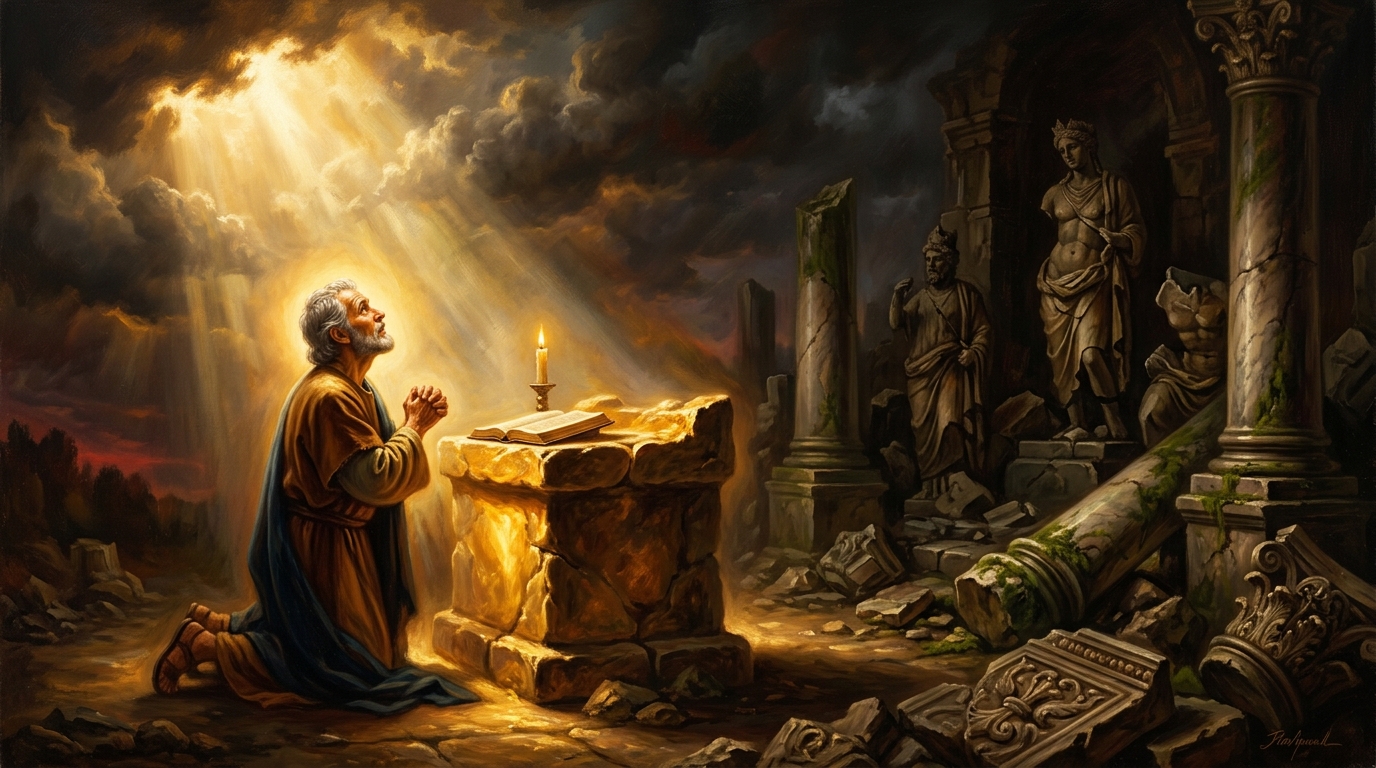
There’s a particular kind of silence that settles over you after something has shifted—when the fever breaks, when the bill clears, when your name is no longer whispered around you like a cautionary tale. You stand in the kitchen after midnight, staring at the refrigerator light, and you realize nobody’s looking anymore. That’s when pride creeps in through the back door, wearing a disguise of gratitude and telling you to keep walking. It doesn’t announce itself as arrogance; it announces itself as self-sufficiency, the quiet conviction that you’ve earned your place at the table. You start building a mental ledger of what you survived, and slowly that ledger replaces the memory of grace. I’ve seen it happen to good people—men who prayed for healing, women who begged for provision—and when they got it, the very first thing they did was credit themselves. It’s not malice that drives pride; it’s forgetfulness.
Now look at Jesus in Luke 17, because this is where the text stops being theory and starts cutting skin. Ten lepers stood afar off, and they lifted up their voices with one cry: "Jesus, Master, have mercy on us." That’s the posture of every human being before God—far off, mute without Him, begging. He told them to go show themselves to the priests, and as they went, they were cleansed. Notice the order: obedience before sight, faith before feeling. They didn’t wait to feel clean; they walked toward the priests and trusted His word. This is the architecture of grace—God speaks, you move, He works. Pride flips it backward: feel it first, then obey if You can verify the result.
And here is the wound that makes this passage sting. One of them turned back—a Samaritan, a foreigner to the covenant people—and with a loud voice glorified God. He fell down on his face at Jesus' feet, giving thanks. Jesus didn’t scold him; He asked a question that echoes through every era: "Were there not ten cleansed? but where are the nine? There are not found that returned to give glory to God, save this stranger." Pride isn’t always loud boasting; sometimes it’s just a lack of turning back. The nine kept walking toward their normal life and forgot the One who changed it. The stranger stopped everything, fell on his face, and found wholeness that went deeper than skin. "Arise, go thy way: thy faith hath made thee whole," Jesus said—and the Greek word behind whole is *sesōken*, saved, made complete. Grace didn’t stop at his body; it reached his soul.
"Were there not ten cleansed? but where are the nine? There are not found that returned to give glory to God, save this stranger."— Luke 17:17-18, KJV
The Architecture of Self-Reliance
Religion loves a checklist because checklists flatter our pride—they make us architects instead of beggars. You prove your worth by what you do, and when the pressure comes, you double down on performance instead of dropping to your knees. I’ve watched capable people grind themselves hollow, thinking exhaustion is evidence of faithfulness, when the Bible says something radically different. Pride wears many faces: the successful one who never admits need, the suffering one who refuses help, the pious one who measures others from a distance. Each version says the same quiet lie—that your standing with God, with people, with yourself depends on how well you manage the impression. But self-reliance is just pride dressed in work boots, and it collapses under the first real storm because it was never built on solid ground. Jesus saw this clearly when He asked, "Who touched me?" in Mark 5—not because He lacked awareness, but because healing required encounter, not just contact.
So listen to the finished work of Christ, because it cancels everything your pride has been trying to earn. You did not make the team. You did not make the cut. The Bible says we were dead in trespasses and sins, and God—not your effort—quickened us together with Christ. When the bleeding woman fell down trembling before Him, He didn’t shame her exposure; He called her forth and told the crowd she was whole. Grace doesn’t require you to become someone else first; it meets you in the trembling and calls you daughter. This is the reset that never expires: God lifts you up in due time, not because you earned it, but because His name is tied to your restoration. You don’t have to fix yourself before you come; you come because He’s already fixed what matters.
The exegesis lands right here: "Thy faith hath made thee whole" carries a word that means saved, not merely healed. The Samaritan’s gratitude wasn’t an extra credit assignment—it was the posture that unlocked salvation's fullness. Pride keeps you in the ten, walking away clean but unconverted; humility brings you back into the presence where Jesus speaks life over your whole person. "The kingdom of God cometh not with observation," He told the Pharisees, meaning it arrives in surrender, not in spectacle. Religion measures distance; grace measures the heart that turns back. When you stop performing and start returning, you discover that worship is not a duty but the natural breathing of someone who has met his Maker.
"Arise, go thy way: thy faith hath made thee whole."— Luke 17:19, KJV
Living Backward Toward Grace
This truth walks into your Tuesday morning like dust on a kitchen floor—unseen until someone stops to sweep. You’re loading the dishwasher, your teenager slams a door upstairs, and pride immediately offers you armor: don’t respond, don’t apologize, hold the high ground. But Jesus is teaching a different way—turn back, fall down, give thanks even when the blessing feels small or late. I’ve watched marriages survive not because someone won an argument, but because one person stopped defending and started thanking. You pray for your children with raw honesty instead of curated perfection, you ask your spouse what you got wrong, you let the quiet moments become altars instead of chores. Pride says keep moving forward; grace says turn back and remember who brought you here.
I’m not asking you to manufacture humility—you can’t fake a heart that’s been remade. You rest in Christ because He already did the work you’ve been exhausting yourself to prove. Stop trying to fix what only forgiveness can cover, and stop measuring your worth against someone else’s highlight reel. The Bible says that God gives grace unto the humble, and humility is simply telling the truth about where you stand before Him. You won’t let him reset you if you keep clutching the ledger of your own merits; let him use you, and let him rest. The moment you stop performing for love becomes the moment you finally receive it.
Walking in this grace day by day means rehearsing gratitude until it becomes reflex, not obligation. You catch yourself bristling at correction and you quietly turn back—inside your car, in the grocery line, at the kitchen table. You learn to say sorry before you’re ready, to give thanks when nothing dramatic happened, to let God be God instead of managing everyone’s opinion of you. Pride hoards credit; grace distributes it back to the One who gave it. And slowly your life stops being a series of performances and starts sounding like a psalm—imperfect, honest, turned toward the light.
"The kingdom of God cometh not with observation: neither shall they say, Lo here! or, lo there! for, behold, the kingdom of God is within you."— Luke 17:20-21, KJV
Standing on Solid Ground
The baseline Scripture doesn’t wobble under pressure—it holds you while everything else shakes. "Pride goeth before destruction, and an haughty spirit before a fall," Proverbs says, and the New Testament echoes without apology: "God resisteth the proud, but giveth grace unto the humble." These aren’t warnings aimed at strangers; they’re diagnoses written for anyone who’s ever stood on the ledge of their own making. God’s promises don’t depend on your stamina; they rest on His faithfulness, which never expires. You can build a life on self-reliance and watch it erode, or you can kneel in the truth that Christ has already paid—and walk out of every chain performance ever forged.
The danger now is returning to the old chains, dressing them up as responsibility and calling it maturity. Religion will always whisper that you must prove what grace has already declared finished, but the voice of Jesus is different—he calls you whole, not worthy, and whole is enough. Don’t trade your freedom for a performance that exhausts you; don’t let guilt become a second cross you refuse to lay down. The stranger who fell at His feet didn’t earn wholeness—he received it—and that’s the pattern for every one of us. Stand on solid ground, which is this: you are known, you are loved, and you have been made complete without your approval.
"God resisteth the proud, but giveth grace unto the humble."— James 4:6, KJV
So when the silence returns after another answered prayer, turn back. Fall down if you have to. Give God the loud thanks that shakes off the dust of self-credit, and let His grace do what your hands never could. He’s not waiting for you to measure up; He’s waiting for you to come home—exactly as you are, trembling and thankful. The nine walked on; the stranger fell at His feet and found everything. Arise, go thy way: thy faith hath made thee whole. And may you walk the rest of your days with a heart that remembers, a mouth that blesses, and knees that know when to bend.