
It was 3 a.m. and the house felt as cold as the stone slabs that held the dead. A single candle flickered, casting shadows on walls that seemed to whisper about loss. The heart thumped like a drum in a funeral march, eac...
- Weeping at the Tomb: Trusting God's Word through life's deepest trials and seasons of waiting.
- The Empty Vessel of Self-Reliance: Trusting God's Word through life's deepest trials and seasons of waiting.
- Walking Through the Valley: Trusting God's Word through life's deepest trials and seasons of waiting.
Weeping at the Tomb
It was 3 a.m. and the house felt as cold as the stone slabs that held the dead. A single candle flickered, casting shadows on walls that seemed to whisper about loss. The heart thumped like a drum in a funeral march, each beat echoing the name of someone gone. Tears fell silently onto the floorboards, leaving a trail of salt that smelled like unfinished stories. In that stillness, the world felt both too large and unbearably intimate.
The Gospel of John captures that exact moment: Mary stood without at the sepulchre weeping. She stooped down, looking into the empty tomb, and saw two angels in white sitting. Their gentle question, "Woman, why weepest thou?" pierced the silence like a sunrise breaking through night. When she answered, "Because they have taken away my Lord," the verse paints grief as a tangible ache for the missing. Yet, before she could finish, Jesus appeared, and He asked again, "Woman, why weepest thou? whom seekest thou?"
Christ's words do more than acknowledge tears; they redirect them. By asking, "Whom seekest thou?" He invites the weeping soul to see beyond the stone and into His presence. The very act of turning, seeing, and recognizing Him dissolves the darkness that had settled around her heart. In the same way, every believer in sorrow can be called to look beyond loss and toward the living Savior. The text shows that grief is not a dead end but a path that leads directly to the risen Lord.
"Jesus saith unto her, Woman, why weepest thou? whom seekest thou?"— John 20:15, KJV
The Empty Vessel of Self-Reliance
We often try to patch our hearts with good deeds, prayer schedules, or self-help books. Those efforts feel like a fragile dam against an incoming flood of sorrow. When the pressure becomes too great, the dam cracks and the water rushes over, revealing how thin our own strength really is. The Bible warns that relying on self alone leads to a barren garden where grief thrives unchecked. It is the performance of religion, not the grace of Christ, that leaves us feeling empty.
But the cross offers a finished work that fills that emptiness. Romans tells us, "For I reckon that the sufferings of this present time are not worthy to be compared with the glory which shall be revealed in us" (Romans 8:18). The blood of Jesus cancels the debt of guilt and lifts the weight of grief. When we rest in that completed sacrifice, our hearts are no longer empty vessels but abundant wells of peace. The Bible says we have been justified freely by His grace, not by our own attempts to mend the brokenness.
John 20:16 provides a quiet exclamation of identity: "Jesus saith unto her, Mary." This simple naming restores dignity to a grieving soul. In the same way, Scripture names each of us as beloved children, wiping away the shame that grief tries to attach. The finished work of Christ means we are no longer defined by loss, but by His love.
"Jesus saith unto her, Mary."— John 20:16, KJV
Walking Through the Valley
Imagine a morning where coffee is cold, the kids fight over toys, and the echo of an empty chair lingers at dinner. Grief does not pause for the sunrise; it walks beside us in those mundane moments that feel heavy. Yet, when we open our hearts to the truth of Scripture, each ordinary task becomes a battlefield where grace wins. The garden we tend may be wilted, but the presence of Christ can revive it with a single touch. In those messy daily scenes, we discover that the kingdom is not about perfect peace but about God’s presence amidst brokenness.
The pastor in me urges you to stop trying to fix yourself and start resting in Him. The world sells the idea of self-healing, but the Gospel offers a deeper remedy: surrendering our grief to the One who bore it Himself. When we trust that He is the Good Shepherd, we can pause at the well of His love and drink without fear. The encouragement is not to hustle harder, but to breathe easier in the shadow of His wings.
Walking in grace day by day means acknowledging that grief is a guest, not a permanent resident. It means trusting that the Lord’s compassion will follow us in all seasons. The Bible reminds us that He is our refuge, and even in tears we can find a sturdy foundation. Each step forward, no matter how small, is a testimony that the Light of Christ outshines the darkness of loss.
"Peace be unto you."— John 20:19, KJV
Rock of Ages
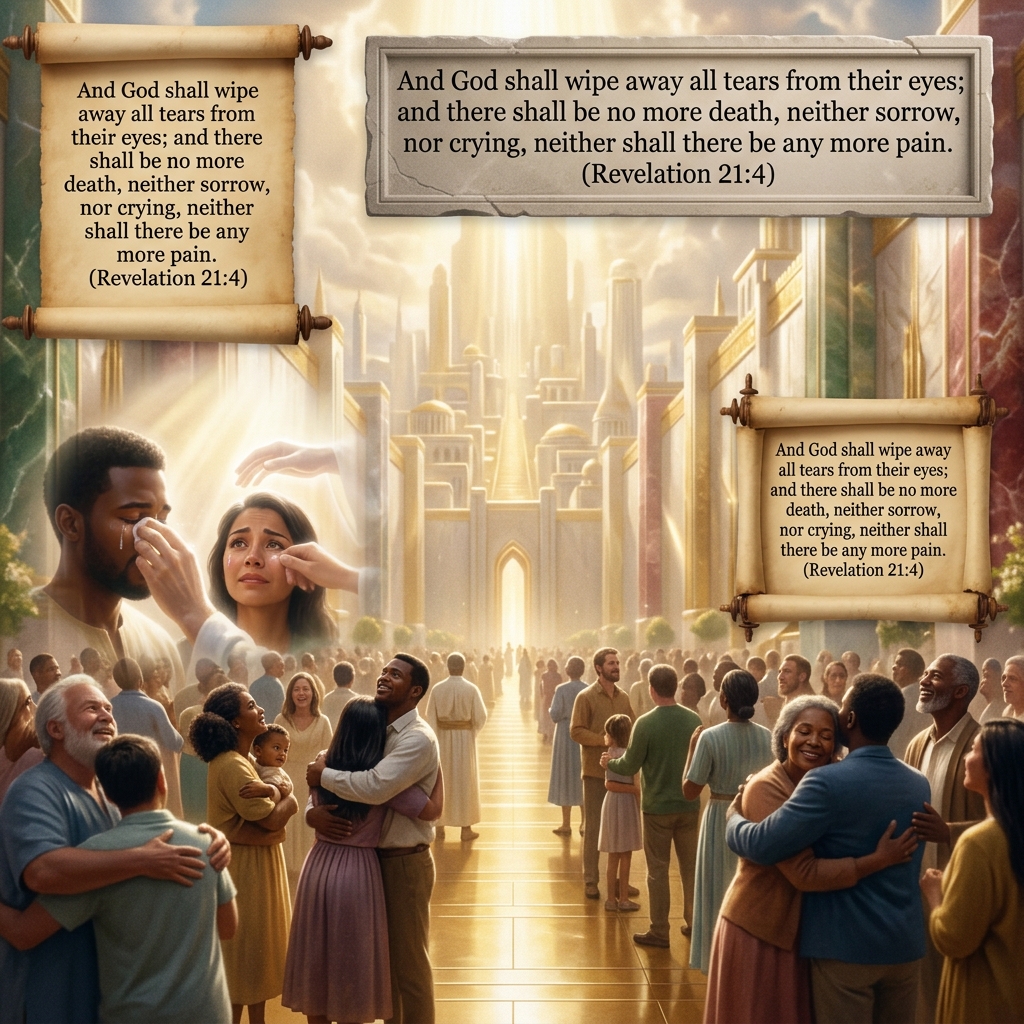
The Scriptures stand as a fortress that grief cannot breach. Psalm 23 declares, "Yea, though I walk through the valley of the shadow of death, I will fear no evil: for thou art with me". This promise is not a vague feeling but an unshakable fact anchored in the blood of Christ. The God who raised Jesus from the dead also lifts our sorrow-laden spirits, guaranteeing us an inheritance beyond this mortal pain. The Bible says that all tears will one day be wiped away, and that promise is our anchor.
But watch out for the sneaky return to performance. When we try to earn God’s love through good deeds, we slip back into the old trap of guilt. The chain of religious rule keeps us chained to our mistakes, not free in the grace we have received. The Bible warns that no amount of effort can replace a heart surrendered to Him. Let us cling to the Rock, not to our own fragile works.
"Thy rod and thy staff shall comfort me."— Psalm 23:4, KJV
May the truth that Christ is both the source of our grief and the cure for it settle deep within your soul. As you navigate the days that feel both endless and fleeting, remember that He has already conquered death and is walking beside you now. Let the promise of His resurrection fill your heart with hope that transcends any sorrow. Rest in the assurance that His love is wider than any loss you could ever imagine. In every breath you take, may the peace of Christ be your constant companion.