
Imagine a midnight kitchen, the hum of the fridge whispering as you reach for another slice of bread. The world outside is silent, yet within your stomach a storm gathers, demanding more than the body needs. The plate si...
- The Hunger that Consumes the Soul: Trusting God's Word through life's deepest trials and seasons of waiting.
- The Fallacy of Self-Managed Righteousness: Trusting God's Word through life's deepest trials and seasons of waiting.
- Living in Grace Amidst Daily Temptations: Trusting God's Word through life's deepest trials and seasons of waiting.
The Hunger that Consumes the Soul
Imagine a midnight kitchen, the hum of the fridge whispering as you reach for another slice of bread. The world outside is silent, yet within your stomach a storm gathers, demanding more than the body needs. The plate sits heavy with comfort food, each bite a promise of fleeting relief that slips into the background of your thoughts. You find yourself caught in a rhythm where the next bite feels like the only answer to an invisible ache, and the daybreak light sees you still searching for that next crumb. The cycle tightens; the body is sated, but the heart remains hollow, yearning for a deeper nourishment that never arrives.
The Scriptures paint this longing with stark clarity. In Proverbs 23:20-21 the wise warn, "Be not among winebibbers; among eaters of flesh: For the drunkard and the glutton shall come to poverty." The verse does not merely condemn a habit; it illustrates how unchecked appetites erode the very foundation of peace. Jesus, when faced with crowds hungry for more than fish and loaves, declared in John 6:35, "I am the bread of life; he that cometh to me shall never hunger again; and he that believeth on me, I will give him a fountain of living water." This promise confronts the emptiness that gluttony tries to fill, offering a supply that never wanes.
When we read the KJV's language, we see a divine invitation to exchange fleshly cravings for spiritual fulfillment. The law of God was never designed to restrict joy but to protect the heart from being dominated by desire. By aligning our hunger with Christ's promise, we discover that the true feast is not measured in calories but in communion with the Savior. This shift transforms the kitchen table from a battlefield into an altar of gratitude, where each bite is taken with awareness of the One who satisfies all longing.
"I am the bread of life; he that cometh to me shall never hunger again; and he that believeth on me, I will give him a fountain of living water."— John 6:35, KJV
The Fallacy of Self-Managed Righteousness
We often trust that willpower alone can tame a restless appetite, believing that if we simply say "no" enough times, the craving will dissolve. Yet the Bible reveals how self-reliance is a fragile scaffolding that collapses under pressure, especially when the soul feels empty. The Apostle Paul writes in Philippians 3:19, "Whose end is destruction; whose God is their belly; and they glory in their shame.” The verse does not merely label a group; it captures the tragedy of placing flesh at the center of identity, where shame becomes the only currency that measures worth.
Grace redefines this narrative. In Romans 5:8, the text declares, "But God commendeth his love toward us, in that while we were yet sinners, Christ died for us." This single sentence cancels the accounting of missed meals and broken diets. The finished work of Christ lifts every guilt, offering a life where the past consumption does not dictate present freedom. The promise is that no amount of overeating can outweigh the love poured out on the cross, and thus we are called to live not for the next bite but for the One who already satisfied our deepest hunger.
The deeper exegesis of Leviticus 11:4, which forbids the consumption of certain animals, underscores a principle that holiness is about setting boundaries. The Old Covenant gave physical symbols to teach spiritual discipline, and the New Testament upgrades those symbols into Christ's flesh. Gluttony, therefore, is not merely a dietary issue but a heart condition that rejects the discipline of the Spirit. When we surrender the control of our stomach to Christ, the cravings are not eliminated but redirected toward a higher sustenance.
"Whose end is destruction; whose God is their belly; and they glory in their shame."— Philippians 3:19, KJV
Living in Grace Amidst Daily Temptations
One morning, the smell of fresh coffee drifts into the living room as your child asks for a snack before school. The desire to give more than requested bubbles up, but the voice inside whispers that a tiny extra piece is harmless. In that moment, you confront a crossroads: to surrender the impulse to Christ or to let it dictate your day. The story of Joseph in Genesis shows how restraint can turn ordinary moments into divine testimonies, and the same principle applies to our everyday meals.
The pastor in you knows that Christ's invitation is not a license for indulgence but an invitation to rest. 1 Corinthians 6:12-13 reminds us, "All things are lawful for me; but all things are not expedient: all things are lawful for me, but I will not be brought under the power of any." This passage does not condemn the act of eating but warns against being enslaved by it. It calls us to a freedom that rests in the truth of Christ's finished work, where we can enjoy food without being consumed by it.
Walking this path daily means seeing each plate as a canvas for worship. When you sit down with your family and thank God, the act of eating becomes a spiritual discipline rather than a mere habit. The real transformation occurs when we recognize that the true nourishment we crave is already present in the Gospel, and any attempt to fill the void with more meat or sweets will always fall short.
"All things are lawful for me; but all things are not expedient: all things are lawful for me, but I will not be brought under the power of any."— 1 Corinthians 6:12-13, KJV
Anchoring in Unshakable Truth
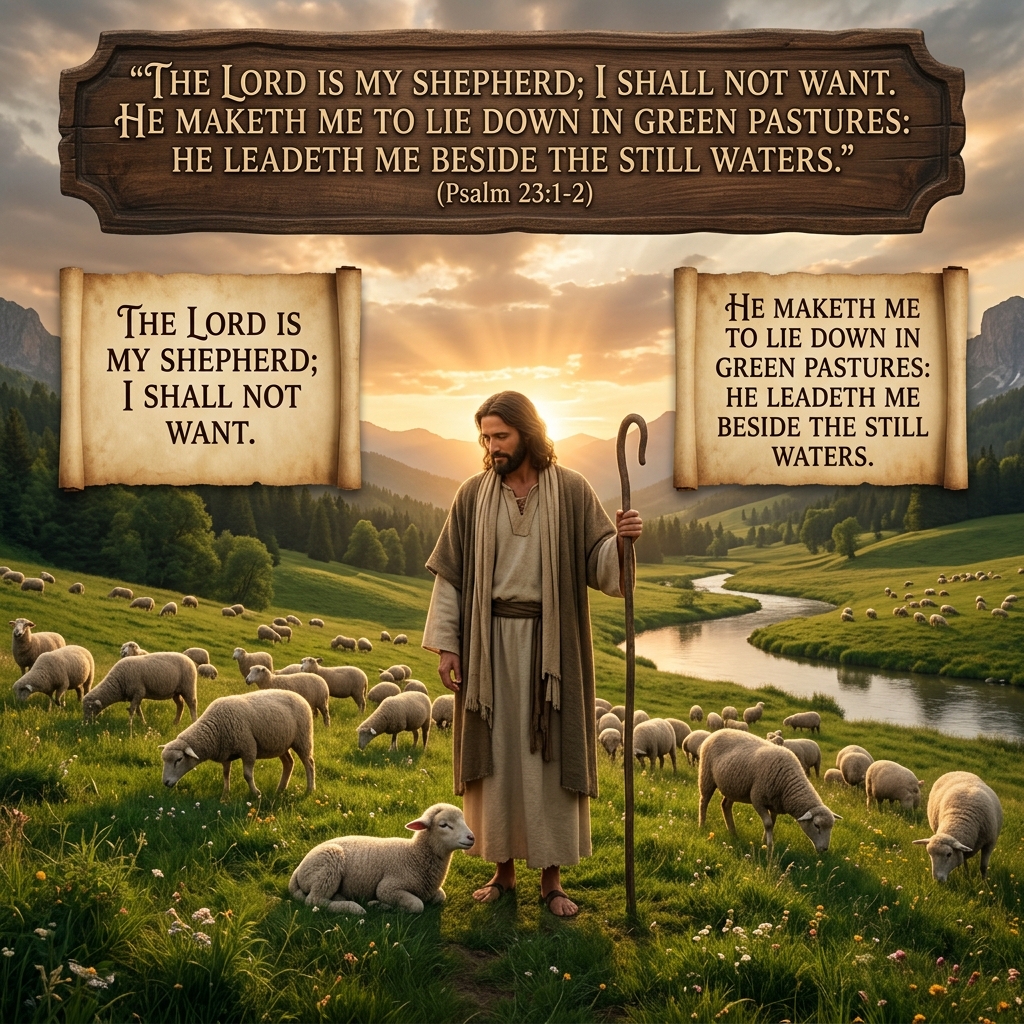
The KJV's testimony about gluttony is crystal clear: it is a symptom of an unfulfilled heart seeking satisfaction in the world rather than in Christ. Yet the same Scriptures proclaim that the Lord is our eternal provider, as Psalm 23:1 declares, "The LORD is my shepherd; I shall not want." This promise anchors us in a reality where need and desire are met by the Good Shepherd, who guarantees that we shall never lack what truly sustains.
Returning to performance-driven habits is a dangerous trap. The warning in Romans 13:13 reads, "Proceed ye therefore to love from a pure heart, and with an upright conscience, and with sincere faith." To fall back into the cycle of guilt is to abandon the pure heart that Christ has given. The final call is to stay rooted in God's promise, trusting that every longing will be satisfied through His grace, and refusing the chains of self-imposed punishment.
"The LORD is my shepherd; I shall not want."— Psalm 23:1, KJV
As we close this reflection, remember that the battle against gluttony is not fought with dicey diets but with a daily reliance on Christ's abundant provision. The Bible assures us that our cravings, when submitted to the Savior, become opportunities for deeper communion rather than moments of failure. So sit at the table with confidence, knowing that the Bread of Life has already filled every void within you. May your meals be marked by gratitude, and may each bite remind you of the unending love poured out at Calvary. Walk forward in this grace, trusting that God's promises never falter.