I remember that night when my phone buzzed at three in the morning, a reminder of an invoice I forgot to pay. The house was still, but my heart thumped like a drum in the quiet. I stared at the ceiling, wondering if anyo...
- Looking Up from the Darkness: Trusting God's Word through life's deepest trials and seasons of waiting.
- The Failure of Self-Reliance: Trusting God's Word through life's deepest trials and seasons of waiting.
- Grace in the Mess of Life: Trusting God's Word through life's deepest trials and seasons of waiting.
Looking Up from the Darkness
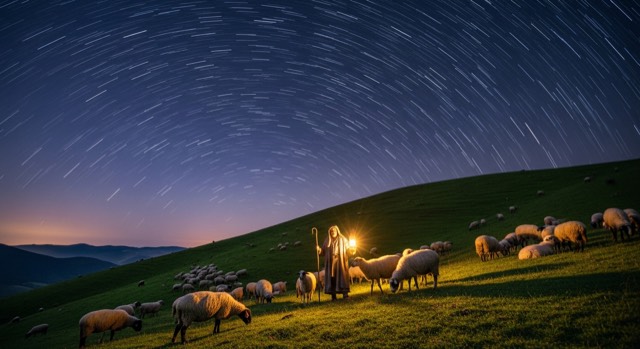
I remember that night when my phone buzzed at three in the morning, a reminder of an invoice I forgot to pay. The house was still, but my heart thumped like a drum in the quiet. I stared at the ceiling, wondering if anyone was watching over me as I wrestled with my own mistakes. The darkness felt like a thick blanket, pressing down on me until I could barely breathe. In that moment I recalled the ancient psalmist saying, "I will lift up mine eyes unto the hills," and felt a flicker of hope. It was as if the verse whispered that my eyes could find refuge even in the deepest night.
Yet it was not just the psalm that steadied me; the desert scene in Matthew 4 reminded me how Jesus faced temptation alone. When the devil offered stones to become bread, Christ answered, "It is written, Man shall not live by bread alone, but by every word that proceedeth out of the mouth of God." The desert was a place where fear and hunger met, yet God's word became the sustenance that kept Him rooted. Later in Luke 4, Jesus rebuked demons and said He must preach the kingdom of God to other cities, showing that even after wrestlings, there is a mission beyond our own turmoil. I realized that my anxieties were not unlike the stones in the desert—temporary, yet demanding a deeper reliance on Scripture. This alignment of Psalm 121 with Christ’s desert victories painted a picture of a God who watches over all our 'going in and going out' moments.
The transformation began when I let the Psalm's promise seep into my marrow. The verse "My help cometh from the Lord, which made heaven and earth," reminded me that my rescue was not in human systems but in the Creator of galaxies. The image of mountains rose in my mind, not as obstacles, but as places from which help descends. The gospel’s guardrails—Jesus' authority over the devil and His call to spread the kingdom—showed me that my rest is not earned but given. I stopped trying to fix every broken piece and instead rested on the unchanging Word, feeling my anxiety crumble like sand under a steady tide. From that night onward, my eyes were no longer fixed on the darkness but lifted toward the hills of eternal assurance.
"I will lift up mine eyes unto the hills, from whence cometh my help. My help cometh from the Lord, which made heaven and earth."— Psalm 121:1-2, KJV
The Failure of Self-Reliance
We often think we can build our lives on our own strength, like a mason stacking bricks without mortar. The psalmist declares that the Lord will not suffer our foot to be moved, yet we keep pressing against slippery rocks of self-achievement. In the wilderness, Christ was hungry after forty days and nights; his reliance on Scripture showed that flesh alone cannot sustain a soul. When we chase performance, the devil whispers that if we must be perfect, then we are doomed to fail. The image of a house built on sand—shallow and easy—cracks when the tide rises, exposing its fragility. This truth forces us to abandon the notion that our works can fill the void left by sin.
The finished work of Christ, however, offers a complete cancellation of guilt. The psalmist proclaims that the Lord is his keeper and shade at his right hand, a promise fulfilled by Jesus' sacrifice on Calvary. The blood of the Lamb did not merely cover sins; it erased them, making us children of the Most High without the weight of performance. When we accept this grace, the pressure to be perfect dissolves like morning dew under a rising sun. The gospel guardrails—Luke’s call to preach the kingdom and Matthew’s rebuke of temptation—guide us away from self-reliance toward divine dependence. In this surrender, we discover a peace that surpasses any human effort.
The deeper exegesis of Psalm 121 shows that God’s watchfulness is constant, not occasional. He watches over our coming and going, a promise that stands firm even when we stumble in the shadows of night. The psalmist's confidence that the Lord will keep us forevermore mirrors Jesus' assurance in the desert: "Thou shalt not tempt the Lord thy God." This harmony between Old Testament and New Testament underscores a single truth—God’s love is unshakable. The imagery of hills becomes a metaphor for God's elevated perspective, seeing beyond our immediate failures to the broader tapestry of redemption. This realization frees us from trying to patch our own brokenness and invites us into the completeness of Christ.
"The Lord will keep thy going out and coming in from this time forth, even for evermore."— Psalm 121:8, KJV
Grace in the Mess of Life
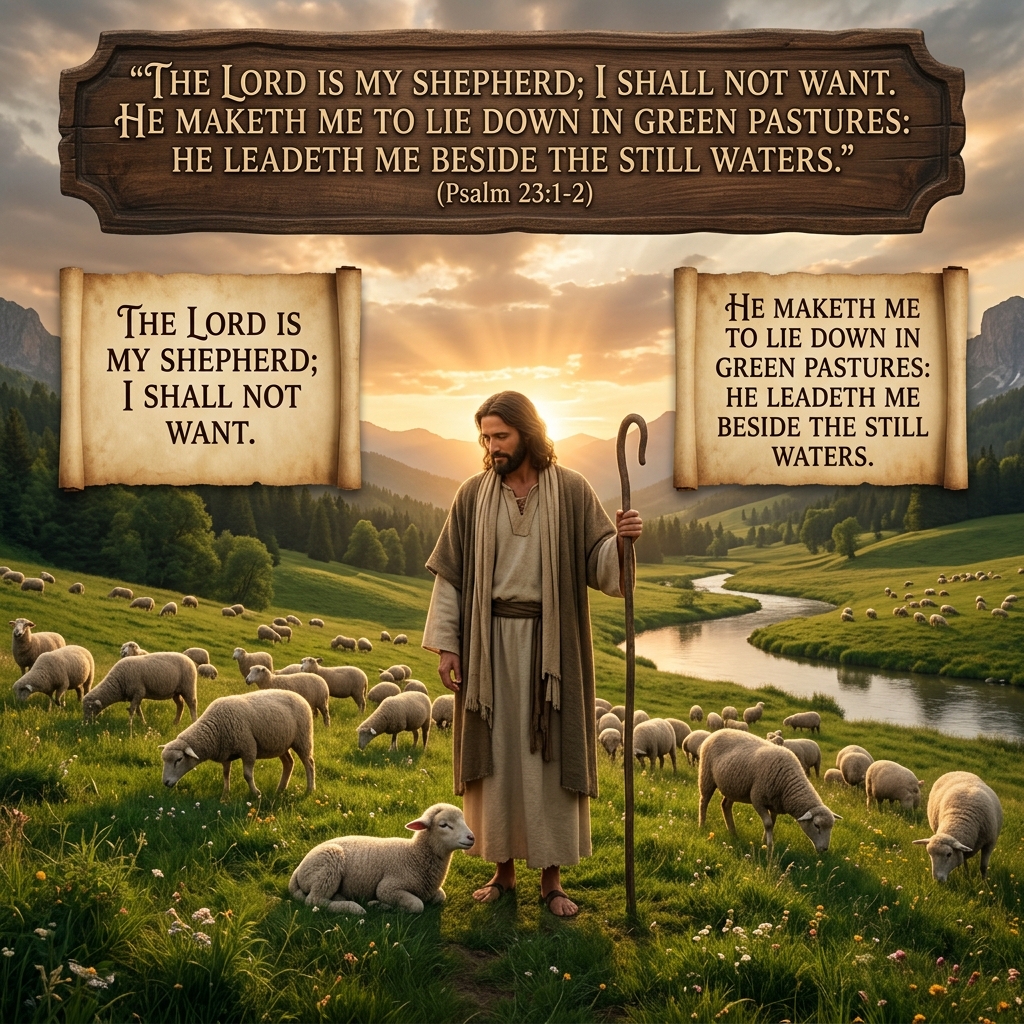
Imagine a Sunday morning where your children are fighting over cereal, the dishwasher is beeping, and a neighbor calls about a broken fence. In that chaos, I felt my heart ready to take on the world alone, as if I could fix every little thing. Then a phrase from Psalm 121 echoed in my kitchen: "The Lord will keep thy going out and coming in." It reminded me that even amidst the noise, there is a keeper who watches over each step. The gospel's guardrails—Jesus' authority over the desert and his call to preach—teach us that we are not meant to battle these messes by our own might. Instead, we lean into the grace that transforms mundane moments into opportunities for divine presence.
I began to rest in Christ rather than trying to fix myself, which meant stepping back from the frantic urge to control. I whispered, "My help cometh from the Lord," and felt my shoulders lighten as if someone else had taken the weight. In those quiet moments, I realized that true strength is not in fixing problems but in trusting the One who already knows the solution. The psalmist's promise that God is a shade at our right hand became an invitation to sit under His protection while life swirls around us. This shift from effort to reliance opened my heart to the reality that grace is a daily encounter, not a distant hope.
Walking in this grace day by day means we see every broken fence as a canvas for God's mercy. It means recognizing that the messes of family, work, and heart are not signs of failure but places where God's love can be displayed. The psalm's assurance that God watches over us from the hills reframes our perspective from frantic self-fix to confident reliance. In each moment, we can ask the Holy Spirit to remind us that our identity is rooted in Christ's finished work. This daily surrender creates a life anchored not to the shifting sands of performance but to the solid rock of divine grace.
"He will not suffer thy foot to be moved; he that keepeth thee shall not slumber."— Psalm 121:3, KJV
Standing on Solid Ground
The baseline of Scripture in Psalm 121 is a fortress that does not waver with the wind. The psalmist declares, "The Lord is thy keeper; the Lord is thy shade at thy right hand," a promise that stands firm even when human foundations crumble. This truth is reinforced by Christ's triumph in the desert, where He proved that God's Word is stronger than any temptation. We can trust that our lives are secured by the very One who made heaven and earth, whose watchfulness never fails. The image of hills becomes a reminder that our help comes from a place far beyond any earthly circumstance.
Yet the danger remains that we might slip back into the chains of performance and religious guilt. When we try to earn God's favor through deeds, we forget that He has already given it freely through Christ's cross. The psalm warns us: "The Lord will keep thy going out and coming in," not just for today but forever. Returning to self-reliance is like climbing a ladder that leads nowhere, while God's promises are an elevator straight to the throne of grace. Let us keep our eyes lifted toward those hills, refusing to be weighed down by the burdens of our own making.
"The Lord is thy keeper; the Lord is thy shade at thy right hand."— Psalm 121:5, KJV
As we close this meditation, may the truth of Psalm 121 KJV settle deep within your soul like a river under a stone bridge. Rest in the knowledge that your help comes from the Maker of all things, who never slumbers nor sleeps. Let the guardrails of Luke 4 and Matthew 4 guide you to a life where performance fades, and grace flourishes. May each step you take be accompanied by the assurance that the Lord watches over your comings and goings, forevermore. Walk forward with confidence, knowing that every hill you face is a place from which divine help descends. And may the eternal hope of Christ's resurrection be your constant companion on this journey.