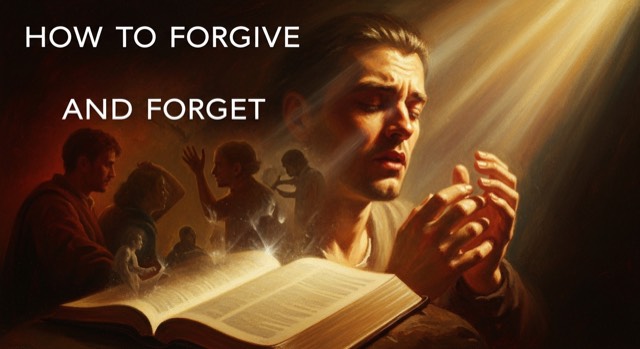
The Weight of a Debt Unpaid
It's three in the morning. Again. The house is quiet, the world is asleep, but your mind is a courtroom where you are the judge, jury, and prosecutor. You replay the words that were said, the thing that was done, the trust that was shattered, and with every replay, the knot in your gut twists a little tighter. This is the heavy price of unforgiveness, a debt you keep on the books that charges interest against your own soul, stealing peace from your nights and joy from your days. It feels like a righteous burden, a necessary shield, but it is a cold and heavy stone you've mistaken for a blanket, and it offers no warmth at all.
And then, in the quiet of your heart, you hear the echo of the prayer Jesus taught us to pray. It comes right after the plea for provision, a sequence that is no accident. He tells us to ask, “Give us this day our daily bread. And forgive us our debts, as we forgive our debtors.” Notice that. The bread and the pardon are neighbors. They are daily requests. Jesus inextricably links the grace we need from God to the grace we extend to others, not as a transaction to earn heaven, but as the very circulation of a healthy soul. An unforgiving heart is a blocked artery; the Father’s grace comes in, but it can’t get out, and the whole system starts to shut down.
This isn't a call to conjure up a warm feeling for someone who wounded you deeply; it's a command to perform a divine transaction based on a reality greater than your feelings. Paul tells us in Ephesians, “And be ye kind one to another, tenderhearted, forgiving one another, even as God for Christ's sake hath forgiven you.” The model is everything. The basis for your forgiveness isn't their apology or their repentance; it is the finished work of Jesus Christ. You are to release them from the debt they owe you because God, for the sake of His Son's blood, released you from the eternal, unpayable debt you owed Him. It is an act of the will, an echo of Calvary's love, not a negotiation of the heart.
For if ye forgive men their trespasses, your heavenly Father will also forgive you: But if ye forgive not men their trespasses, neither will your Father forgive your trespasses.— Matthew 6:14-15, KJV
The Myth of Forgetting
Now, let's dismantle the lie. The world tells you to 'forgive and forget,' a cruel and impossible standard that the Bible never sets. Your memory is not a hard drive you can selectively wipe. Trying to force yourself to forget a deep wound is a fool's errand, a form of self-reliant religion that leads only to frustration and the false guilt of failing to achieve emotional amnesia. The enemy of your soul loves this little phrase because it makes you focus on your own mental power instead of God's supernatural grace. So you try, you fail to forget, and you conclude that you must not have truly forgiven, and you remain shackled to the very thing you're trying to escape.
The Gospel offers a much better word. The cross of Christ is not about forgetting; it is about canceling. God doesn't have amnesia about your sin; He has made a legal declaration that it is paid for, nullified, and no longer has any claim on you. He took the record of debt that stood against you and, as Paul writes, nailed it to the cross. He didn't erase it; He publicly declared it satisfied. This is the freedom we're called to. Forgiveness isn't pretending the wound never happened. It’s looking at the scar and declaring that, by the grace of God, it no longer has the power to infect you, control you, or demand payment from you.
Jesus uses two powerful words in the Lord's Prayer: debts and trespasses. A debt is something owed that must be paid back; a trespass is a boundary that has been violated. Both are concrete, not abstract. When you forgive, you are making a conscious choice to cancel the debt, to absorb the cost yourself just as Christ absorbed yours. You are choosing not to demand repayment, not to hold the trespass against them, not to allow the violation to define your relationship with them or with God. It is a decisive, deliberate act of faith, trusting that God is a better bookkeeper and a more just judge than you could ever be.
Lay not up for yourselves treasures upon earth, where moth and rust doth corrupt... But lay up for yourselves treasures in heaven...— Matthew 6:19-20, KJV
Your Daily Bread of Mercy
So what does this look like on a Tuesday afternoon when you run into that person at the grocery store? The stomach drops, the heart rate quickens, and the old record starts playing in your head. This is the moment of truth. This is where you pray for your daily bread. You don’t have a stockpile of grace for this moment; you have to ask for it, right then, right there. 'Father, give me this day my daily portion of mercy. Give me enough of your forgiveness right now that I have some to spare for them.' It transforms the encounter from a test of your willpower into an opportunity to be a conduit of His supernatural supply.
Friend, stop trying to fix this yourself. You can't. You can't heal your own heart or manufacture a spirit of forgiveness out of sheer determination. Rest. Cease striving. The Christian life is not a program of self-improvement; it is a process of surrender. Your part is not to dredge up the strength to forgive, but to open your hands and receive the grace that God is pouring out, a grace sufficient for this wound, this memory, this person. It is a posture of receiving, not achieving. Let the finished work of Christ be truly finished in this corner of your heart.
Walking in this grace day by day means the memory of the wound loses its power. It's the difference between a live electrical wire and a dead one; the wire is still there, but it can no longer shock you. You may remember the facts of what happened, but you are no longer defined by the bitterness, the anger, or the desire for revenge. You remember the offense, yes, but you choose to remember the Cross more. And in time, by the sanctifying work of the Holy Spirit, you find that the memory brings not a fresh sting of pain, but a fresh sense of gratitude for the magnitude of the grace that covered not only their sin, but yours as well.
And be ye kind one to another, tenderhearted, forgiving one another, even as God for Christ's sake hath forgiven you.— Ephesians 4:32, KJV
Standing on Solid Ground
The ground beneath your feet is this: God's forgiveness of you is the unshakable foundation for your forgiveness of others. Jesus makes the stakes incredibly high when He says, “For if ye forgive not men their trespasses, neither will your Father forgive your trespasses.” This isn't a threat that you might lose your salvation. It's a spiritual diagnosis. It's like a doctor saying, 'If you're not breathing, you have no life in you.' A heart that chronically, stubbornly, and finally refuses to extend forgiveness is demonstrating that it has never truly understood or received the forgiveness of God in the first place. It's a heart that is still trying to operate on a system of earned merit and paid debts, a system the cross completely abolished.
So do not return to that prison. Do not listen to the serpent's whisper that your bitterness is your right, that your grudge is a treasure worth guarding. It is a treasure of earth, and Jesus promises that moth and rust will corrupt it, and it will be stolen from you one way or another, leaving you with nothing. Holding onto unforgiveness is drinking poison and waiting for the other person to die. It is blasphemy against the grace you claim to cherish. Lay it down at the foot of the cross, and leave it there. Choose instead the treasure of a clear conscience and an open heart before your Father, which is a treasure in heaven that nothing can touch.
Wherefore I say unto you, All manner of sin and blasphemy shall be forgiven unto men: but the blasphemy against the Holy Ghost shall not be forgiven unto men.— Matthew 12:31, KJV
In the end, this isn't about your ability to forget, but about God's power to redeem. Every morning, we come to the Father's table like children, asking for our daily bread, for our sustenance. And in the same breath, we ask for our daily pardon, admitting our own profound need for a grace we could never earn. He gives both freely, without reservation. And as we are filled, we find our hands are now carrying the same bread and the same pardon, a provision meant to be shared with a world starving for both. Let go of the ledger of wrongs. Lay down the heavy burden of being someone else's judge. Come to the table, eat your fill of His mercy, and walk away free.