
The house is dark; the clock ticks past three. A baby whines, a blanket slips, and her heart hammers against the silence. She tiptoes across the hallway, feeling the cool floor beneath her feet, clutching a tiny hand tha...
- A Mother's Cry at Midnight: Trusting God's Word through life's deepest trials and seasons of waiting.
- The Illusion of Self-Reliance: Trusting God's Word through life's deepest trials and seasons of waiting.
- Grace in the Everyday: Trusting God's Word through life's deepest trials and seasons of waiting.
A Mother's Cry at Midnight
The house is dark; the clock ticks past three. A baby whines, a blanket slips, and her heart hammers against the silence. She tiptoes across the hallway, feeling the cool floor beneath her feet, clutching a tiny hand that barely fits in hers. The mind spirals: Did I feed him enough? Is my husband working hard enough? Her breath catches, and suddenly the night feels like a weight pressing down. Yet beneath the panic there is a flicker—an ancient promise that whispers through the darkness.
The scene mirrors the words in Luke 13:34 where Christ mourns Jerusalem, saying He would gather its children as a hen gathers her brood under her wings. A mother is that hen, spreading her arms wide to protect the fragile lives she has birthed. Christ's lament shows He never abandoned the lost; He would have shielded each one if they let Him. The mother, though weary, sees that the same divine tenderness is stretched toward her—every sigh of a child is a feather in His wing. She realizes that the fear she carries is not new; it has been cradled by a shepherd who knows every heartbeat.
When the Gospel says, "Ye shall not see me until the time come," it offers a future hope that transcends present fatigue. The promise is not an escape from the night but a guarantee of sunrise. In Luke 13:35, Christ declares that believers will one day proclaim, "Blessed is he that cometh in the name of the Lord." The mother can trust that her sleepless vigil is part of a larger narrative where love and sacrifice intersect. The KJV text becomes a compass; it points her toward the certainty that every tear she wipes will one day be reflected in divine mercy. She is no longer alone; the Scriptures hold her hand through each whisper of midnight.
"O Jerusalem, Jerusalem, which killest the prophets, and stonest them that are sent unto thee; how often would I have gathered thy children together, as a hen doth gather her brood under her wings, and ye would not!"— Luke 13:34, KJV
The Illusion of Self-Reliance
She checks the calendar, counts the chores, and feels the pressure of a world that expects perfection. A mother may try to balance bills, meals, and school runs as if she were a machine; the weight of expectations becomes an invisible armor. The performance rulebook tells her that if she fails to meet the schedule, the love she offers is insufficient. Yet each cracked cup and missed appointment reveals the futility of relying solely on her own strength. The scriptural narrative shows that even prophets faltered when they relied on human applause.
John 4:42 shatters that illusion, stating, "Now we believe, not because of thy saying: for we have heard him ourselves, and know that this is indeed the Christ." The mother learns that belief does not rest on her ability to juggle, but on hearing the voice of Christ who has already done what she cannot. The finished work of the Savior cancels every guilt that clings to her heart, for He has already paid the price for any perceived failure. The gospel invites her to release the burden of performance and rest in the assurance that she is loved regardless of how many dishes are left unwashed.
John 4:44 warns that a prophet has no honor in his own country, reminding the mother that her worth is not measured by local applause but by divine affirmation. The Scriptures reveal that true honor comes from being known and loved by the One who sent her into this role. She discovers that the societal yardsticks are shallow; the eternal perspective is deep and unchanging. The holy text calls her to shift focus from external validation to the internal truth of God's grace, which never wavers.
"Now we believe, not because of thy saying: for we have heard him ourselves, and know that this is indeed the Christ, the Saviour of the world."— John 4:42, KJV
Grace in the Everyday
The morning rush begins with spills of cereal and a frantic search for misplaced shoes. A teenager slams the door, muttering about friends; a toddler insists on wearing an oversized hat to school. The mother feels the tug of resentment and love at once, caught between the chaos of a household and the desire for quiet. She sees her own reflection in the mirror—tired, frayed edges, yet still holding a smile for the little one who clings to her leg. The Scripture becomes the breath she takes between the demands, reminding her that grace is not a feeling but a fact.
Christ's invitation to "Get thee out, and depart hence" does not mean abandoning love; it means stepping away from the exhausting effort of fixing everything alone. He offers a hand that lifts her from the mire, urging her to let go of the habit of self-repair. The mother receives a gentle nudge: rely not on her own cunning, but on the power of His presence. The gospel whispers that true peace is found when she ceases to be the fixer and instead becomes the receiver of divine calm. She learns that resting in Christ is a radical act of trust, not a passive surrender.
Walking in this grace daily means allowing the truth to shape each decision. When she hears a child's cry, she responds with patience rooted in God's love rather than frustration. When bills pile up, she trusts that provision is already spoken over her family. Each moment becomes a chance to echo the promise that God gathers his children under His wings, even when the world feels harsh. The mother discovers that living in grace is a steady rhythm of surrender and gratitude, an ongoing conversation with the Savior.
"Get thee out, and depart hence: for Herod will kill thee."— Luke 13:31, KJV
Standing on Solid Ground
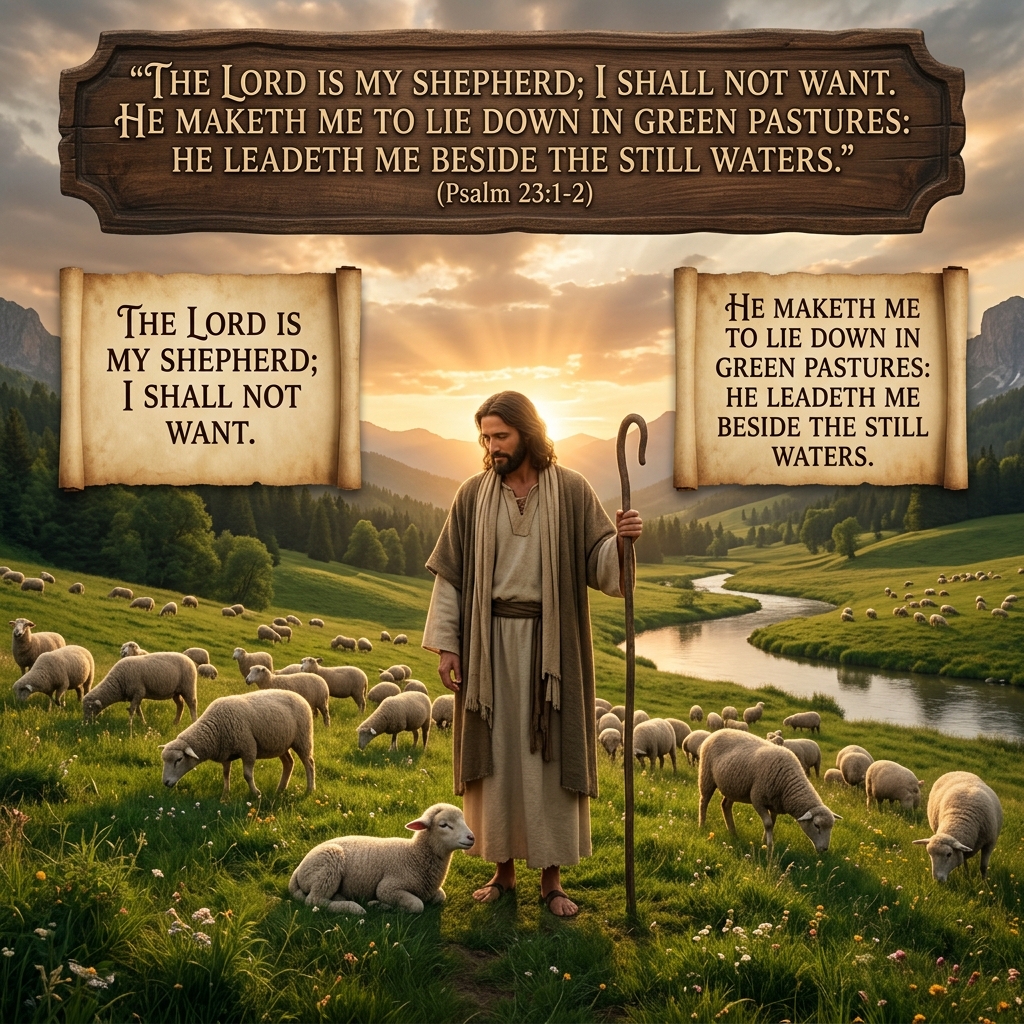
The foundation of her life is anchored in the KJV words that have endured centuries. The promise of a shepherd who never abandons his flock provides an unshakable footing amidst the storms of parenting. She stands on the rock that says, "Behold, your house is left unto you desolate"—a warning that worldly security fades, yet divine refuge remains. The Scriptures remind her that the love she receives is not dependent on earthly circumstances but on an eternal covenant. This truth steadies her heart when the house feels broken, because she knows that God's promises never falter.
The temptation to return to performance guilt is ever-present. She may glance at a calendar and feel the weight of unfinished tasks, but the gospel warns that such chains are counterfeit. The words in John 4:45—"For Jesus himself testified, that a prophet hath no honour in his own country"—speak to the futility of seeking validation from those who cannot see beyond the surface. She is called to break free from the shackles of self-judgment and rely on the everlasting love that declares her valuable beyond measure.
"For Jesus himself testified, that a prophet hath no honour in his own country."— John 4:44, KJV
As the day ends and she finally sits with a cup of tea, she realizes that motherhood is not a solitary march but a pilgrimage guided by the Savior's hand. The gospel whispers to her heart: your worth is sealed in His blood, not in the tidy rooms you keep. She can breathe easy knowing that each weary sigh is heard by One who gathers his children under everlasting wings. May she walk forward with confidence, resting in the promise that "Blessed is he that cometh in the name of the Lord." The eternal hope she clings to will sustain her through every sleepless night and joyful sunrise.