
It was 3 a.m., the house still, the night wind rattling the shutters. My heart thudded against my ribs like a drum in a silent cathedral. I lay awake, mind replaying the nightmare of the empty tomb – stone rolled away, d...
- The midnight whisper of hope and doubt: Trusting God's Word through life's deepest trials and seasons of waiting.
- Self-reliance versus the finished work of Christ: Trusting God's Word through life's deepest trials and seasons of waiting.
- Living the resurrection in everyday mess: Trusting God's Word through life's deepest trials and seasons of waiting.
The midnight whisper of hope and doubt
It was 3 a.m., the house still, the night wind rattling the shutters. My heart thudded against my ribs like a drum in a silent cathedral. I lay awake, mind replaying the nightmare of the empty tomb – stone rolled away, darkness lingering. In that stillness, a question rose: what if the promise of life was just a story? Yet in that breathless hour, I remembered that even Peter wrestled with the same fear. The empty sepulcher was not a void but an invitation to see beyond what eyes can grasp.
Mark 8:31 cuts straight through the fog of denial, reminding us that the Son of Man must suffer and rise again. The verse declares a hard truth: after three days, He will rise. This is the backbone of every resurrection claim – suffering and triumph are inseparable. The KJV phrasing, "and after three days rise again," leaves no room for ambiguity; it is a promise anchored in time and divine power. When Jesus said these words openly, He set the stage for a mystery that would shatter all expectations. The disciples' confusion was not just about time, but about the nature of God’s salvific plan.
The gospel transforms that midnight fear into a dawn of assurance. The KJV verse in John 20:6-7 – "He rose quickly and went into the tomb, and saw the linen cloths lying there" – confirms that the stone’s removal was a divine act, not an accident. The empty grave is a visual proclamation that death does not have the final word. This reality dismantles every attempt to control or predict outcomes; it places us under a sovereign God who orchestrates redemption. The resurrection is not a philosophical concept but a lived reality that rewrites the script of our existence.
"And he began to teach them, that the Son of man must suffer many things, and be rejected of the elders, and of the chief priests, and scribes, and be killed, and after three days rise again."— Mark 8:31, KJV
Self-reliance versus the finished work of Christ
We often build our lives on a scaffolding of performance – a checklist of good deeds, an agenda of spiritual milestones. The moment pressure mounts, this scaffolding creaks and collapses, exposing the hollow core beneath. In Mark 8:34-35, Jesus flips this script: "For whosoever will save his life shall lose it; but whosoever shall lose his life for my sake and the gospel’s, the same shall save it." He invites us to surrender our fragile strategies to His eternal design. The language of the text strips away any notion that we can earn our salvation through effort alone.
The finished work of Christ is the only anchor that steadies us in the storm. John 18:11-12 underscores this surrender: "Put up thy sword into the sheath; the cup which my Father hath given me, shall I not drink it?" Jesus does not cling to a weapon or a plan; He drinks the cup prepared by the Father. This act of humility shows that true power lies in obedience, not in self-will. The KJV text reminds us that the resurrection is a product of this obedience – a cup poured out and risen anew.
The theological depth of Mark 8:36-38 paints a sobering picture: "For what shall it profit a man, if he shall gain the whole world, and lose his own soul?" The verse warns that chasing worldly success at the expense of spiritual integrity leads to emptiness. When we grasp the resurrection, we see that our souls are not measured by wealth or status but by alignment with Christ's truth. The KJV language is crisp and uncompromising, challenging us to evaluate where we place our hope.
"For whosoever will save his life shall lose it; but whosoever shall lose his life for my sake and the gospel’s, the same shall save it."— Mark 8:35, KJV
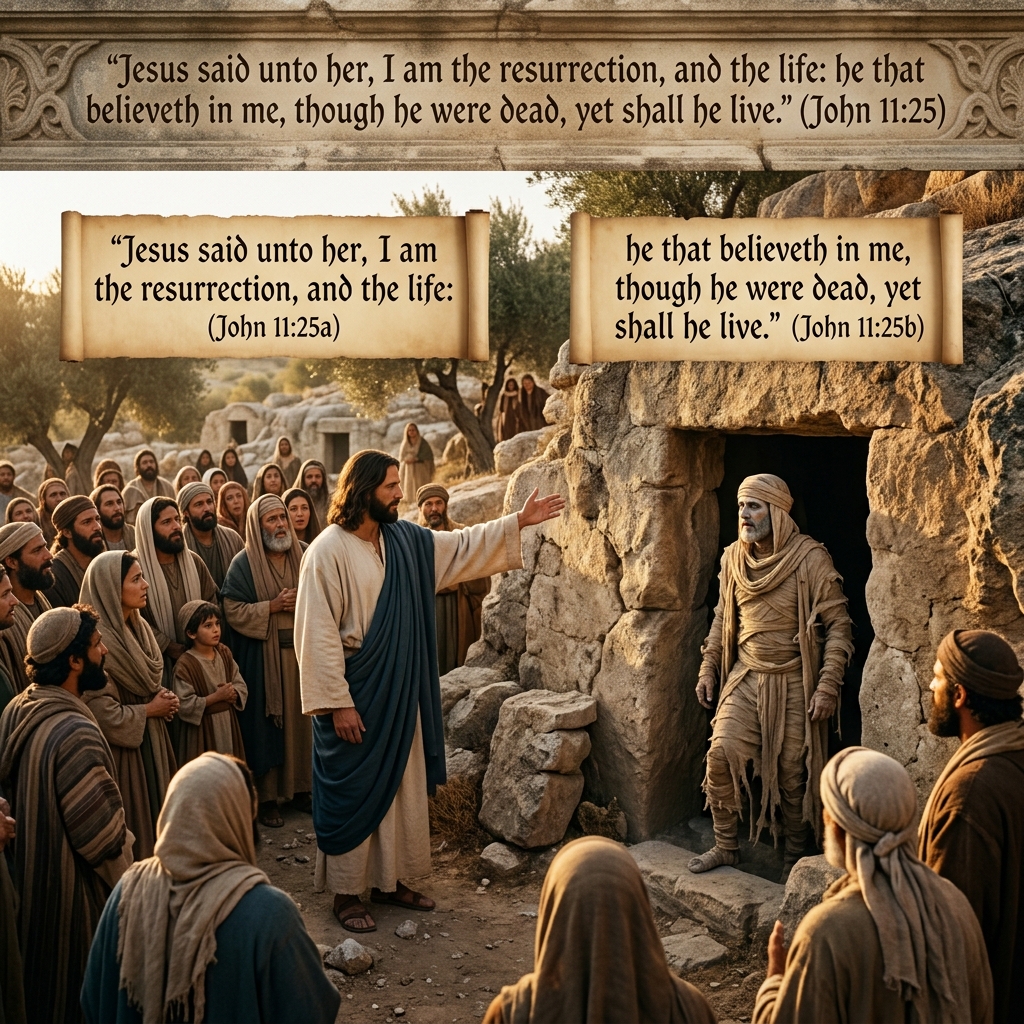
Living the resurrection in everyday mess
Imagine a kitchen at dawn, dishes piled high, coffee brewing, a toddler's laughter echoing off the walls. In those ordinary moments, the resurrection can be felt as a quiet confidence that chaos will not define us. When we remember that Christ rose from the grave, we see that our daily failures are not final verdicts but stepping stones toward grace. The KJV text in Matthew 28:6 – "He is not here; for He is risen" – assures us that death has been defeated, and so are the small defeats of life.
Pastoral encouragement is not about fixing brokenness but about resting in the finished work. "He hath risen" means that every scar, mistake, and regret has been covered by His blood. In the messy rhythm of family arguments or sleepless nights, we can breathe in the reality that Christ's resurrection brings a peace that surpasses understanding. The KJV scripture does not merely describe an event; it offers a present reality that we can cling to when the world feels heavy.
Walking in this grace day by day means letting go of the need to perform and instead trusting that Christ's victory already secures our future. Each sunrise becomes a reminder that the stone was rolled away, and each sunset a promise that darkness cannot hold us. The KJV verses are not relics of the past; they are living words that shape how we navigate love, grief, and joy.
"He is not here; for He is risen"— Matthew 28:6, KJV
Standing on the unshakeable foundation of resurrection
The KJV scriptures stand as a solid rock beneath our wavering faith. Mark 8:38 warns us: "Whosoever therefore shall be ashamed of me and of my words... the Son of man shall be ashamed, when he cometh in the glory of his Father with the holy angels." This verse underscores that our ultimate destiny hinges on how we receive Christ's truth. The resurrection is the cornerstone of this promise – it guarantees that God's glory will be fully revealed.
Returning to a performance-based religion is like building a house on sand; the next storm will bring it crashing down. The resurrection declares that our hope is not in our deeds but in Christ's triumph over the grave. When we cling to this truth, we reject the chains of guilt and step into a freedom that only God can provide. The KJV language reminds us that shame has no place where Christ reigns; He lifts us up from the dust.
"Whosoever therefore shall be ashamed of me and of my words in this adulterous and sinful generation; of him also shall the Son of man be ashamed, when he cometh in the glory of his Father with the holy angels."— Mark 8:38, KJV
As the sun sets over the horizon, remember that Christ's resurrection is not a distant memory but an ever-present invitation to live in victory. The empty tomb whispers that no night is too dark, no sorrow too deep for His light to pierce. Let your heart rest in the assurance that He has risen, and let every breath you take echo this truth. The world may shift, but the KJV promise remains steadfast – He is risen indeed! May you walk each day wrapped in His grace, unburdened by performance, and anchored in eternal hope.