
At 3am, I sat on the edge of my bed, listening to the soft whir of the ceiling fan while the silence between me and my spouse grew louder. The tension that had crept in over the past weeks felt like a thick fog, each wor...
- The Heartbeat of the Gospel: Trusting God's Word through life's deepest trials and seasons of waiting.
- Beyond Performance: Trusting God's Word through life's deepest trials and seasons of waiting.
- Love in the Messy Day: Trusting God's Word through life's deepest trials and seasons of waiting.
The Heartbeat of the Gospel
At 3am, I sat on the edge of my bed, listening to the soft whir of the ceiling fan while the silence between me and my spouse grew louder. The tension that had crept in over the past weeks felt like a thick fog, each word left unsaid adding weight to my chest. I stared at the ceiling, remembering how Peter once wrestled with his own doubts and failures on the shore of Galilee. In that quiet, I felt the pull of a higher love—a love that does not rely on perfect words or flawless deeds. The night seemed to whisper, asking if there could be any love that lasts beyond my own shortcomings. My heart finally beat faster as I recalled the promise that true love bears all things and endures every trial.
When Jesus gathered his disciples after the resurrection, he asked Peter three times if he loved Him. Each question carried a weight beyond mere affection; it was a call to shepherd the flock that would follow. Peter's grief and confusion mirrored our own human frailty, yet his answer—'Yea, Lord; thou knowest that I love thee'—revealed a grace unearned by performance. Christ's invitation to dine and share bread with his disciples showed that love is expressed through tangible acts of care, not just lofty declarations. This scene frames the KJV words that follow: love is patient, kind, and bears all things. Those verses are not abstract ideals but the very heartbeat of Christ's relationship with his people.
The KJV declares, 'Charity suffereth long, and is kind; charity envieth not; charity vaunteth not itself, is not puffed up.' In this ancient language, love is stripped of any pretense and revealed as a concrete virtue that stands against pride. When we let Christ's words settle into our marrow, they dismantle the idea that love is a feeling; it becomes an action, a steady presence even when the night feels endless. Peter's restoration after denying Christ three times demonstrates that love is not contingent upon our perfection but on the finished work of the Savior. As we read these verses, we see that God's love does not waver with our moods; it is a firm foundation upon which we can rebuild broken relationships.
"Charity suffereth long, and is kind; charity envieth not; charity vaunteth not itself, is not puffed up"— 1 Cor 13:4, KJV
Beyond Performance
I once thought that if I could simply keep my head down and follow the routine of church services, I would earn God's favor. That mindset crumbled when life threw a sudden illness upon my family, and the prayers that seemed to work in the pews fell silent in the hallway. The performance rules—checking off spiritual duties like a checklist—failed to hold my heart when the storm hit. I realized that reliance on my own strength was like trying to keep a boat afloat with a cracked hull: it works until the waves become too high. The truth revealed itself in Peter's threefold questioning, where Christ recognized his love not by the number of deeds but by the willingness to feed the sheep. This is why the KJV's warning against boasting and pride resonates so deeply.
In Christ's finished work lies the complete cancellation of guilt. When Peter was rebuked for denying Him, Jesus did not condemn him; He restored him to a place of purpose by asking Him to love and feed His flock. This mirrors the KJV's promise that 'faith, hope, charity,' these three remain—yet love surpasses them all. The moment we accept that Christ's sacrifice covered every flaw, we can step out of the endless cycle of performance. Rather than striving to earn merit, we are called to rest in the grace that has already been poured out for us. The finished work is a shield, rendering our attempts to fix ourselves unnecessary and freeing us to love as Christ loves.
The KJV further states, 'Charity never faileth.' This is not a vague sentiment but a promise that true love endures beyond the temporal constraints of our life. When we look at Peter's story, his youth was filled with boldness and impulsiveness; in old age, he would be guided by the very love that had been poured into him. The verses remind us that even when prophetic gifts cease and tongues become silent, love remains the living strand of God's covenant. By anchoring ourselves in this divine love, we find a steadiness that outlasts any fleeting spiritual experience.
"Charity never faileth"— 1 Cor 13:8, KJV
Love in the Messy Day
Family dinners often become battlegrounds where expectations clash with reality. I recall a night when my teenage son slammed his fork down, claiming the food was too bland, while my wife whispered that their love had become routine. In that moment, I could have slipped into frustration or withdrawn into my own thoughts of resignation. Instead, I remembered the call to feed Christ's sheep—a reminder that love is about patience and humility in the very ordinary. I paused, asked for forgiveness where needed, and offered a listening ear, allowing love to be expressed through gentle dialogue rather than sharp words.
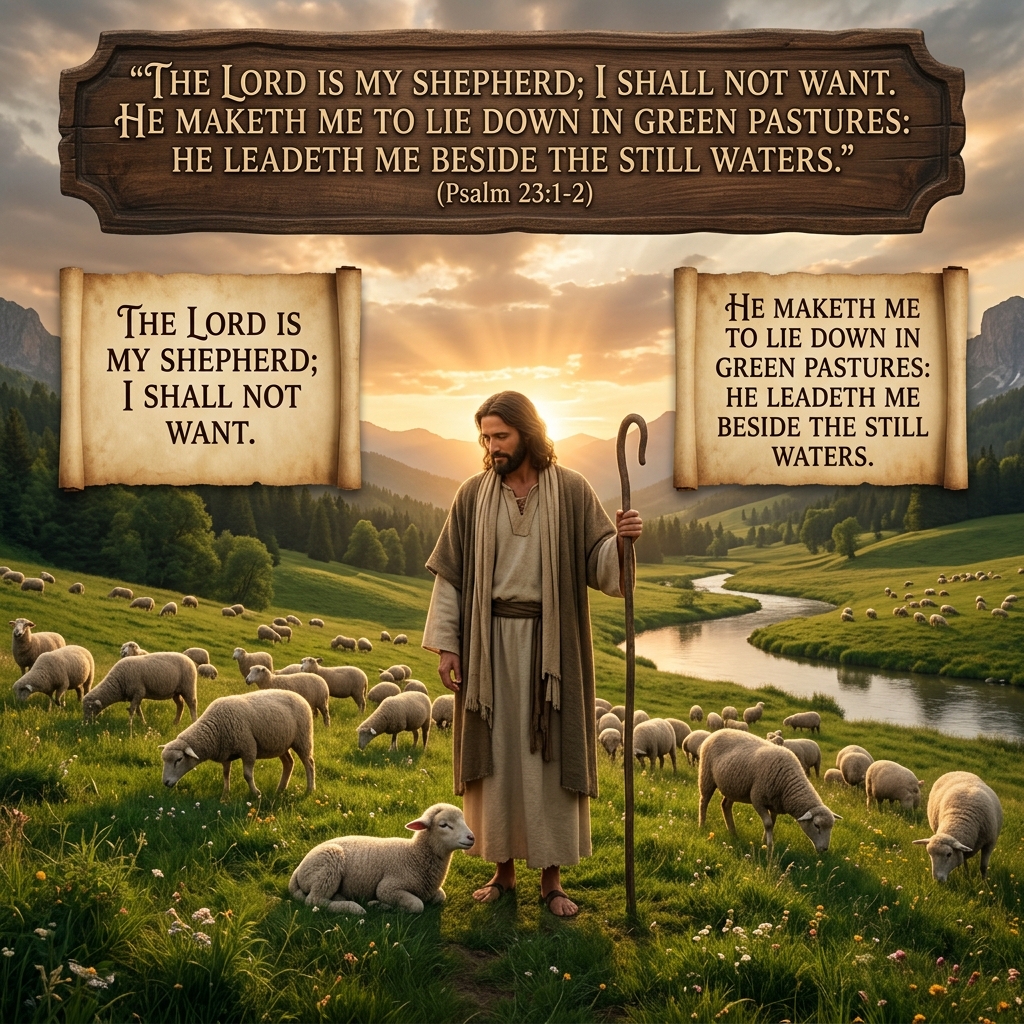
Rest in Christ means letting go of the impulse to patch up every broken part of ourselves. When we constantly seek to fix what is not broken, we miss the opportunity to simply be present with those we love. The KJV assures us that 'God is love,' and His nature invites us into a peace that does not depend on our performance. In the messy moments—spilled milk, missed appointments—Christ's love remains the steady pulse that keeps us from spiraling into self-condemnation. We are called to breathe in this grace, trusting that the Shepherd's hand is guiding us even when we stumble.
Walking in this grace day by day transforms how we view our interactions. The love that Peter was asked to nurture is not a feeling that fades; it is an intentional commitment to see the needs of others before our own. It means setting aside pride and recognizing that the flock we care for are imperfect mirrors of Christ's love. As we practice this daily, our hearts become more attuned to the still small voice that whispers forgiveness and patience. The true measure of our faith is not how flawlessly we follow a schedule but how steadfastly we love the broken and the whole.
"And now abideth faith, hope, charity, these three; but the greatest of these is charity"— 1 Cor 13:13, KJV
Standing on Solid Ground
The KJV's foundation—Christ's unchanging love—acts as a rock that does not shift with the winds of worldly opinion. Peter's transformation from denial to shepherd illustrates how God's promises stand firm even when our own convictions falter. When we cling to love as defined by Scripture, we find a security that outlasts any temporary feeling or cultural trend. The verses remind us that love is the only virtue that will endure beyond the cessation of spiritual gifts.
The danger lies in returning to the chains of performance and guilt that once held us captive. When we measure our worth by how well we can keep a routine or avoid sin, we become prisoners of self-judgment. The KJV warns us that pride and boasting puff up the heart, but love humbles it. By staying rooted in Christ's finished work and his call to feed the flock, we are freed from the endless chase for perfection. Instead, we walk confidently in a love that forgives and sustains.
"And now abideth faith, hope, charity, these three; but the greatest of these is charity"— 1 Cor 13:13, KJV
As we close this meditation, let the words of Christ in John 21 echo within us: "Feed my sheep." Let that call be the compass that directs our love, not toward fleeting applause but toward the quiet acts of mercy that build His kingdom. Rest in the assurance that God's love never fails, and let that truth shape every breath you take. May your days be marked not by the weight of performance but by the lightness of grace, as you walk beside the Shepherd who knows every heart. In this journey, we are not alone; we share a love that surpasses all knowledge and endures forever.