Here is the thing that gets smuggled into your mind so quietly you barely notice it happening: the past starts writing your identity. Not in one dramatic moment — in a hundred small ones. A word someone said about you at twelve. A pattern of failure you couldn't break. A decision you made that you can't unmake. A version of yourself that someone decided you were — and that you eventually stopped arguing with.
And then one day you realize you are living as if the past is your address. As if where you came from determines where you're going. As if the record of who you were is the description of who you are.
But God doesn't work that way. He never has.
Here is the thing that gets smuggled into your mind so quietly you barely notice it happening: the past starts writing your identity. Not in one dramatic moment — in a hundred small ones. A word someone said about you at...
- The Names God Changes: Trusting God's Word through life's deepest trials and seasons of waiting.
- The Legal Reality of 2 Corinthians 5: Trusting God's Word through life's deepest trials and seasons of waiting.
- What This Doesn't Mean: Trusting God's Word through life's deepest trials and seasons of waiting.
The Names God Changes
One of the most consistent patterns in Scripture is God renaming people. Not because their past didn't happen — it did. But because their past was no longer the most important thing about them.
Abram — "exalted father" — became Abraham — "father of a multitude". At ninety-nine years old, with no children. God named him by his future before his future had any evidence to support it. Jacob — whose name literally meant "he who grabs the heel, the supplanter", the schemer — became Israel. He who prevails with God. Simon — impulsive, unstable, the one who would deny Jesus three times on the worst night — became Peter. The rock.
God has a consistent habit of looking at the worst version of you and naming the true version. And the true version is always forward, never backward.
The Legal Reality of 2 Corinthians 5:17
Paul doesn't mince words about what happens at salvation:
"Therefore, if anyone is in Christ, he is a new creation; old things have passed away; behold, all things have become new."— 2 Corinthians 5:17 (KJV)
A new creation. Not a renovated version of the old one. Not a morally improved edition. Something categorically new. The word Paul uses — ktisis — is the same word used for the original creation in Genesis. God is doing creation-level work in you.
"Old things have passed away" — the Greek is perfect tense. Past action with continuing results. It is done. The old things — the old standing before God, the old identity defined by sin, the old record — have passed. They are not coming back. The verdict has been rendered. The verdict is: new.
What This Doesn't Mean
This doesn't mean the past didn't shape you. The wounds are real. The patterns that were grooved into you by hard years are real. The work of healing is real work, and it takes time. God is not asking you to pretend the hard things didn't happen.
He is telling you that they do not have the final vote on who you are.
He is telling you that the person who hurt you doesn't get to write your identity. That the mistake you made at your lowest point doesn't get to be your permanent label. That the family of origin you didn't choose doesn't determine the family of God you have been chosen into.
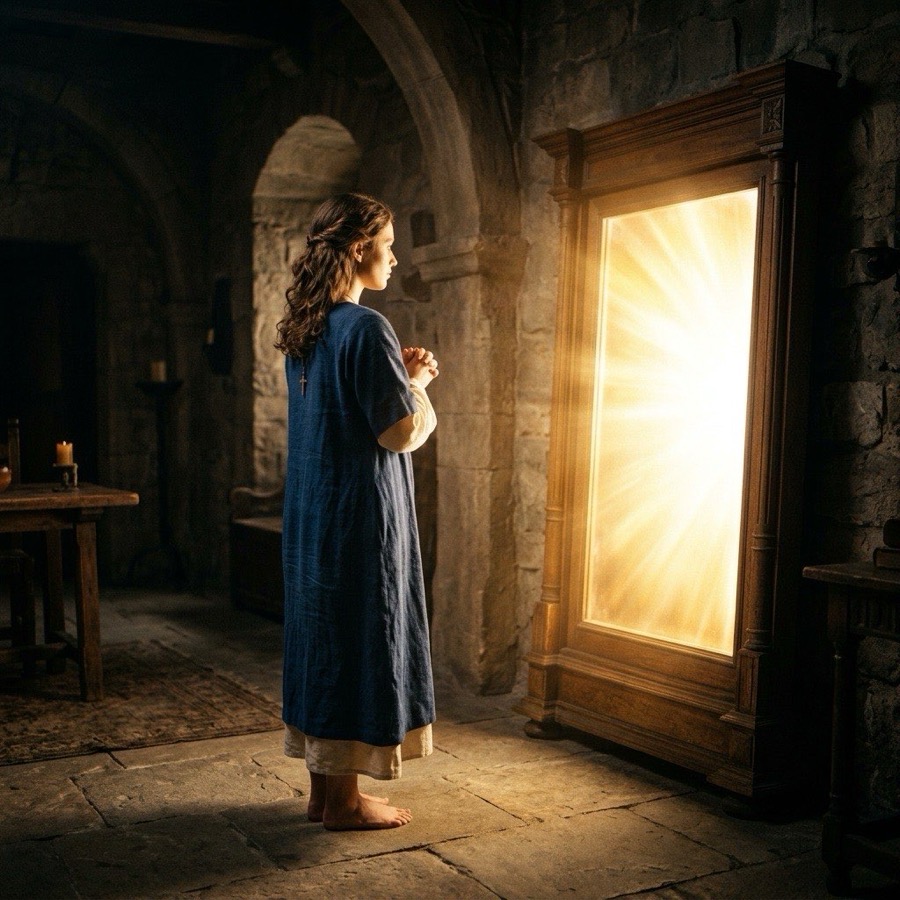
The Mirror You Are Looking Into
The mirror that matters is not what other people have reflected back at you. It is not the mirror of your own worst moments. It is the mirror of the Word of God — which tells you, with clarity and without apology, who you are in Christ:
Loved — before you did anything to earn it. (Romans 5:8) Chosen — before the foundation of the world. (Ephesians 1:4) Forgiven — completely, not provisionally. (Colossians 2:13-14) Known — every part of you, and still fully accepted. (Psalm 139:1-4) Called — with a purpose that your past cannot cancel. (Jeremiah 29:11)
"See what great love the Father has lavished on us, that we should be called children of God — and that is what we are!"— 1 John 3:1 (NIV)
That is what you are. Not what you were. Not what you did. Not what was done to you. What you are — in the present tense, in the settled legal reality of heaven — is a child of God. And that is the identity your past does not have the authority to overwrite.
You are not your history. You are His.